Berlin DayTrips – Sights beyond the Capital (Part 1)
Wandering is a lifestyle and even when you’re stuck in a city for an extended period of time, you’ll find the itch to want to explore more. Thankfully, not only is Berlin in the middle of a region filled with amazing destinations, it also is well connected to all of them, being the capital and all that. I took a lot of day trips in my time in Berlin and I wanted to share them. I realized that I’d have to break them into two posts to give each destination it’s fair space so, in this post, we’ll explore Rostock, Teufelsberg, and Potsdam.
If you want to read about Dresden and Spreewald, click here.
Rostock – The City on the Baltic Sea
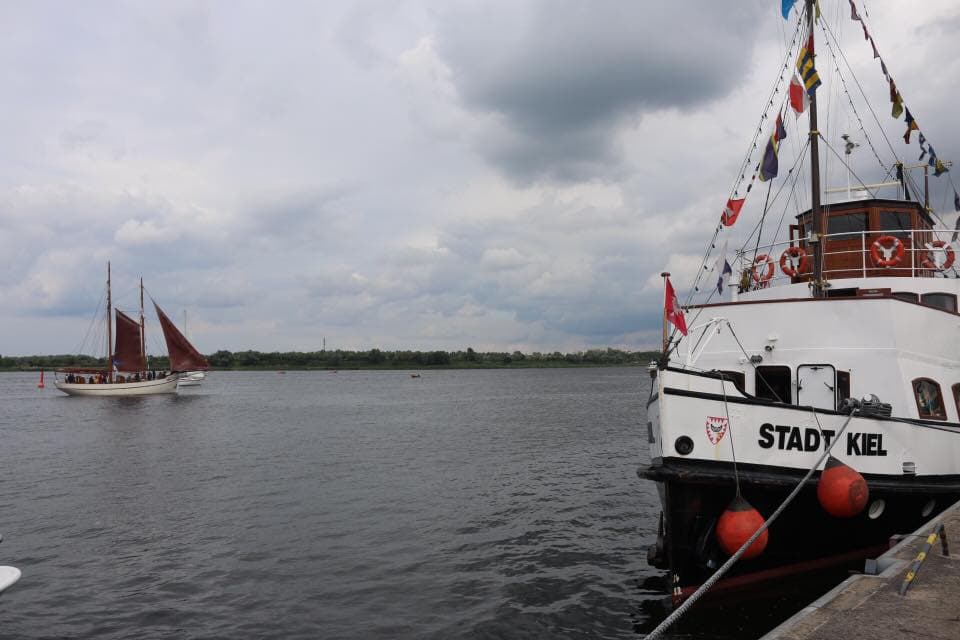
Two and a half hours north of Berlin by train lies Rostock, a seaside city in the state of Mecklenburg-Vorpommern. The city is great to visit for a couple of reasons: the sea, the architecture and the history.

Rostock has a lot of history. Its port was the envy of many rivals in the area and caused it to be a strategic capture for many empires and kingdoms. But similar to many familiar stories we’ve heard, the city befell economic hardship (after World War 1) and turned to fascism as the solution, supporting the Nazi party during its rise. This widespread support made it an important target for the bomb attacks of the British Airforce, damaging a lot of its important structures and people. Rostock has had a bad reputation since, for being home to right-wing fanatics. It wasn’t helped by the 1992 riots that saw locals attack the property of migrants in the city while onlookers applauded. You’ll see tension as you walk through the city – with the bombings having left visible marks. I honestly couldn’t tell you if Rostock is still a city that supports racism or xenophobia, but it strongly depends on tourism these days and I doubt that fascism is an attractive trait.
The other part of Rostock’s history and one that is slightly more available to observe is the remnant of its occupation by the Soviets during the GDR era. Rostock was East Germany’s largest port, which was a stark contrast to Hamburg, another popular German port in the west. In the picture above, you can see a Stasi Checkpoint structure, where they stopped locals and interrogated them before taking them to jail. The giant lamp shade is probably as Cold-War-Soviet as it gets, and it reminds you of a time not too long ago.


You’re going to see a lot of churches in Rostock. A lot of these are interesting to visit simply because they were damaged or destroyed during the bombings of World War 2. St Nicholas and St Mary’s both are built in a unique Brick Gothic Style of architecture that isn’t that easy to find around. The Convent of St Katherine, situated adjacent to the St Nicholas Church is a peaceful area and a good place to have a cup of coffee or tea as you soak in the medieval charm. It’s now an Academy of Music and Theatre but you can see the Christian symbolism everywhere.
The St Mary’s Church is also home to two very unique treasures. The first is a gigantic organ – the biggest I’ve personally seen and that is supposedly the dream of every organ player in the world. The other is an astronomical clock built in the 1400s by Hans Düringer. I was tired of churches by then, but I’m glad I saw both of these treasures – they really are remarkable. The interior of the church is otherwise depressing, a memory of the effects of war on monuments such as these.

In between these two churches lies Kröpeliner Straße, which is home to the city’s main shopping street. As is the rule with most cities – look up. Rather than get distracted by the shops, most of which are just branches of large MNCs, be amazed by the stunning baroque architecture. These houses follow the famous Northern European policy of being narrow in width, because of the taxation laws that tax the width you occupy on the street.

In the same day, take a train ride, about 40 minutes even more north to Warnemünde, which is where the beach lies. While Rostock is not extremely touristy, you’ll find even fewer here. This is where Berliners and other Germans go for their beach vacations nearby. There’s a large beach, divided into a nude and clothed beach, where many go to spend their day away. Expect classic beachtown vibes with tons of provisions and seafood around.

And of course, food. A lot of port/beach cities are going to be known for one thing especially and that’s the fish sandwich. Of course, you’re going to have a wide variety of fish available from herring to mackerel to cod. Try them all, but don’t make the mistake I did and ask for fish without bones in them. It really isn’t a pleasant experience eating through an actually delicious sandwich but have to go through the hassle of taking out bones. You’ll find shacks all around the seaside.
All in all, Rostock was a great escape from the grungey vibes of Berlin. It’s more historically classical, together with refreshing beach vibes and some interesting history to spice it up. You also don’t have to spend too much, all of the sights above are publicly accessible.
Teufelsberg – The Abandoned Listening Station

Teufelsberg is really as Berlin as it gets when you think of attractions accessible from the city. It’s not too much of a day trip – just a 15-20 minute ride from the city centre west towards the Heerstraße S-Bahn station and then another 20-25 minute hike by foot and up the hill to the station. You get to go through parts of Grunewald so altogether you can make a day trip of the visit here and then a picnic/hike through the forest.
Teufelsberg means Devil Mountain (from German) and is where the Americans built their listening station to spy on East Berlin during the Cold War. Now it’s an abandoned area that has been converted by a collective of local artists into a performance and street art venue. Entry is 8 Euros at the door, which is a bit pricy, but there are tours you can sign up for that make the costs more bearable or you could honestly sneak in, which is up to your sense of morality.

Aside from being a haven for people looking to add a more grungy aesthetic to their Instagram feed, Teufelsberg is spectacularly stimulating. The giant domes, especially the one right at the top that takes quite a climb, allow you to see the science of the station and how any minute sound is amplified to more than an audible degree. There’s no set way of exploring these domes. You can just wander around and even climb up some of them that have holes in it. The view from the top of the main building is also a good way to look at Berlin and the Grunewald area.

Finally, within the building, which I assume used to be office spaces, you can find tons of graffiti from local street artists. It is akin to a modern museum, where every piece is unique and tells a story. Again, expect many planning to take advantage of the backdrops for their Insta-shots. Perhaps that’s just our generation – ‘participative art’. In many ways then, this is truly a spot for young people with both throwbacks to history and a peek into the future of art.
We spent a total of 3 hours here but honestly, we could have wandered around and just chilled for more. There’s an area outside the building where you can buy a drink and sit out in the sun or play a couple of games like table tennis. Definitely worth the trip out.
Potsdam – Seat of the Prussian Kingdom

An hour west of Berlin’s Central Station by train is Potsdam, the capital of the state of Brandenburg. Potsdam is a picturesque city, so if you want a calm escape with gardens, small neighbourhoods you can walk around in and a bit of history, this is the spot for you. There are many cool spots, including this Brandenburg Gate in the city centre. This gate has two sides designed by two different architects, and while the name is similar to the one in Berlin, this one actually makes more sense as it was meant to be the entrance to the state of Brandenburg of which Potsdam is the capital. It’s much smaller than the Berlin version, but interesting all the same. From here, you can explore the city centre which is charming and classically old-school German.

10 minutes by bus from the city centre, you can go to Schloss Sanssouci, which translates to Castle without Care. This was the seat of the Prussian king, ruler of one of the greatest European kingdoms around. The castle itself is captivating and architecturally stunning but the gardens are the real wonder. You can spend hours walking around the gardens, perhaps explaining why he named the castle as such. There are multiple other buildings including the New Palace and the Orangerie which I didn’t personally visit but I’ve heard that they’re all just as beautiful to walk around in if you really want to give your day to it. All of these are also UNESCO protected sights.

Another 10 minutes north from the Schloss, you can make your way to Cecilienhof. This is in the city’s New Gardens (Neuergarten), which means you can take your time strolling up to the actual house. It was the last ‘palace’ built by the Prussian rulers and is interesting because it is in the style of the English Tudor manor house. It is also where the Potsdam Conference decided how the world was shaped post World War 2 by the Allied forces. Lots of history here, but do take the time to walk around the surrounding gardens too. There’s tons of picturesque and charming spots and a good brewery nearby.

Potsdam has a couple of interesting quarters. Alexandrowka was built by the Prussian king as a symbol of affection to the Russian Czar to celebrate the Russians in his kingdom. There’s a lot of traditional Russian Orthodox style houses and even a church and tea house you can relax at.

In order to bring skilled Dutch craftsmen into Prussia, the King struck a deal to build a Dutch Quarter with houses similar to the ones back home to accommodate the workers. Again, it truly feels like you’re transported into a different country when you walk through these quarters and you understand why all of these are protected by UNESCO.

For food, there’s only one spot I’d recommend. Restaurant Dreimäderlhaus is a cosy little spot, in the city centre, that you can see only Germans going into. It’s a classic German spot, where the owner serves you personally and recommends dishes inherited from his grandmother. I had the Rindfleishroullade or the rolled beef, which is a classic German dish and comes with amazing red cabbage and deliciously sinful potato dumplings. Damage is around 15 Euros but it’s standard for German pub fare.
The Prussian Empire isn’t covered much in Germany and Berlin’s past because of its already convoluted modern history, but it’s equally informative and stunning of a different time. Don’t miss out on it if you’re trying to find something to do while in Berlin.
____
As you can see, there are tons to do from Berlin, and I’m not even done. Look out for my follow-up post on my trips to Dresden and Spreewald!
Also if you’ve been to these locations yourself and have other thoughts, drop them below! Would love to know what everyone else thinks.