Travelling in a Pandemic
When the government announced the launch of Vaccinated Travel Lanes (VTL) between Singapore and a selection of risk-assessed countries in late 2021, I was extremely excited to have the chance to be reconnected with my friends from the rest of the world. I have shared before that while Singapore is home to me, I also feel deeply connected to a global community, especially having spent key years in the US, UK and India and developed relationships in many other cities. My first trip during the pandemic was back to the US, and it was a great adventure, but it also involved navigating multiple hurdles and uncertainties. I have jotted down some of my reflections here in case you may be curious about how VTL travelling was and especially if you want some tips before your own trip.
Why even travel while COVID-19 rages on?
It would have been easy to get put off by the Facebook comments on news articles claiming that VTL travellers were “irresponsible” for potentially bringing back COVID-19 to Singapore. I will admit that I definitely hesitated for a while before purchasing my flight tickets but a number of factors swayed me.
Firstly, Singapore has already established that it is committed to a path that treats COVID-19 as endemic and re-establishes itself as a business hub in Asia.
It is not just useful for people to move through Singapore for work, it is unavoidable. Whether because of supply chains and our ports (like our initial Delta transmission at Jurong port) or because of business decision-makers needing to be in-market to evaluate options, as long as Singapore relies on the rest of the world for goods and services, COVID-19 will find a way to our shores. The issue then, in my personal view, is one of risk management rather than absolute prevention.
Given the series of protocols in place for travelling and even on-arrival in Singapore, I was assured that even in the worst case that I contracted COVID-19, as long as I isolated myself and avoided immunocompromised individuals, the situation would be fine. Boosted individuals had a low chance of getting the Delta variant and the Omicron variant was statistically less lethal for those vaccinated. All things considered, it did not make sense to me to live in a constant state of fear when the health risks appeared managed. Two years of stasis was more than enough for me.
Another key consideration was my own mental state and needs. There were many who were able to carve a lifestyle for themselves during the pandemic that relied on just visiting the same places, meeting the same people and refuelling their soul tank by participating in the same routine activities within the country. I am genuinely happy for those people. I am also not one of those people. While I was able to adapt and manage myself for the last two years, I also knew that I needed to refuel my soul tank by being with dear friends who were not in Singapore and by having experiences that I could not have in Singapore. If there was a window for me to satisfy those needs, I was not going to waste it. It was a real cost-benefit analysis in play before I clicked on the “Purchase” button but the benefits outweighed the cost to me, with limited potential spillover to my community, and so I decided to take the plunge.
Flying clean
I should have expected that I would not be able to enjoy all the same pre-flight conveniences that I was used to enjoying as a frequent flyer. My flight was at 5am on a Sunday and I thought I could early check-in at midnight and relax at the lounge so that I do not have to worry about commuting in the middle of the night. Little did I know that Changi Airport was basically a ghost town, with most places shut down especially in the late night. Early check-ins were also halted, understandably to limit the number of people in the airport. Thankfully, Jewel still had its cinema where I watched Matrix Resurrections (review upcoming).
Most entry requirements are verified by the airline so I had to show my vaccination certificates and test outcomes to the ground team in the airports. The US was very straightforward in its entry requirements – just a negative test one day before the flight which I was able to get at Raffles Medical for just $30. I actually forgot to apply for an ESTA (too many requirements) but thankfully my approval came in within the hour.
I had a similarly straightforward verification experience on my flight back to Singapore, although Singapore requires both a vaccination certificate as well as an ART/PCR taken within two days of the flight. While it is a bit tricky to navigate the various web pages online stipulating the requirements (e.g. QR code needed), I relied on my friends who had travelled before me for tips on trusted testing providers.

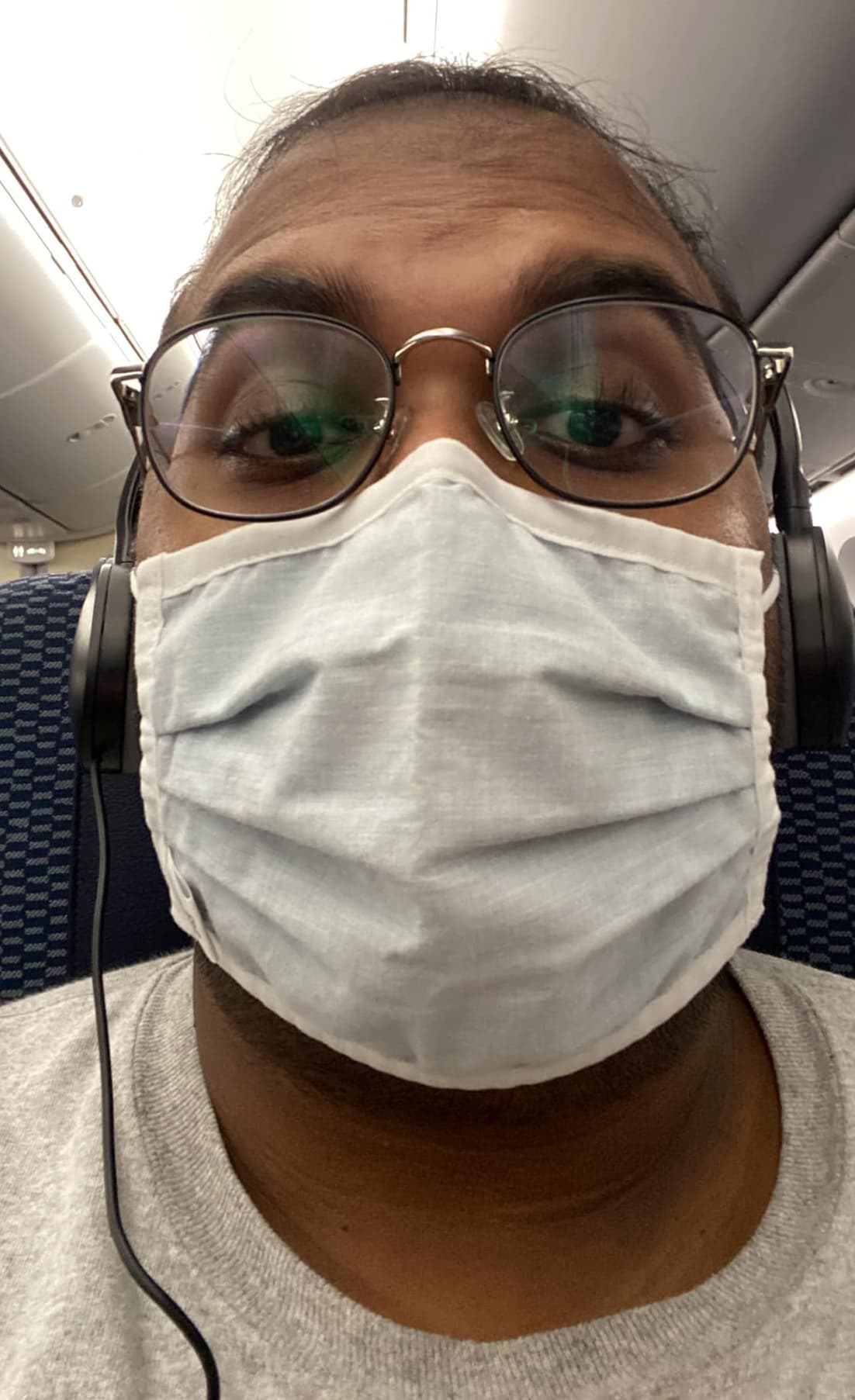
My flight to the US (on ANA, one of my favourite airlines after SQ) was a lot more empty and I could lie across the row if I wanted to. The ANA staff were also a lot more intentional in encouraging proper hygiene discipline on the flight – I recall them carrying large laminated cards with an image of a mask on it through the aisles to remind passengers to keep their masks on. Wearing a mask throughout the nearly 17-hour flight was sometimes annoying but never inhibiting. I would take breaks to the washroom both to stretch my legs and let my face breathe. Upon arrival, with my Global Entry, I was able to zip right past the Customs area and enter Chicago without a hitch.
My flight back to Singapore on SQ was slightly less comfortable. First of all, tests in the US are surprisingly much more expensive than in Singapore. A pre-departure ART test that meets requirements set me back US$90 (~S$120). Secondly, the repercussions of getting tested positive were much scarier. Flights back to Singapore required a 21-day period since a positive diagnosis which meant that I could have been stuck in the US for a long time (and with an angry employer). Thankfully, I was cautious during my trip and tested negative.
The plane was also fully booked and I was surrounded by people. I was worried that I had cautiously avoided COVID-19 during my whole time in the US only to get exposed to it on an 18-hour flight back home. The passenger next to me also seemed to think it was appropriate to remove her mask to conduct a face rejuvenation treatment in our row (probably not a good time to be classically Singaporean?). Where the ANA crew used laminated cards, the SQ team relied on their impressive digital entertainment systems to remind passengers of proper hygiene practices. While there were more steps to take upon landing in Singapore, namely the on-arrival PCR test, the process was impressively efficient and fast. I got through immigration and my test within 30 minutes (perhaps because I landed at 8.30am) and was in a Grab back home sooner than I thought I would be.
The key takeaway is that as long as you do your research and you stay up to date on requirements, travelling in a pandemic can be efficient. The airlines have also had some time to get used to pandemic rules for flying and can make the whole experience comfortable if you follow their cues. Most of the delays happen when passengers do not get a valid test result (e.g. one without a QR code) or if they refuse to comply with safety practices.
Different systems, one world
The last area I wanted to write about was the diversity in how countries around the world are approaching COVID-19. Having lived only in Singapore since the pandemic started and only being able to read the news and talk to friends about how conditions are like elsewhere, it is easy to presume that there is a “right” way to deal with the pandemic, and that way is likely ours. After visiting the US, I realise that that was the furthest thing from the truth. Each country is navigating its own path out of COVID-19 and learning to make its own trade-offs.
The US approach differs from Singapore in two main ways. Firstly, people can be outdoors without a mask – understandable in a country where population density is not as high as Singapore’s. Secondly, there is no need to register entry on a contact tracing app every time you enter a location – also understandable in a country that has a distrust of government surveillance. By the time I had arrived, Chicago and LA had started requiring vaccination proof for indoor dining (although outdoor dining was still available without proof) because of Omicron spikes.

I will acknowledge that the US can differ in its approach from state to state and even neighbourhood to neighbourhood. I saw some restaurants state that they were not going to enforce the mask requirement for indoor dining, which signalled to me that I should head elsewhere. However, besides the two broad areas above, the situation in the US did not feel that different from Singapore. California had an opt-in Bluetooth-enabled contact tracing program that seemed to be an adaptation of our TraceTogether program. Insurance-covered testing was available in most clinics and pharmacies (and even street corners) to provide assurances to residents.
I was able to do a lot more things in the US that I had grown to miss. I was able to stay in a bar past 10.30pm. I was able to meet friends in groups bigger than five. I was able to go hiking in large open spaces. I was able to go on a date and it seemed normal. I was able to do all those things and not get COVID-19.
What stood out to me however was the mindset difference towards living with COVID-19. The Singapore approach while decisively implemented from the top seems to also suffer from paralysis and inefficiency when situations change and rules have to adapt. We are quick to blame leadership and wait for clarity from the top before personally adapting to the situation. People here get confused when they follow the rules but they still see numbers rise or their friends get COVID-19.
In the communities that I was in while I was in the US (admittedly not representative of the US as a whole), there was a sense of acceptance that rules from the top were going to frequently change and that the focus should be instead on personal responsibility. Ironically, amidst the lack of clarity, my friends were more cautious and were able to better respond to changes. One of my friends apologetically cancelled his trip to meet me because he had been in the presence of someone who later was found to be COVID-19, despite himself testing negative and not having any symptoms. It genuinely felt like people had treated the virus as endemic and were learning to live with it. It felt like the right balance of personal freedom and personal responsibility that was missing here in the city-state.
Brave new normal
In all honesty, when it comes to travel, I am more risk-friendly. I was ready to fly out even in the heat of the pandemic in 2020 but both state and employer restrictions made that impossible. If I could, I would travel a lot more in 2022, especially since this US trip has increased my confidence that it is not scary to venture out of our borders. Unfortunately, not all organisations have embraced borderless work despite the pandemic providing its possibility, so I may still need to find a sensible way to spend my nearly 40-days of accumulated leave.
I have three more countries to hit before I would be able to fulfil my dream of visiting 50 unique countries before I turn 30. The pandemic may have slowed me down but it looks like I may be able to get back on track. Travelling during a pandemic is possible and safe.