the cdmx experience: mexico city in summary
The capital of Mexico underwent a rebranding recently, and with CDMX being the port of call for anyone wanting to visit Mexico without being thrown into the deep end, it was a good time to make our way there and experience the city. I’d have to admit early on that while we did a good amount of sightseeing this trip, we didn’t see the full extent of it. This was one of those trips where the setting plays wingman to a great crew and where adventure is the context for a reunion destined for months.
As with every travelogue, I will describe the main attractions of Mexico City and then describe some of the best foods to get your hands on. It’s important to understand that CDMX (the new name for the city from the older DF) is in a stage of rampant development and opening up for tourists. It’s in a tension of weeding off its more dangerous elements while leveraging what makes it truly unique as a Mexican destination, especially for its neighbours up north. There is a good amount to do and see and I’d be very surprised if one actually ran out of itinerary options.


If you go to Mexico and you don’t visit a market, you are missing out on some of the most authentic parts of Mexican culture. From fresh produce to traders and craftsmen, Mexican mercados are wondrous sights because they are so unabashedly focused on serving quality over anything else. CDMX has a number of markets but Mercado La Merced is right in the city and one of the biggest in all of Mexico. You can find clothes and toys on one end and then chillies and tortilla makers on the other. You’ll also witness a lot of traditional forms of food production, such as threshing of corns and the making of mole paste. Also, it’s a perfect place to get some street food as there are probably close to a hundred different small business owners just making dishes from tacos to tostadas at their stations. This is really where CDMX comes alive.


From the market, you can make your way to the CDMX Zocalo also known as the Plaza de la Constitucion. This is the heart of the city and where walking in any direction will lead you straight into something historical or cultural. Built on the remains of Tenochtitlan, the capital of the ancient Aztec empire, you will find signs of both Spanish New World architecture as well as archaeological and historical sites all over. You’re also probably likely to find a cultural dance by the concheros or Aztec dancers in one of the squares, a mode of preserving the heritage of the Aztecs.


One of the many sights to catch is the Palacio Nacional, a government building that is publicly accessible. You’ll need your passport to get in but it’s worth it for both the vast expanse of garden and palace that you get to explore but also the attractions inside. For one, the estate of Benito Juarez, a Mexican national hero and symbol of national values, is put on display at a museum exhibit in the palace. There are also monumental murals painted by the extremely talented and magnificent Diego Riviera, towering over you and telling you the story of Mexico from the times of empires to the Spanish colonialization. It is both inspiring and tragic and something you should not miss while in CDMX.


Exactly adjacent to the Zocalo is the Templo Mayor. This is the actual and still active site of one of the most important temples for the Aztecs, where both the god of war as well as the god of agriculture and rain are worshipped. It is also supposedly the location where a sign was given to build the origin point of Mexico as we know it. The temple has a small entrance fee but you get to roam around the temple and observe up-close well-maintained features of the temple including animal statues and skull walls. They also have a recently opened museum with small artefacts and more comprehensive information on life around the area.


One of the things the Spanish Conquistadors did when they came was to try to wipe out any signs of non-Christian worship and rule. One of those measures manifested in the Metropolitan Cathedral, the largest Roman Catholic cathedral in Latin America and a true wonder to behold. Embodying a high Baroque style, this church was discovered to be standing on ruins of the Templo Mayor, providing a dilemma for the city. There’s an ongoing careful excavation process to uncover more of the ancient Aztec temple while maintaining the church.


One of CDMX’s most iconic structures would have to be the Palacio de Belles Artes, a marble symmetrical hall that hosts some of the most interesting opera and dramatic pieces in the region. The interior of the actual concert hall is depicted as beautiful and while I didn’t get to catch a show, I’d recommend trying to book tickets and catch something while you’re there. The top two floors are used as the National Archaeological Museum, a slight misnomer because there’s not too much on actual architecture but more murals painted by Diego Riviera and the like. These murals are more abstract in nature, depicting artistic themes unique from the National Palace.


Established by one of the Spanish Viceroys, the adjacent Alameda Park is the oldest public park in the city and a popular one for locals. You can catch local entertainers and musicians hone their craft as you join the vibrancy of the city. Make sure to swing by the Hemiciclo, a marble monument commemorating the same Benito Juarez, a national hero of Mexico.


If you love parks, head westwards of the city to Chapultepec Park, a 1700-acre park with a zoo and a lake where you can go on a boat. There are many monuments and street food sellers but do note the park closes rather early in the evening. One of the key attractions is the Castle, called the ‘only royal castle in the Americas’. It was where the Emperors of the Mexican Empire resided and deemed to have some of the best views of the city. Unfortunately, we came too late to actually see the views, but you should definitely try to experience it.

If you ask any local Mexicans what one of the most sites in the city is, they are likely to point you to the Angel of Independence, a column commemorating a century of Mexican Independence and iconic to the city akin to most European columns. There is a mausoleum underneath where many iconic Mexican figures are kept but the area is better known for being the starting point of many parades and protests. We managed to catch the Mexican Pride festival there which was a great privilege.


Finally, the last iconic site we got to visit was the Frida Kahlo Museum. This museum, also called the Blue Casa, is pretty far from the city centre and requires some planning to get to. The lines here tend to be extremely long, even if you buy tickets, so I recommend rationing a lot of time to visit this place. It is the actual house where the famous painter Frida Kahlo lived, a woman known for bearing her pain in her paintings and navigating her identity as a woman, wife and artist through her works. It was definitely a very moving and striking museum and the courtyards give you both space and atmosphere to breathe and take it all in.


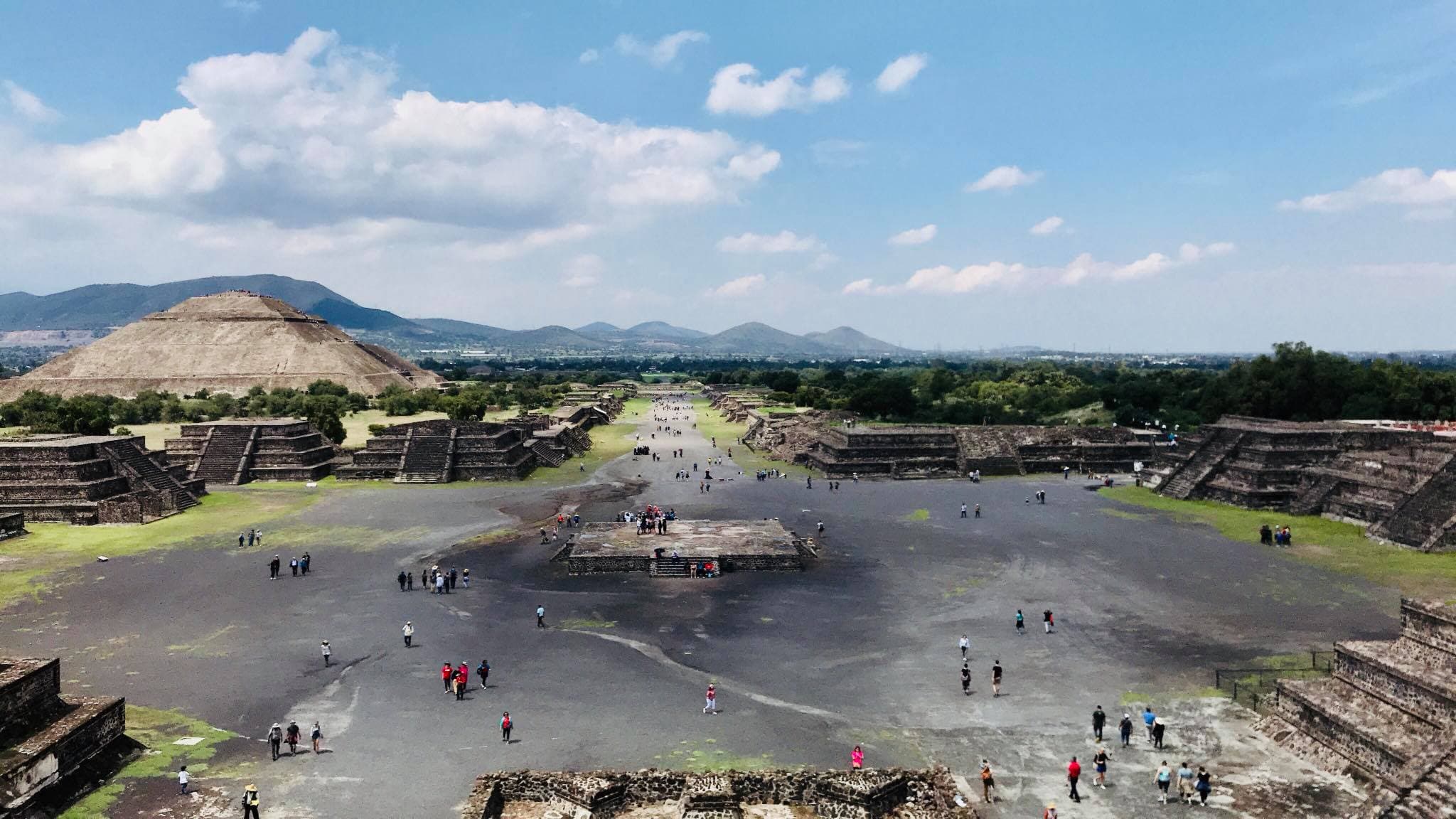
If you have the time for a day trip, I highly recommend taking the hour ride to Teotihuacan, site of one of the largest pyramid complexes in the world. The whole campus is run by the government including a small cultural coop run by locals and inhabitants of the area who have tried to maintain and live off cultural practices and crafts. For a small price, you’ll be able to enter the Avenue of the Dead, the road connecting the gigantic Pyramid of the Sun with the slightly smaller Pyramid of the Moon. There are a number of other archaeological attractions as well that you can visit including a palace with murals and carvings in it, but you’ll spend a decent amount of time simply climbing the pyramids and exploring the campus. These pyramids are so old (close to 200CE) that they predate the Aztecs. It was amazing being able to still see and explore these historical wonders.
Food and Drinks


There are very few countries and cultures in the world that are actually good at breakfast. Mexico is one of them. From tamales that are served by the street in metal containers to chilaquiles and huevos rancheros served in establishments, do not cheat yourself of the opportunity to have a hearty breakfast that is normally made up of corn, eggs and salsa. It’s the perfect kick in the morning. If you’re looking for a reliable destination, hit up Eno, a great Mexican bakery and brunch chain.


Almost everything in Mexico is served in a corn tortilla shell and I wouldn’t have it any other way. The key thing to try in Mexico though is as many different fillings as possible. From birria (or goat stew) to nopi (cactus) to different cuts of beef and pork, you will never run out of delicious and unique options to explore. Here are two recommendations for taquerias I had:
- Birria Estilo Jalisco – Goat Stew Tacos
- El Hueqito – High-Quality Variety Tacos, especially their Al Pastor


Aside from tacos, there are a number of larger plates I’d recommend getting your hand on. Tortas, or Mexican sandwiches, are easy to find both on the street and at restaurants and are normally stuffed with local meats and vegetables including a healthy serving of avocado and salsa. Quesadillas are great street snacks, also found on most corners. Tostadas are like Mexican flatbreads, except using a tortilla chip and topped with extremely fresh garnishes and ingredients. Finally, go to a Mexican restaurant and get a range of dishes ranging from lengua (beef tongue) to stuffed chillies. Here are some destination recommendations:
- Tortas Alex – Tortas
- Mariscos Orizaba – Seafood Tostadas
- El Cardenal – Mexican Plates including those mentioned above


People often assume all Mexican food is cheap and street food but that can’t be further from the truth, especially during the current food renaissance occurring in Mexico. There are a number of fine dining establishments that are not only serving out great ingredients treated with mastery of technique but that are also being celebrated worldwide. Pujol, one of the best restaurants in Mexico City, was an absolute dream to visit, serving some of the best food I’ve ever tasted. Their paparadzul was one of my favourites and their mole that is more than 800 days old blew my mind. Chef Enrique Olvera is a pioneer in the elevation of Mexican cuisine and it is a must to try his menu here.

For dessert, you can’t go wrong with churros. El Moro is the go-to place in CDMX and they serve churros that are generously powdered and accompanied with chocolate to dip in. If you’ve been to Spain and like the chocolate thick as they have it there, it’s available here as well, although the Mexican version is closer to a hot chocolate consistency. Lines can run long in the day but it’s open 24-hours so there’s no need to rush.

When it comes to alcohol, there are two main things to try. Mezcal is the spirit distilled from agave plants and is akin to a Mexican whisky, often smoky and frequently complex. Tequila is a specific type of mezcal that is made from blue agave, but in CDMX you’ll want to explore the variety of options they have. El Palenquito is a medium-sized mezcaleria we found that has a good variety, serving both mezcals straight for tasting as well as in cocktails for those not used to its strong flavours.
You’ll also want to try pulque, a fermented sap also from an agave plant, but often flavoured with fruits such as mango or guava. These are a slightly acquired taste but become incredibly addictive because of their weak alcoholic notes and fruit-forward flavours. Pulqueria los Insurgentes is a popular local dig for extremely cheap and delicious pulque.
Finally, don’t miss out on heading to a Mexican Cantina. These are the Mexican version of dive bars where locals just go to get extremely cheap alcohol that comes with free food and snacks. You will find few tourists here but often good spirits and loud conversations. I was personally a big fan of Salon Niza, near where we lived.
___
Here are some general tips for the city:
- The biggest concern you probably have is safety and that’s an understandable one. I can only speak to my own experience and I did not feel unsafe at any point in my visit to Mexico. I stayed in an Airbnb in the Roma Norte area, an admittedly more affluent part of the city, and only went to the other parts in the day. We also did stay out late at night. The police are very present in CDMX, and at times to the level where it did seem too much, but it made me feel overall secure about Mexico City.
- CDMX is extremely easy to get around by Uber. I rarely paid more than 7 USD for a ride that lasted at most 30 minutes, and even our 1-hour ride to Teotihuacan only cost us 20 USD total. I’ve heard the subways are good in CDMX but we never got to try them.
- CDMX is very cash dependant except for big restaurants so I’d strongly recommend front-loading on the pesos. Having said that, CDMX is also extremely cheap to get around so don’t worry too much about blowing the bank. ATMs do exist in some 7-11s and banks.
- Be wary of political events such as strikes or roadblocks as you explore the city, these are not uncommon.

I have to admit a big part of this trip was getting to reunite with some of my best friends from college. Sure we didn’t get to see a number of important Mexican museums or take other day trips but I have to declare this trip as one of the best trips I’ve ever taken because of the company I had. It really goes to show that travel becomes exponentially more fun with the right people around. I’m glad I had this privilege.