rovik. screens: ready player one
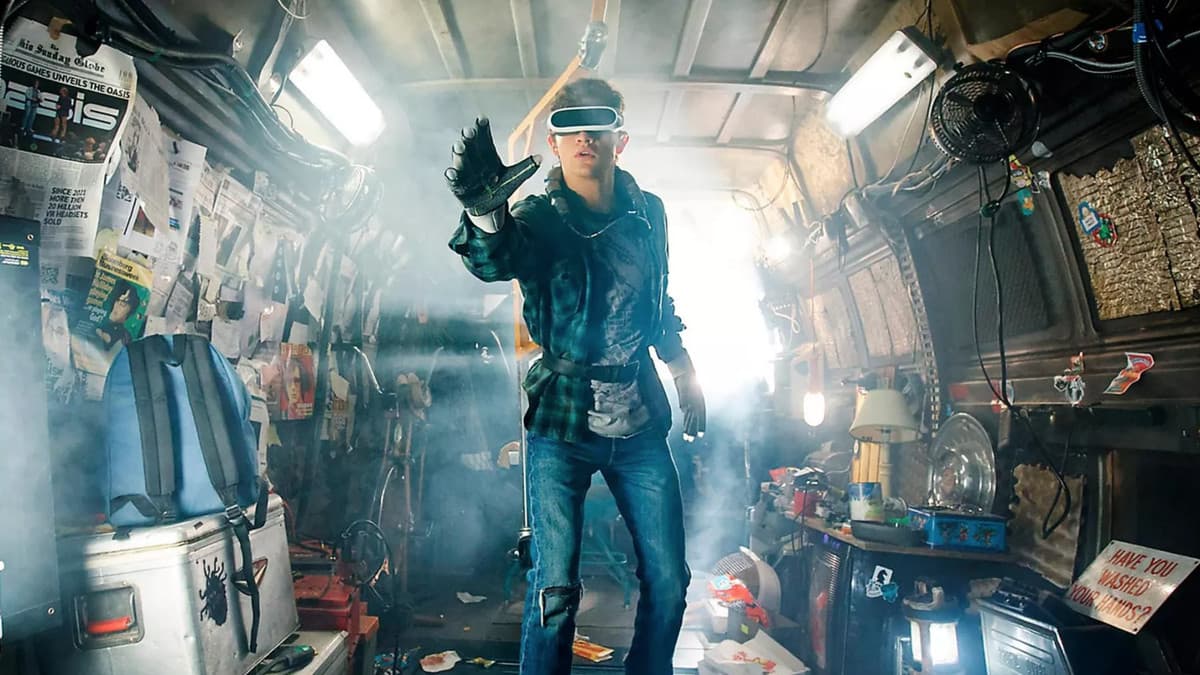
The last movie review I wrote was of Dunkirk because frankly, that was the last movie I had seen in a cinema. As a guy who moves around a lot, I prefer the comfort of Netflix on my handheld devices to the cinematic experience, but Ready Player One called out to me as a special occasion. Originally written by Ernest Cline and adapted onto the big screen by Steven Spielberg, Ready Player One (or RPO as I shall call it) was the best movie I had seen in a long time. This review explores some of the major themes in the movie and some critiques of components in it. There will be spoilers.
The story follows Wade Watts, an orphan who lives with his aunt in the ‘Stacks’, a ghettoized part of the city. He is a ‘Gunter’ or an Egghunter, searching for keys to an Easter Egg hidden within the virtual reality world of Oasis. The Easter Egg and the keys to it were hidden by creator James Halliday after he died. This is in an attempt to find a worthy successor to his fortunes. Of course, there are other Gunters, the most notorious of which work for IOI, a corporate cliche that wants to profit from the game. All of this operates in a social context of extreme poverty and environmental degradation where Oasis has provided an escape for many.
Wade discovers through his journey that Halliday wasn’t simply trying to provide a challenge for those who seek his Easter Egg, he was also trying to teach them a lesson about the mistakes he made in constructing his game and the burdens he’s had to carry because of them. This comes in good time because the normally alone Wade (with the exception of his online buddy Aech) is starting to find kinship with other avatars and even fall in love with Artemis, another Gunter. This new clan is in direct battle with IOI and its power-hungry boss Sorento, with the latter taking an aggressive no-mercy approach to the game. IOI essentially floods money into cracking problems, using what the industry calls brute force. We have a case of idealized challenge-loving gamers going against power-hungry corporate tools.
Here’s what I loved about the movie. It was jam-packed with quality scenes and great action. By the end of the two and a half hour run, I did not realize time had passed at all and had to take the time to process the entirety of the movie. The transition between the CGI Oasis-world and the real world is smooth, yet we’re always reminded of the jarring differences between them. Dystopia, as it is painted in this world for us, is real enough that we are drawn into its potential. All the characters in this world are complex and conflicted, and the progressive layering of traits hook you onto each scene. Tye Sheridan is a solid anchor for the film although accompanying stars of Olivia Cooke and Lena Waithe do a lot of heavy lifting as well.
Spielberg’s homage to pop culture is endearing and as an early 90s kid who got to see some of the tail-ends of 80s culture, I felt excited about each and every reference made. From The Shining to Planet Doom, backdrops within the movie are grand landscapes that evoke both a memory from the past and an entanglement with the present. Alan Silvestri’s musical score for the film is satisfying and truly shines in the final boss scene, which is especially epic and an absolute treat.
Here’s what I hated. Wade does undergo character development in the movie, but the costs of which are not realistically shared with the audience. Midway through the movie, his aunt is killed in a bomb explosion caused by IOI. He is rescued by Artemis’ real-life character, Samantha, and within seconds he confesses his feelings for her. Where’s the grieving? Where’s the sense of vengeance? Seems like the explosion was just shock factor kindling for the movie. The movie has a couple of other scenes that speeds past emotional moments (was Og really always plugged into the game as the helpful Curator?) and into the next plot development, leaving the audience confused.
Another thing I didn’t like? The big moral of the story. The final lesson, of course, is that reality is worth spending time in and the Oasis needs to be protected as a game for lovers of the game without detaching them from real issues. For a 21st century audience, that ending seemed too cliche and simplistic. What about the fact that a utopia within a dystopia could be ethically justifiable? Where was the government in all of this? Why is it wrong to build your life in the virtual world if you have a much higher freedom of access than the real world? None of these issues is explored deeply and we end up with a candy pop version of the movie that was satisfying for a day and then lacking after.
I’ve set high bars for my trips to the cinema because the extra money out of my pocket has to be rewarded with an exceptional time. RPO, despite its minor flaws, makes sure the time you spend in the cinema is a blast. If you can, do as I do and get a 4DX ticket, with the moving chairs and tactile effects. The cinematography in the movie is accompanied by the 4DX movements in such a coordinated way that I felt truly immersed in the movie. I’ll hope there’s a sequel to the movie, although I can imagine at that point, the story could become contrived. I’ll take it anyway, RPO-style candy pop is the kind of candy pop I’ll indulge in.
Here’s my rating of the movie below:
Cinematography: 5/5
Screenwriting: 4.5/5
Musical Score: 5/5
Acting/ Performance: 5/5
Overall: 4.75/5