rovik. reads: when breath becomes air
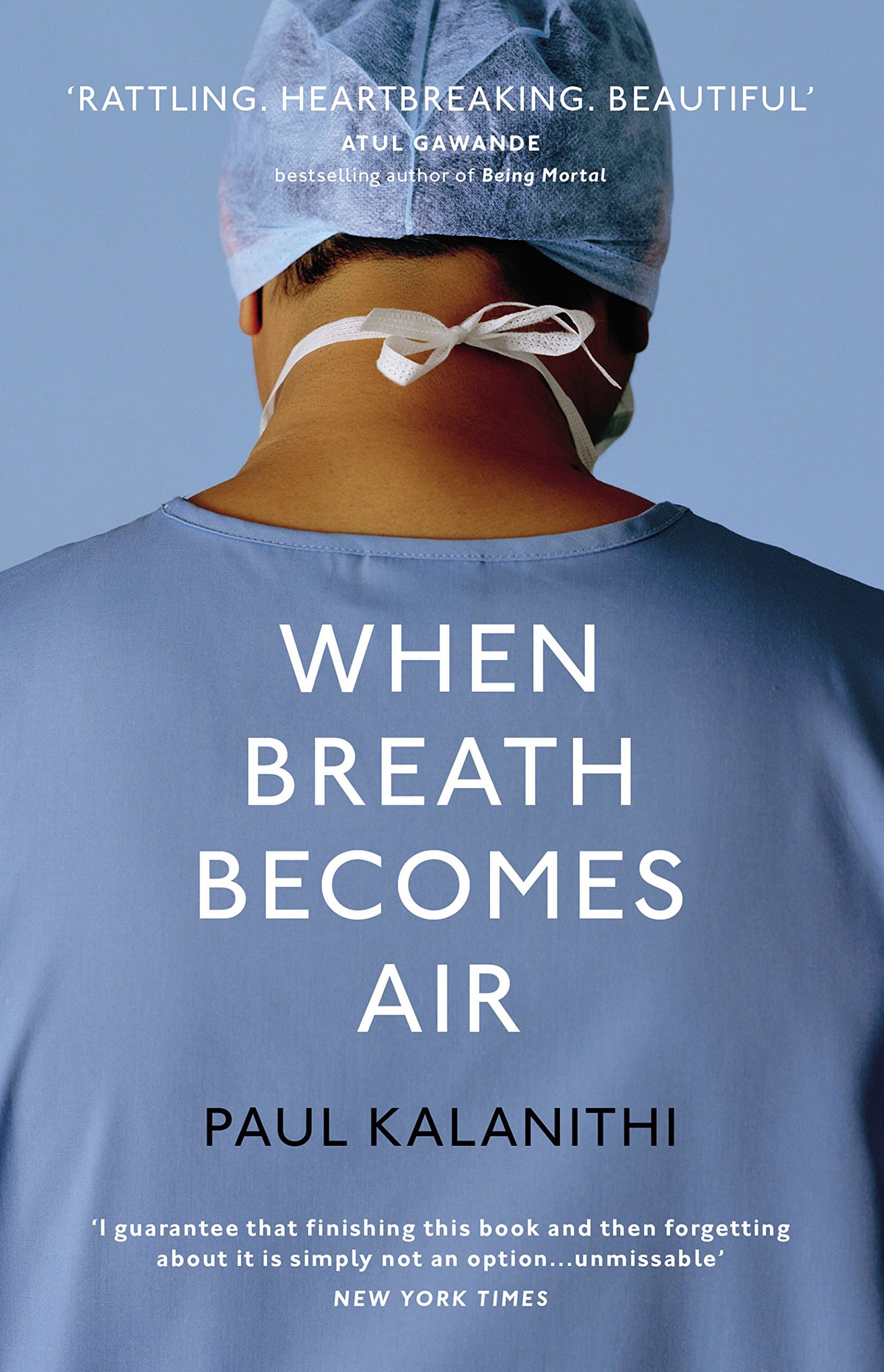
I was on the bus back from Manchester to London, having the row to myself and feeling hungover from the night before. I had an hour worth of reading left in the book and was already invested in Paul’s life, having learned so much about him from the first half of the book. He announces he has cancer – it’s not a spoiler, that’s the whole premise of the story, but somehow I’m still rattled by the news. Later on, I find tears on my cheeks. “Stop being emotional,” I tell myself, “He hasn’t even died yet.” As the chapter closes, I let myself cry unabashedly because I have to grieve for Paul, and also, with Paul. I’ve only had one other book affect me this much in my life, and that was when I was 15 and still naive to the world. How did this book get to me? How did Paul, a person I have never met and will never to get to meet, make such an impact on me, a reader? These are the questions I will try to answer here.
Paul has an interesting story to present. He’s always been curious about the human condition, having a deep affection for literature and the humanities as lenses to understand the mind and soul. He also encounters an intuitive interest in biology to connect the imaginative to the real, driving a frustration with academic theories and a lean towards medicine and surgery.
Literature not only illuminated another’s experience, it provided, I believed, the richest material for moral reflection. My brief forays into the formal ethics of analytic philosophy felt dry as a bone, missing the messiness and weight of real human life.
Paul ends up doing his residency focusing on neurosurgery. This is the first part of the story, the part before cancer. Here, he has already begun elucidating deep truths about life and death, finding connections between the work he’s doing and the greater ideas that he has found in his readings.
Don’t think I ever spent a minute of any day wondering why I did this work, or whether it was worth it. The call to protect life—and not merely life but another’s identity; it is perhaps not too much to say another’s soul—was obvious in its sacredness. Before operating on a patient’s brain, I realized, I must first understand his mind: his identity, his values, what makes his life worth living, and what devastation makes it reasonable to let that life end. The cost of my dedication to succeed was high, and the ineluctable failures brought me nearly unbearable guilt. Those burdens are what make medicine holy and wholly impossible: in taking up another’s cross, one must sometimes get crushed by the weight.
The concept of life had stakes attached to it now, and he was beginning to understand more about the role of the doctor as a healer. The striking part of his narrative so far is how he recognizes that many times the doctor is not so much the provider of promise as much as he is the facilitator of grasping with reality and a preparer for pain.
The physician’s duty is not to stave off death or return patients to their old lives, but to take into our arms a patient and family whose lives have disintegrated and work until they can stand back up and face, and make sense of, their own existence.”
At this point, I am compelled by Paul’s deep introspection and wisdom. This book is already sufficient for the average medical student in reminding them of their roles and realities and is inspiring for the casual reader to understand how medical practice is not just a technical endeavor. He has a beautiful writing style, pacing between broad anecdotal pieces and reflective asides in a manner that brings rhythm rather than interruption. It is at this point of comfort however where we must face Paul’s changing reality.
Paul recognizes his body is not functioning as it should. This makes sense, he’s a doctor. He suspects cancer but as with many of us, he acts as if it could be something else. Yet, he is also quick to promptly preliminarily self-diagnose himself and seek examination for cancerous cells. He is right, he has lung cancer. The tables have turned, and Paul is now the patient instead of the doctor, although the flip isn’t completely made. Paul still attempts to understand his condition as a doctor would, yet recognizes that he’s stealing time from himself maximizing the remainder of his life.
I began to realize that coming in such close contact with my own mortality had changed both nothing and everything. Before my cancer was diagnosed, I knew that someday I would die, but I didn’t know when. After the diagnosis, I knew that someday I would die, but I didn’t know when. But now I knew it acutely. The problem wasn’t really a scientific one. The fact of death is unsettling. Yet there is no other way to live.
The rest of Paul’s story takes on a magnificent depth in understanding how to live with death clearly on the horizon. He ponders on his own ambition, his relationships with family and his legacy. He decides to have a child with his wife, even though he would have limited time with the baby.
“Will having a newborn distract from the time we have together?” she asked. “Don’t you think saying goodbye to your child will make your death more painful?”
“Wouldn’t it be great if it did?” I said. Lucy and I both felt that life wasn’t about avoiding suffering.”
The sense that Paul is a deep thinker, connected with the grander elements of humanity and life, moves the reader to develop empathy with a distant character. He has articulated the moanings and frustrations of so many before him, not experiencing anything new himself but being able to evoke poetry and sense onto it all. Paul’s last words end with him holding his daughter in his arms and sharing the joy she brings to him.
This is where the book takes an abrupt turn. I flip the page to hear a new voice – that of his wife, Lucy. I put down the book. I need a break because I know where the story is about to go. I only have around 10% left. Being mentally prepared doesn’t help. Lucy’s words continue to inflict emotional impact as she documents Paul’s eventual deterioration and his struggle to keep being human.
“I expected to feel only empty and heartbroken after Paul died. It never occurred to me that you could love someone the same way after he was gone, that I would continue to feel such love and gratitude alongside the terrible sorrow, the grief so heavy that at times I shiver and moan under the weight of it.” – Lucy
The last 10% is a stop and start process as you grapple with the realization that the person you spent an hour and a half to get to know is now no longer. Death has played another cruel trick and Paul’s words, while belonging to a dead person, continue to provide life and clarity in the darkness of it all.
I really loved this book and it is my favorite read of the last 12 months. Paul’s writing is very fluid and the book is easily read in around two hours. Its ease of language is balanced well by its moments of depth that compel reflection and pause. I give this book my highest recommendations to all my peers. Here are my ratings:
Readability: 5/5
Intellectual Stimulation: 5/5
Perspective Shifting Capability: 5/5
Would I Recommend? – Absolutely!