rovik. reads: we were eight years in power
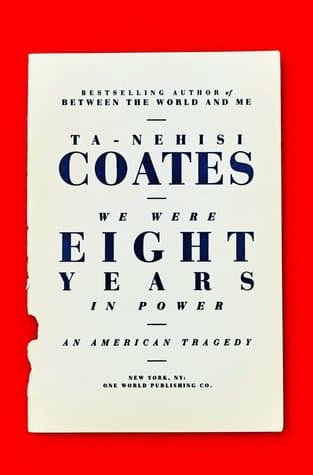
For the first book in our discussion group’s theme on Reconciliation, we chose Ta-Nahisi Coates’ “We were Eight Years in Power”. The book is a series of essays written by Coates during his time at The Atlantic and during Barack Obama’s presidency. What’s incremental is his retrospective reflections especially as he saw Trump’s presidency unfold. I personally enjoyed the book because it gave an impassioned argument for reparations – a frequent topic of interest in the area of reconciliation.
“An America that asks what it owes its most vulnerable citizens is improved and humane. An America that looks away is ignoring not just the sins of the past but the sins of the present and the certain sins of the future.”
Ta-Nehisi Coates
Coates’ essays admittedly look at more than just reconciliation, but for the purpose of this reflection and for our book club, this was the lens in which we read the book. He looks at the history of America’s treatment of black residents, beyond slavery to the repeated attempts to isolate and sideline the community. These include redlining, stop-and-frisk and mass incarceration, among other measures. At the heart of it all is a deep sense of being wronged, for no other reasons than one’s identity. Coates seems to advocate not just for a way forward that is inclusive, but a way forward that also acknowledges and accepts that the past was laden with wrongs and hurts.
“Whatever appeals to the white working class is ennobled. What appeals to black workers, and all others outside the tribe, is dastardly identitarianism. All politics are identity politics – except the politics of white people, the politics of the blood heirloom.”
Ta-Nehisi Coates
I’ll make a slight detraction here, because I found this quote fascinating. In Singapore, our count of cultural trauma is low compared to other countries in the world. That isn’t to say that we don’t have anything to be concerned about- the Japanese occupation during World War 2 is still a traumatic memory for many still alive. However, given all that, when we look at topics like the Black Identity in the US, I am not convinced that we can simply waive away the lessons as inapplicable to our context.
We must understand the original environment and features and recognize that there must be caveats when applied to a different situation, but modern societies also see many similarities. Inequality that has strong correlations to class, race and religion should invite questions – well-meaning and constructive, but ultimately rigorous. When the pushback is along the accusation of “identity politics”, I smell deflection. Identity politics is not a term oft used by those who wish to explore the range of their identities, it is a weapon used by those who wish to protect the boundaries of their own identities.
“Perhaps after a serious discussion and debate – the kind that HR 40 proposes – we may find that the country can never fully repay African Americans. But we stand to discover much about ourselves in such a discussion – and that is perhaps what scares us. The idea of reparations is frightening not simply because we might lack the ability to pay. The idea of reparations threatens something much deeper – America’s heritage, history, and standing in the world.”
Ta-Nehisi Coates
“For Americans, the hardest part of paying reparations would not be the outlay of money. It would be acknowledging that their most cherished myth was not real.”
Ta-Nehisi Coates
Bringing it back to the topic of Reconciliation, how then do reparations feature? Coates suggests that the topic is only as valuable as its ability to be a platform for honest discussions on accountability and integration of identity. Yet, those who must acknowledge such wrongs are also those who refuse to cede their ground, because of power, ignorance, or quite frankly, wealth. Historical examples of reparations show that it has been helpful as a way to demonstrate accountability but it’s difficult to understand why the conversation around reparations for slavery and injustice against black Americans keeps end up at a dead end. Our group agreed the book seemed to suggest a pretty bleak future for the topic but the reality is perhaps more hopeful. Our ability to move forward may not completely depend on the reconciliation achieved with others, but it definitely helps in our ability to achieve belonging and integration.
Here are my ratings:
Readability: 4/5
Intellectual Stimulation: 4/5
Perspective Shifting Capability: 4/5