rovik. reads: the white tiger
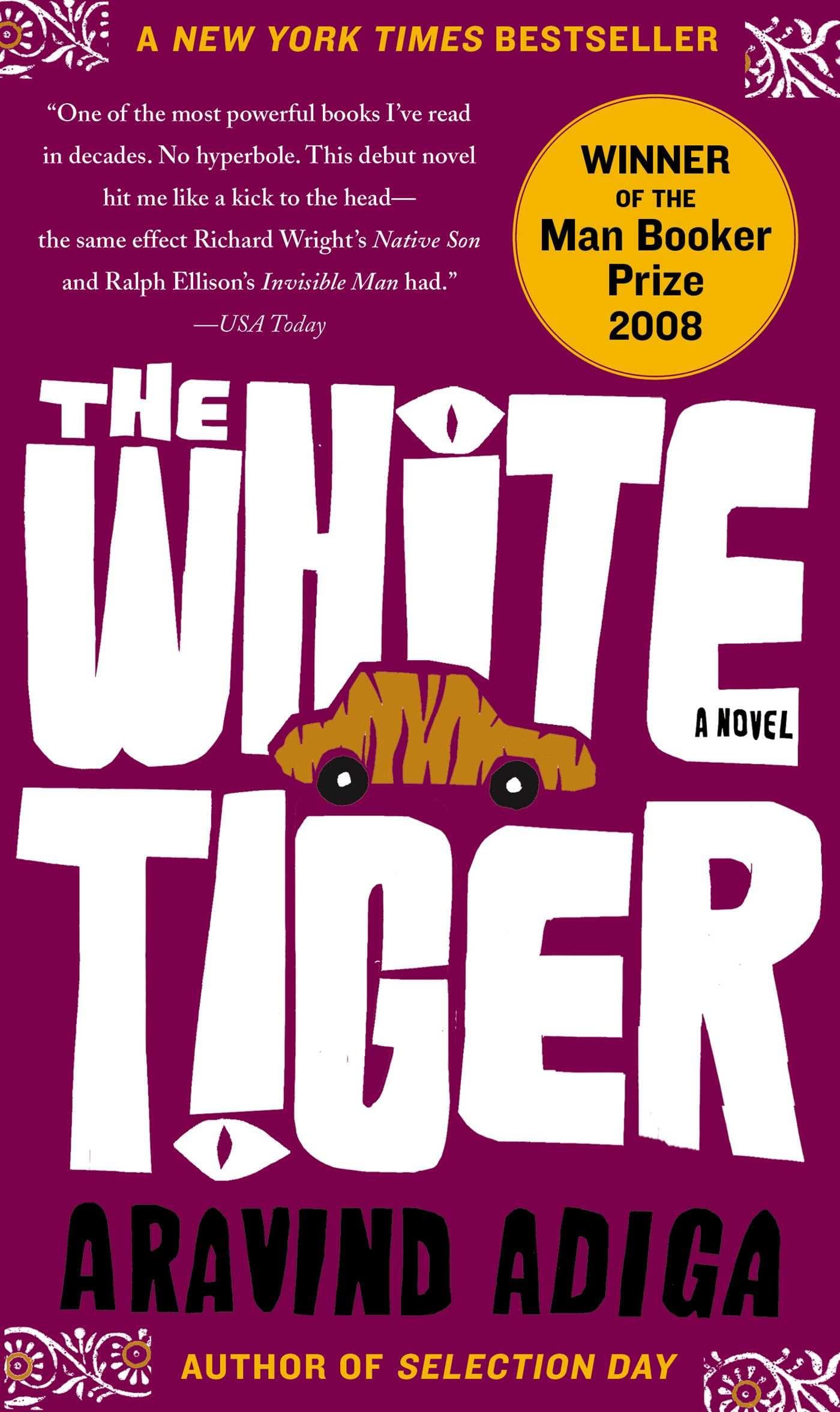
It gets easy to become comfortable with certain narratives, even when you read regularly. The White Tiger was an attempt for me to familiarize myself with a different context and challenge myself to build empathy for characters I had little relation to. I was introduced to this book by a good friend who mentioned that it really throws you into a world of its own, and he was not wrong. The White Tiger is an exhilarating Indian adventure packed with moral ambiguity, systemic violence and characters so real you couldn’t tell it’s fiction.
The name of the book points to a comment made by a school inspector when he observes the main character in the classroom. The White Tiger motif appears multiple times in the story.
“You, young man, are an intelligent, honest, vivacious fellow in this crowd of thugs and idiots. In any jungle, what is the rarest of animals—the creature that comes along only once in a generation?”
“The white tiger.”
“That’s what you are, in this jungle.”
The book follows Balram, a small-time villager and White Tiger who leaves his family to become a driver for a rich business heir. The book is written in the form of a series of letters to the Chinese Premier who is supposed to be visiting India shortly. Balram wants to communicate the “truth” about India. He is familiar with the ironies of life in his society – for example, how politicians never actually change things even though they promise to do so in campaigns.
“Never before in human history have so few owed so much to so many, Mr. Jiabao. A handful of men in this country have trained the remaining 99.9 percent—as strong, as talented, as inteligent in every way—to exist in perpetual servitude; a servitude so strong that you can put the key of his emancipation in a man’s hands and he will throw it back at you with a curse.”
Yet, what starts out as a mere first step to building a career brings Balram through some rough patches. He witnesses his bosses engage in corruption, manslaughter, and adultery. He becomes jaded by the activities of the rich and powerful, recognizing gradually that they too are base in a lot of their ideas.
“See, the poor dream all their lives of getting enough to eat and looking like the rich. And what do the rich dream of?? Losing weight and looking like the poor.”
Balram himself loses whatever vestige of a moral compass he had and kills his own boss. He claims his first taste of real freedom at this moment, finally not bound to the chains of the Indian system that keeps the poor in servitude. Balram runs away and uses a new identity but not before recognizing the difference between him and others around him.
“They remain slaves because they can’t see what is beautiful in this world.”
The White Tiger is a difficult book to read if you’ve never been to India before. I had some personal connection to a lot of the illustrations in the book because I had been back so many times to visit my grandparents and so was more comfortable with a lot of the themes. Even I recognized in my own reflections of India that the driver, in fact, is a key Indian pillar. Despite the framing of the book as letters to an outsider, however, there are descriptions so specific that it really takes a lot of imagination to put yourself in Balram’s shoes. My book club members who had never been to India communicated this frustration. But that’s what makes The White Tiger so important. The Indian narrative tends to be rather one-dimensional in the news, but this book really peels back all the layers to flesh out some of the key phenomena in the country. For example, Adiga points out very clearly a reason for Balram’s privileged ability to listen in on key happenings yet never be treated as a threat.
“The trustworthiness of servants is the basis of the entire Indian economy.”
Adiga also uses a lot of good metaphors to communicate the chaos of India. Balram frequently compares society to a chicken coop where everyone is trying to escape. He also jumps to and fro between being in the Light and the Darkness, parts of India that are either enlightened or heavily corrupted respectively. These simplifications provide a consistent frame of reference for the reader to appreciate Balram’s mindset throughout the story. In fact, the key message about Balram’s self-liberation is tied to one of these metaphors.
“I was looking for the key for years
But the door was always open”
I am used to having a “good” person be the main character in my stories so it was difficult to follow the amoral Balram as he descends into familiarity and indulgence with distasteful behaviors. It could be argued that some of these choices were his only way out but the question of whether some choices are intrinsically worth avoiding at all costs is relevant here. Adiga himself argues that his intention wasn’t for the reader to root for or even like Balram but to simply understand that Balram represents a lot of the views and habits of people in India. That to me was an important prompt. How do I build off this empathy with this new slightly distasteful character? Do I simply nuance my opinions about Indian affairs, or do I seek to normalize and recalibrate what morality is? These were difficult questions that The White Tiger has emerged in me, which is an indicator of a good and stimulating book.
I’d definitely say The White Tiger is a unique read that is absolutely worth the journey. Here are my ratings:
Readability: 4/5
Intellectual Stimulation: 4/5
Perspective Shifting Capability: 4/5
Would I Recommend? – Yup