rovik. reads: the power
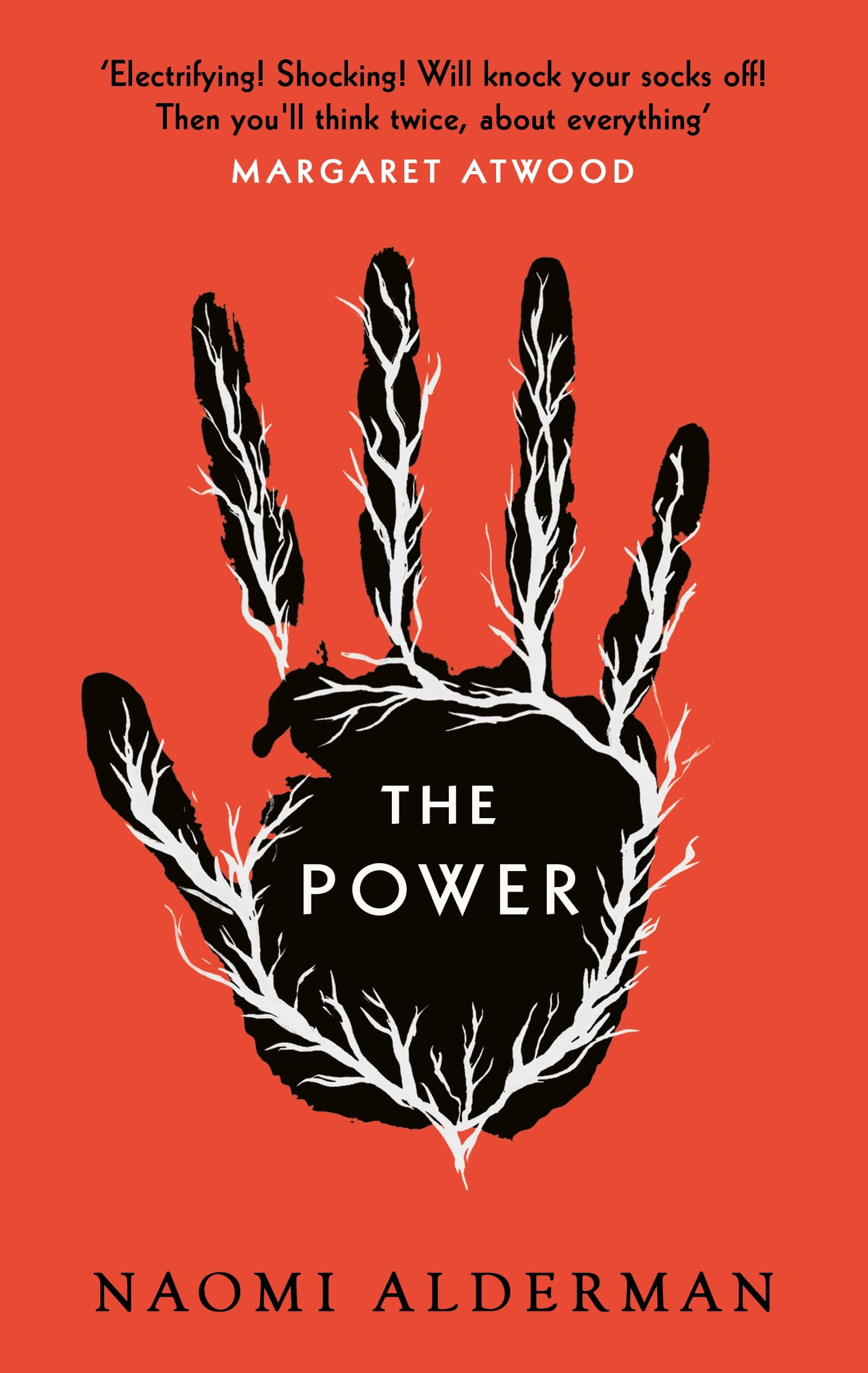
The book club decided to round up the quarter with a book quite aptly named after the theme. The Power is a look at a world where women have the physical advantage, supposedly evolved through the activation of electrostatic powers in their “skein”. I had lots of high hopes for the book, especially given that Naomi Alderman was mentored by Margaret Atwood, but the book while interesting in concept was lacking in conviction. However, it is admittedly a useful take on the question “Is power gendered?”. This book suggests that it may not be.
“The shape of power is always the same: it is infinite, it is complex, it is forever branching. While it is alive like a tree, it is growing; while it contains itself, it is a multitude. Its directions are unpredictable; it obeys its own laws. No one can observe the acorn and extrapolate each vein in each leaf of the oak crown. The closer you look, the more various it becomes. However complex you think it is, it is more complex than that. Like the rivers to the ocean, like the lightning strike, it is obscene and uncontained.”
Naomi Alderman
Common critiques of patriarchal structures suggest that such structures are violent and dangerous because power in the hands of men will always yield such violence and danger. More matriarchal structures are supposedly caring and inclusive. Alderman seems to rebut this theory and attribute violence to the nature of power itself. Power when wielded seeks to subjugate and influence and cannot be controlled, whether it’s yielded by masculine or feminine structures.
“This is the trouble with history. You can’t see what’s not there. You can look at an empty space and see that something’s missing, but there’s no way to know what it was.”
Naomi Alderman
This hot take is communicated through a book-in-a-book concept. A male author writes a book supposedly tracing the history of such electrostatic power to 500 years back, covering stories of a broad ensemble of characters including Mother Eve/Allie (a spiritual ascendant), Roxy (daughter of a crime family), Tunde (a male reporter who goes into conflict areas) and even Tatiana (the wife of a dictator ,who herself takes over the country). Characters start out promising, wishing to do things differently and push back against the dominance of men, but they do so in the only ways that are familiar to them – more violence. When the primary book is reviewed by a female editor, she questions the male author if men actually had any real power back in the day and if women were indeed so sinister. This “revisionist” critique is all too familiar but it speaks to how we view history. We know that women have not been in power and that in itself is an issue worth fighting for, but to blame that for the violence of the past may be a tenuous claim.
“Gender is a shell game. What is a man? Whatever a woman isn’t. What is a woman? Whatever a man is not. Tap on it and it’s hollow. Look under the shells: it’s not there.”
Naomi Alderman
One of the members in the book club shared a useful way to move forward from this book given that most of us had thought the solution to violent structures was more women in power. She shared that any power structure where gender was an influencing factor was problematic and the first step was to avoid the influence of gender in policy and strategy. This also accommodates for non-binary identities. The solution may not be to create structures where there is forced representation so that we can achieve more balanced outcomes. Rather it’s to have representation as a result of a gender-agnostic structure. This reduces the burden of a subset of outcomes purely placed on women at the workplace (e.g. welfare, gender issues etc.), and instead recognizes that opportunity must be present for all.
“The world is the way it is now because of five thousand years of ingrained structures of power based on darker times when things were much more violent… But we don’t have to act that way now. We can think and imagine ourselves differently once we understand what we ‘ve based our ideas on.”
Naomi Alderman
The idea in itself is profound but unfortunately Alderman is inconsistent in her delivery. Some characters are predictable and the dialogue is unengaging at times, but the arch of the story is intriguing. In Alderman’s world, the future may not be women, it may simply be one where gender doesn’t matter.
Here are my ratings:
Readability: 4/5
Intellectual Stimulation: 3/5
Perspective Shifting Capability: 3/5
Would I Recommend? – Fun read, not a mandatory one.