rovik. reads: the misremembered man
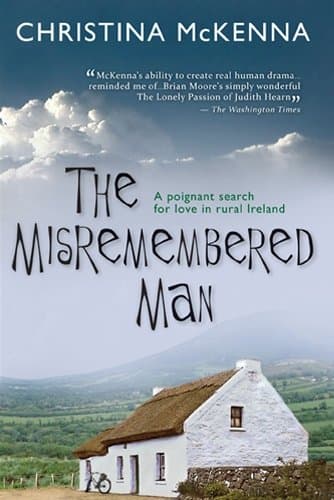
March took on a slightly Irish theme for the book club, probably a product of my trip to Ireland, a member’s study abroad experience there and the overall St Patrick’s festivities. The Misremembered Man by Christina McKenna called out to us as a well-liked book by a Northern Irish writer who could hopefully provide some insight into the complex and often cloaked lives of the folk who live up there. Did the book meet our expectations? The short answer is yes and no. The more interesting answer is below.
McKenna’s novel explores life in rural Ireland, supposedly before the Troubles were a big issue, with the main characters of James McCloone and Lydia Devine. Both live separate lives as 40-somethings in opposites classes of society – James is a farmer who lives humbly and Lydia is a tutor from an upper-middle-class class family. They interact through the medium of a Lonely Hearts Ad page and try to fulfil their desire for a partner through their courting of each other. The premise itself is interesting enough, reading about two middle-aged folks from different classes struggle to find common ground is fascinating by itself. McKenna, however, reveals a tragic past to James’ character, depicting his horrible treatment at the Catholic orphanage he was raised in and the mental and emotional scars it left on him.
The story is a love story of a different class, and if you are looking for a joyful adventure I’d walk away from the book. McKenna weaves together chapters from James’, Lydia’s and the orphan McCloone’s perspectives, bringing together a depiction of a relationship that is a product not just of the people in it but also the baggage they carry.
Such were the effects of those seminal events that, over the years, had carved deep pathways into the lumpy geography of his brain, rendering him incapable of forgetting the injury that had been done to him, making him wary of people and anxious of change, and forcing him to live a lesser life, full of empty dreams and broken hope, without much joy, without much meaning, without much love.
This book deals with many important themes, some universal such as love, companionship and loneliness, some political such as poverty, class and justice and others regional such as the Northern Irish perversion of Catholic orphanages. It is difficult at times to trace what action could be attributed to what theme, frequently McKenna writes them in all together as a more representative possibility of reality. Yet, it is exactly this intersectionality and muddiness that makes The Misremembered Man a great book for the curious soul to wander through.
Each child was paying for the “love” that brought him into being: a love that in the “holy” eyes of the children’s “carers” was tainted, because it had come from lesser beings – poor people
There a number of reasons to read the book. McKenna’s writing style is a major one. She has a way with words that are poetic and illustrative, yet do not overwhelm and nauseate. The Northern Irish scenery is enthralling (I’ve seen it myself) and McKenna does a good job of sharing that beauty but also, tempering it through the broken lives of the characters we are accompanying. Another major reason to read the book is the uniqueness of it all. The Misremembered Man takes characters who are otherwise hidden from international view and reveals the stories that could probably be told by real people from the region. None of the characters in the book makes me think of in my own life and that by itself warrants my interest in finding out more.
The only criticism I have of The Misremembered Man is the lack of content warnings or even revelatory foreshadowing to the amount of violence explored in the book. It does execute McKenna’s probable intent of being shocking but as a reader, choosing to be exposed to such violent and at times, depressing themes, can have some harrowing effects especially if the reader themselves have similar backgrounds. There has to be a better way of warning the reader of some issues talked about in the book.
How does a broken man find companionship in a bleak (?) world? That’s the question this book attempts to answer and I’d say it did a good job at it. It’s not a complete picture of Northern Irish life and McKenna seems to try to focus on one issue, one novel at a time, so don’t expect a comprehensive understanding of all Northern Irish folk after reading the book. What you should expect is an appreciation of the complexity of life in both a troubled but ultimately beautiful place, and the resultant interest to find out more.
Here are my ratings for it:
Readability: 5/5
Intellectual Stimulation: 2/5
Perspective Shifting Capability: 3/5
Would I Recommend? – For those looking a good fictional read, add this to your list.