rovik. reads: the lonely city
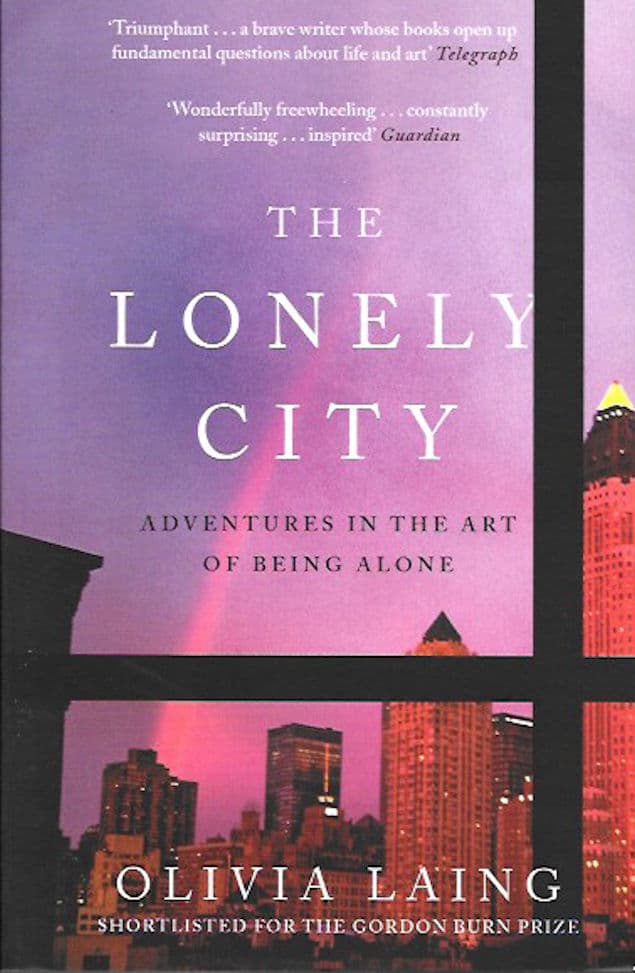
The book club is back together and what better way to commemorate it than by tackling the concept of connection. Of course, the absence of connection and intimacy can lead to a sometimes painful state of loneliness, an issue we try to explore in Olivia Laing’s popular book The Lonely City. Building on the works of artists whose experiences with loneliness influenced their art, Laing provides an eloquent thesis on how identity and society play a role in perpetuating the tragic climate of loneliness.
If loneliness is to be defined as a desire for intimacy, then included within that is the need to express oneself and to be heard, to share thoughts, experiences and feelings. Intimacy can’t exist if the participants aren’t willing to make themselves known, to be revealed. But gauging the levels is tricky. Either you don’t communicate enough and remain concealed from other people, or you risk rejection by exposing too much altogether: the minor and major hurts, the tedious obsessions, the abscesses and cataracts of need and shame and longing.
As with most books that explore artists and their work, The Lonely City is also one that takes the leisurely route to the punchline. Artists such as Edward Hopper and Andy Warhol are diagnosed in great detail in how their childhoods and backgrounds shaped their views of the world and consequentially their art. Their sense of loneliness and voyeurism is a result of a vicious cycle between not being given access to intimacy and the exacerbated inability to even be intimate when the opportunity is available. This is true even at a less extreme level, when we think about our own narratives where we close ourselves off after we’ve been hurt by people who we’ve open ourselves to.
“You can be lonely anywhere, but there is a particular flavour to the loneliness that comes from living in a city, surrounded by millions of people.”
At a structural level, the rise in urban centers and cities is non-intuitively a source of some of the rise in loneliness globally. Even though we pack people into a smaller space, the inability to connect with people and form intimate relationships can make one feel even more frustrated – “I am among many, yet I am just one.” Cities like New York and London have opened up spaces for groups that otherwise would not have had found their communities including LGBTQ+ groups, but at the same time, groups are defined by and operate on an almost exclusionary basis so it is not granted that one could find their cure to loneliness in these spaces.
I don’t believe the cure for loneliness is meeting someone, not necessarily. I think it’s about two things: learning how to befriend yourself and understanding that many of the things that seem to afflict us as individuals are in fact a result of larger forces of stigma and exclusion, which can and should be resisted.
Laing explores a breadth of artists and creators, but the repeated theme is implicit: no one could have helped these artists overcome their loneliness, they would have needed to have helped themselves. Learning to build the strength to form intimate connections starts with even being comfortable being vulnerable, a trait often lost upon modern citizens. Without vulnerability, we lose the ability to accept ourselves and therefore the accept to connect with others such that they may accept us.
There are so many things that art can’t do. It can’t bring the dead back to life, it can’t mend arguments between friends, or cure AIDS, or halt the pace of climate change. All the same, it does have some extraordinary functions, some odd negotiating ability between people, including people who never meet and yet who infiltrate and enrich each other’s lives. It does have a capacity to create intimacy; it does have a way of healing wounds, and better yet of making it apparent that not all wounds need healing and not all scars are ugly
I’ll admit I was initially perplexed on Laing’s angle to explore loneliness through the lens of art, but as I browsed through the works she cited, I was reminded of the power of art to express complex and intangible concepts in relatable ways. Art, in the context of the works of the likes of Hopper and Warhol, are transformative in their ability to articulate hurt and pain in a rehabilitative way. Regardless of how got to a state of loneliness, Laing’s book is a reminder that people have found ways to cope with it and in some ways, create beautiful things out of it. My appreciation of how people cope with loneliness and how we can make tweaks in the way we engage others has definitely improved after this read.
Here are my ratings:
Readability: 3/5
Intellectual Stimulation: 4/5
Perspective Shifting Capability: 4/5
Would I Recommend? – Good read, especially for those who want to know more about art !