rovik. reads: the lemon tree
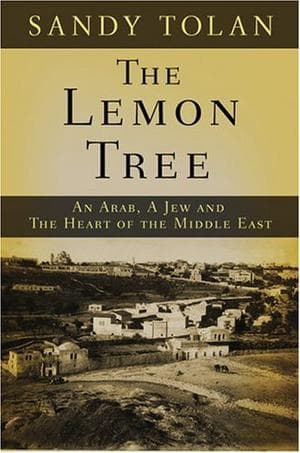
I’ll be the first to admit that I know next to little of the Israel-Palestine conflict. Every time a development unfolds, I am lost to why a solution seems so far from reach. Surely it’s a matter of compromise and incentives, right? Sandy Tolan’s The Lemon Tree proves there’s so much beneath the surface, and that the story is not just a historical one. Intertwining the political and the emotional as well, this book tells the story of two people connected by a lemon tree in Al-Ramla against the backdrop of the Israel-Palestine saga. If I thought I knew nothing about the conflict before this book, I definitely realized there’s so much more to learn about after finishing it.
“I struggle for your rights despite my fears. But your rights have to be balanced against our needs for survival. That is why you cannot be satisfied. For you, every viable solution will always be lacking in justice. In a peace plan, everybody will have to do with less than they deserve.”
Tolan’s book is all non-fiction, but it is part historical recount and part memoir. Revolving around two main people – Dalia, the daughter of Jewish refugees from Bulgaria during World War 2, and Bashir, one of the Palestinians evicted in the creation of the modern Israel state, The Lemon Tree talks about a literal lemon tree in an estate in Al-Ramla that connects the two. What used to be Bashir’s family home became Dalia’s during the formation of the Israeli state, and the lemon tree in the compound becomes the reason for their friendship despite differences.
Tolan does a fantastic job of laying out the historical series of events in true dramatic fashion. There are so many motives and interests underlying big political decisions and Tolan draws them out masterfully. We are brought through major episodes, from the Nazi influence in Bulgaria to the consequences of the UN Resolutions, to the formation of the PFLP and Hamas. But to really land the heart of the conflict, the story of Dalia and Bashir is made critical. The solution isn’t an easy one, not because there isn’t a solution, but because there has been so much hurt caused in the process and neither side is willing to acknowledge each other’s pain. For the Jewish community, this is a story of finding a true home after being persecuted and discriminated globally. But for the Palestinians, this is a story of having their lands stolen and their families forced into poverty. In some ways, each others’ pains and futures are heavily interdependent.
“Bashir walked toward a glass cabinet in the dining room. Dalia followed Bashir, and the two stood looking through the glass.
“Look at the cabinet and tell me what you see,” Bashir said.
“Is this a test?”
“It is a test. Please tell me what you see in the cabinet.”
Books, vases, a picture of Abdel Nasser. Maybe some things hiding behind. And a lemon.”
“You won,” Bashir said. “Do you remember the lemon?”
“What about it? Is there a story?”
“Do you remember when me and my brother came to visit?…Yes? Do you remember that Kamel asked you for something as we left? And do you remember what you gave him as a gift?”
Dalia was silent for a moment, Bashir would recall. “Oh, my God. It’s one of those lemons from that visit. But why did you keep it? It has been almost four months now.”
They walked from the cabinet and took their seats in the living room.
“To us, this lemon is more than fruit, Dalia,” Bashir said slowly. “It is land and history. It is the window that we open to look at our history. A few days after we brought the lemons home, it was night, and I heard a movement in the house. I was asleep. I got up, and I was listening. We were so nervous when the occupation started. Even the movement of trees used to wake us. And left us worried. I heard the noise and I got up. The noise was coming from this room right here. Do you know what I saw? My father, who is nearly blind.”
“Yes,” said Dalia. She was listening intently.
“Dalia, I saw him holding the lemon with both hands. And he was pacing back and forth in the room, and the tears were running down his cheeks.”
If there’s one thing The Lemon Tree reminds me of, it’s that war and conflict has long-lasting effects. I am situated in a vastly different world – as I type this review, I am looking out at a peaceful city in Singapore where we’ve not had to deal with cultural or historical trauma for a long time. Yet, in Israel and Palestine, the trauma is ongoing. The road names, landmarks and labels are all reminders of one’s victory and loss, depending on who the audience is. As I read Tolan’s book, I tried not to take a view of who was “justified” or “validated”. Rather, I tried to appreciate that history played out the way it did as a series of choices and consequences. How we got here may have had less to do with moral choices as much as they had to do with survivalist ones. Yet, because we lack the moral frame, we are also unable to reconcile the hurt created with the desire to protect one’s heritage. The solution would not just be a political one, it has to extend beyond.
“The act of planting was thus an act of faith and patience.”
Later on, Dalia converts the house with the lemon tree into a non-profit to foster better relations between the Arabs and Jews in the state, with Bashir’s blessing. The lemon tree, of course not being able to last forever, dies, punctuating a somber moment for the mission, but offering an opportunity to replant and refresh the mandate. Tolan doesn’t offer blind hope in a solution for Israel and Palestine – the journey of documenting all of the history could turn anyone into a cynic – but he does offer hope for the relationships between the people that occupy those territories.
I wouldn’t be so naive to imagine that the hurt created in the past 50 years could easily be addressed with some politician-crafted solution moving forward. War and conflict is violence, and violence creates pain. What this book does teach me is that we must believe and support the people who want to reconcile and who want to find a way forward.
I still have lots of thoughts from reading this book and am trying my best to process them – if you’ve read it too, do reach out so we can talk more. Such heaviness cannot be carried by just one soul.
Here are my ratings:
Readability: 5/5
Intellectual Stimulation: 4/5
Perspective Shifting Capability: 5/5
Would I Recommend? – Especially if you know nothing about the Israel-Palestine conflict.