rovik. reads: the lean startup
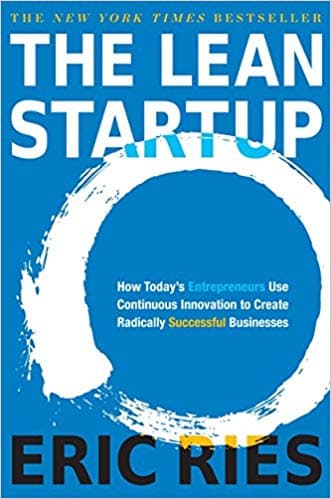
I am passionate about innovation, as a means to improve the lives of people and achieve better outcomes faster. Whether it be in the social enterprise of The Hidden Good, or even the large organization I am currently at, it is important to think about how to solve problems in an environment of increasing uncertainty while being conscious of resources. Good man Jacob Kerr insisted I move this book to the top of my reading list and once again, his advice was well put as I found myself engaging with a paradigm that relooked innovation as a learning strategy that aimed to maximize knowledge gain and application. I’d definitely add this book to any innovation enthusiast’s starter kit.
“The only way to win is to learn faster than anyone else.”
If there’s one takeaway from The Lean Startup, it’s that the goal of the innovation model is to learn quickly and clearly. Ries does not narrow the definition of the startup to the more commonly known visual of the scrappy garage team trying to launch the next software product. He counts corporate venture teams in large enterprises and even government policy teams as equal recipients of the startup moniker as long as they aim to address an issue in an environment of uncertainty. The common denominator then is to learn, reduce uncertainty, create relevant products and repeat the cycle.
“Innovation is a bottoms-up, decentralized, and unpredictable thing, but that doesn’t mean it cannot be managed.”
The lean methodology is not original to Ries. In fact, he attributes much of the thinking from The Toyota Way – the lean manufacturing techniques that the Toyota automotive company introduced to reduce wastage and improve efficacy. Ideas such as just-in-time delivery and KANBAN are adapted to the lean startup and complemented with new concepts such as “actionable metrics” and “minimum viable product”. The point is to empower managers with a toolkit to introduce lean methodology into their teams such that they can be better leaders. Lean methodology empowers people with knowledge to make actions that skip vanity theater (showing numbers just to please your bosses) and to speak truth to power.
“This is one of the most important lessons of the scientific method: if you cannot fail, you cannot learn.”
Perhaps the most important takeaway from the book is to design the learning process with allowance for failure. Failure is just as important for learning as is success. But processes, systems and people that do not tolerate failure will also prevent learning. The lean startup methodology does not put excessive pressure on teams to succeed, instead, it provides a means for teams to indicate achievement of truth. The design is such that failures are not costly and that core reasons can be immediately identified. Of course, this requires not just a procedural shift but a cultural shift as well. Bosses must be willing to participate in meetings where the agenda items could identify learning rather than achievements and where actionable data guides decision making.
___
I’m usually skeptical about books on business because it’s common for a lot of it to be hot air, but Eric Ries does a good job of balancing anecdotal examples with introduction of theory to deliver a compelling argument for adoption of the Lean Startup Methodology. It’s a rather succinct book (with only a few parts that ramble a bit) that progressively develops both cultural and conceptual ideas while still providing specific tools and methodologies to employ to engage those ideas. Ries also speaks from a place of humility throughout the book, speaking to much of his failures and how he learned from all of them. This is a refreshing feel for a business book and well welcomed. Innovation enthusiasts would definitely do well to pick up this book.
Here are my ratings:
Readability: 5/5
Intellectual Stimulation: 4/5
Perspective Shifting Capability: 4/5
Would I Recommend? – For the innovators.