rovik. reads: the anarchy
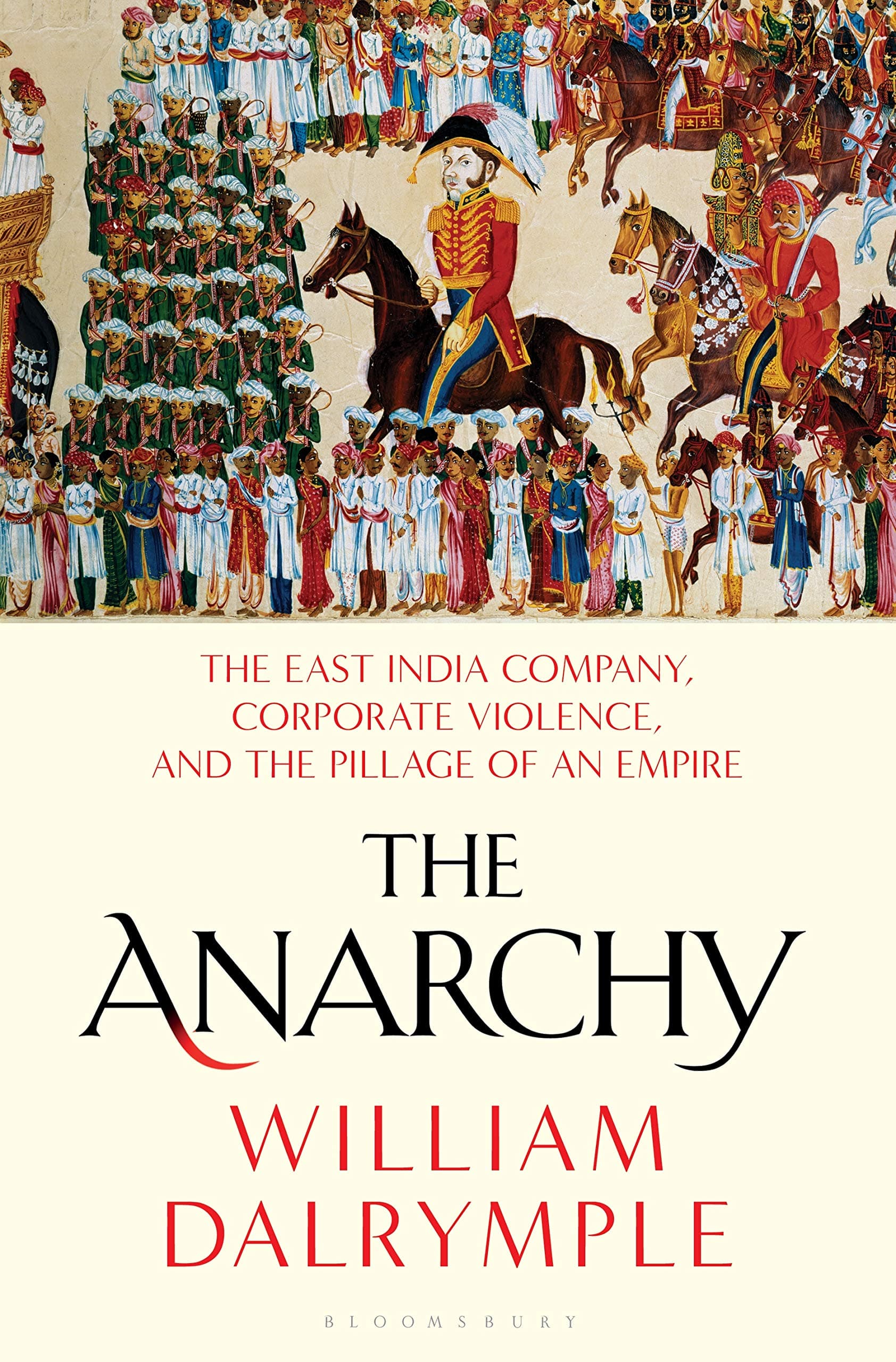
Perhaps one of the most peculiar historical stories I’ve been told is that of how India was ruled by a company. Today we look back at the colonial era with mixed feelings, mostly with admonishment of the colonizing powers that infringed on the rights of others. Yet, the story of India is complicated by the fact that it wasn’t an imperial or state power that subjugated the local kingdoms but a militarized company, greedy for the jewels and resources of a population, that caused a great empire to collapse under it. In our book club’s exploration of power, it became important to understand how our world allowed this to come to be and what lessons we can draw from it today.
“India’s transition to colonialism took place under a for-profit corporation, which existed entirely for the purpose of enriching its investors.”
William Dalrymple
The Anarchy can be read with many different lenses, but Dalrymple is clear in why he wrote it. How a corporation came to create the in-roads for colonization is the main question that he seeks to address, bringing together a rich tapestry of quotes and statistics from both British and Indian historical records. Starting with the origin of the East India Company in itself and tracing the history of England’s engagement with India, Dalrymple is meticulous in his retelling of one of history’s most peculiar events. We get to meet nearly fantastical characters including Shah Alam, Sir Richard Clive, Sir Warren Hastings and Tipu Sultan. Backstabbings, peace treaties, betrayals and retribution are all commonplace over the duration of the book, making me wonder at times if I was reading fiction or history.
“Barter and exchange is the business of merchants, not fighting of battles and dethroning of princes.”
William Dalrymple
I’ll admit my bias that I was hoping to complete the book feeling justified in blaming England for a lot of India’s modern day problems, whether it’s the constant allegations of corruption or the focus on caste. These may very well be attributed to the British Raj but in the ascension of the EIC, the story is a lot less sinister. In fact, what’s most disappointing was that the EIC just happened to be in the right place at the right time, when the Mughal empire that had dominated India in the past decades collapsed due to threats from the region. In-fighting within the Indian peninsula gave not just opportunity for the EIC to consolidate power but also a justifiable excuse to stabilize revenues and trade promises. Of course, this was only understandable in the early stages of the EIC’s rise. With the incremental expansion of scope, bad actors such as Ellis and Wellesley exploited the EIC’s advantage in India (numerous military sepoys, treaties with minor powers etc.) to further consolidate power.
Many a time, the various kingdoms came together to push back against the EIC and a number of times, they did succeed, but it was always one king wanting to play the EIC against another king that gave the EIC more power. From where it stood, the EIC saw opportunity everywhere.
“Corporations have neither bodies to be punished, nor souls to be condemned, they therefore do as they like.”
Lord Edward Thurlow
There was a lot of suffering caused by the EIC’s unchecked power. Famines, gruesome deaths, psychological uncertainty among many others plagued India as the EIC enjoyed the plunder of their conquests. At a certain point, the EIC’s dividends did not come from trade but from directly taking resources from India and sending them back to England. A country was being robbed and no one could do anything about it because the EIC had put itself in a position of legal privilege. There was no need for an internal moral compass – the duty of a company was only to its shareholders. Finally, the English government nationalized the EIC and made India a crown colony, but it was too late as a lot of the damage was already done.
Today, when we look at how companies interact with government, we see a new type of antagonism. Companies can threaten to uproot jobs and investments in an instant, and often use in-fighting within governments as an opportunity to lobby exploitative positions. If states do not create proper protections for its citizens and more importantly, do not seem limits to corporate greed as a pre-condition for stability, then we potentially see the repeat of the EIC, albeit in a most disastrous form.
I deeply valued Dalrymple’s effort to put together mounds of research in a readable and captivating way. This book is a good read for anyone who wants to understand the power of the unbridled corporation and the story of India.
Here are my ratings:
Readability: 4/5
Intellectual Stimulation: 4/5
Perspective Shifting Capability: 5/5
Would I Recommend? – Yes!