rovik. reads: talking across the divide
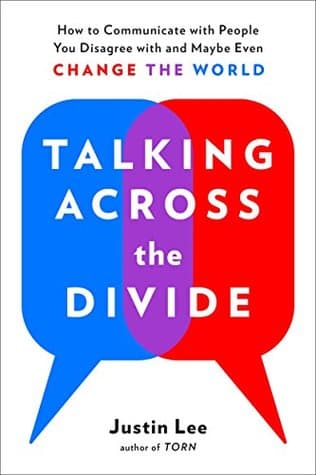
Folks who are familiar with the book club I helped start two years ago would know that I’m especially proud of the community we’ve built and difficult conversations we’ve been able to facilitate with friends calling in from different parts of the world. There’s plenty of room to grow but we’ve been thinking for a while on how to scale this project to have more people be able to benefit from the principles we’ve developed for effective conversations. As part of better.sg, I’ve actually been developing a product called Heart2Heart to perhaps automate and encode some of these principles while still creating the space for human relationships to thrive. In my effort to understand how to facilitate difficult conversations, I’ve been on a long journey, and Talking Across the Divide by Justin Lee has helped provide a rather foundational look at how to use strategic dialogue as a means to engage others.
“There’s something weird about arguments: They’re the first thing we reach for when we want to change someone’s mind, and yet they’re not very effective at actually changing minds. The more desperate we are to change someone’s mind, the more passionately we argue. And the more passionately we argue, the more defensive each side gets. It’s as if we’re trying to force them into our way of thinking by making our words louder and harsher, but in so doing, we only cause them to dig in their heels more and more, as both sides grow increasingly angry and irrational.”
Justin Lee
Having difficult conversations rarely works when debate is the platform. A war of ideas is not what moves people towards consensus. In fact, it is dialogue, underpinned by vulnerability, active listening and understanding that helps different sides of a topic be able to not only perceive one another but also seed the ground for subsequent strategic action. Lee is able to break this down into a set of steps and principles, spanning from strategic listening to storytelling to making specific asks, so that anyone can host such conversations with anyone from their family members to their college or work mates.
“Every time I run a public dialogue event, I always begin with a quick explanation of what dialogue is and isn’t: It isn’t saying “everyone is equally right,” and it isn’t debate or argument. It is a chance to hear one another out and seek to build understanding while acknowledging that we still want to change one another’s minds.”
Justin Lee
Lee is clear that dialogue isn’t an excuse for inaction – often times, in order to prevent harm, action is critical. But dialogue is a pre-condition for changing people’s views. I thought this was powerful because I believe that we still lack effective dialogue that is owned at the community level (and not by some organization or authority), so that we can actually talk through difficult topics and issues. I recall when my own personal view of immigration was changed when I talked to a child of undocumented immigrants and had the privilege of hearing his story. It was that opportunity to listen, understand motivations and humanize a topic that helped me recognize that even if I choose to continue to hold my view, I want to also make sure I do not infringe on someone else’s ability to live freely.
“This is a choice between “winning” and winning: If you want to succeed in bringing the truth to light, you have to give up the urge to “win” the argument by proving you know more than they do. Resist the urge to antagonize them or bash their ego. Let them recognize the limits of their knowledge, then back off.”
Justin Lee
I appreciated Lee’s dissection of key barriers to effective dialogue, spanning ego protection, team loyalty, comfort, misinformation and worldview protection. For example, according to Lee, everyone sees themselves as a protagonist in their own stories and they cannot be won over until they are convicted within their own worldviews that a change in perspective is only consistent with their values. Such techniques are helpful, both for my own facilitation practice and also in whatever platform we end up building.
All in all, a useful read!
Here are my ratings:
Readability: 5/5
Intellectual Stimulation: 4/5
Perspective Shifting Capability: 4/5
Would I Recommend? – If you’re interested in facilitation/ dialogues