rovik. reads: pachinko
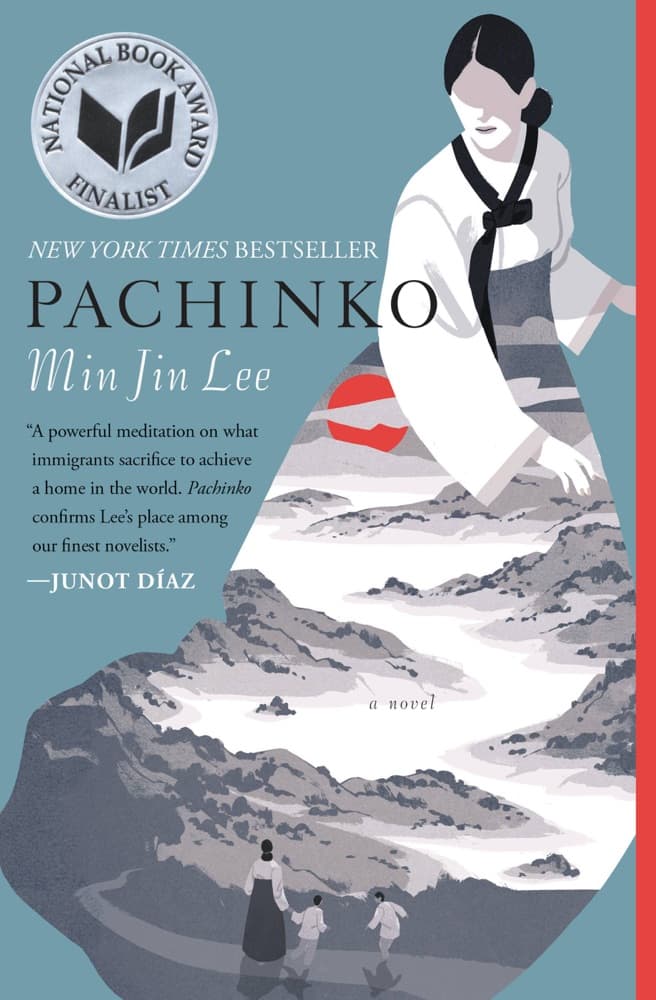
I’ve been on a search for Asian narratives written by Asian writers. There’s been a craving to build a deeper understanding with my Asian-ness and I’ve been trying to read across the continent. In my research, Pachinko came about a lot, mainly as a first-of-its-kind English book about the Japan-Korea dynamics especially around the WWII era. Reading it without any expectations, I was not ready for the multi-generational saga that would unfold, showing how both hopes and trauma can span across waves. Starting and ending off tamely, Min Jin Lee lands surprise after surprise in the pages between, reminding readers that life is made up of both the quiet and the loud.
“Living everyday in the presence of those who refuse to acknowledge your humanity takes great courage”
Min Jin Lee
Pachinko is a story across three “Books” or sections, starting with Hoonie, the father of Sunja. Sunja is in my opinion the main character of the book. We meet various characters including a rising Yakuza boss who impregnates Sunja, a preacher who marries her to save her from disgrace and of course her children and their own circles of loved ones.
The context is important – Korea was under the role of the Japanese and Korean people were treated quite horribly, especially in the Japanese cities. Knowing the South Korea that we are familiar with now, it’s difficult to imagine a time where Korean people were subjugated and oppressed but this book does a good job of demonstrating how dehumanized the Korean people were made to feel. It is this theme that repeats itself throughout the book, about how Koreans have to navigate a world where they are treated like second-class humans and yet fight for their families and lives. This is both deeply inspiring and humbling.
“No one is clean. Living makes you dirty.”
Min Jin Lee
Morality and character is another major theme in the book. Pachinko is a gambling activity similar to Slots but with some adjustments in place to create an artificial guise that it is just a harmless arcade activity. It’s often associated with Korean owners and becomes a major repeated motif in the book, especially as both Sunja’s children end up being involved in the Pachinko sector.
Sunja, her husband, her brother-in-law and his wife are all devout Christians who rely on the morality of the Christian faith to motivate them in troubled times. Yet, in times of great need, characters deviate from their principles to survive, or to gain an advantage. There are various conversations on morality and identity that I found profound. I closed the book not sure myself if anyone leaves this world “clean”, and if that’s a fair expectation of anyone at all.
“because she would not believe that she was no different than her parents, that seeing him as only Korean—good or bad—was the same as seeing him only as a bad Korean. She could not see his humanity, and Noa realized that this was what he wanted most of all: to be seen as human.”
Min Jin Lee
Together with Nothing to Envy, I feel like I’ve been building an appreciation for the Korean identity. It’s incremental and nowhere enough in scope, but I’m learning that the Korean identity carries a lot of recent trauma having gone through both the Japanese rule as well as the Korean war. Yes, there has been a massive economic boom, but money doesn’t heal inter-generational issues. This is conveyed in Pachinko in how Sunja’s children try their best to build their own identities while still trying to be respectful to their past. In times, there’s deep shame for their past and in others, there’s respect for the hardships endured. To carry so much in one’s identity is difficult and Pachinko conveys this difficulty in a very meaningful way.
Pachinko is at times a fast-moving historical story, but mostly it’s a heavy insider view on the WWII-era Korean family unit. I’ll admit that I was a bit concerned at the beginning because the story unfolded very slowly but it quickly picks up pace and by the end of the book we’ve gone many decades into the future. I’d definitely recommend it as a good Asian narrative – I’ve built a much deeper appreciation for the Korean perspective as a result of this book.
Here are my ratings:
Readability: 5/5
Intellectual Stimulation: 3/5
Perspective Shifting Capability: 5/5
Would I Recommend? – Yes!