rovik. reads: our lives to live
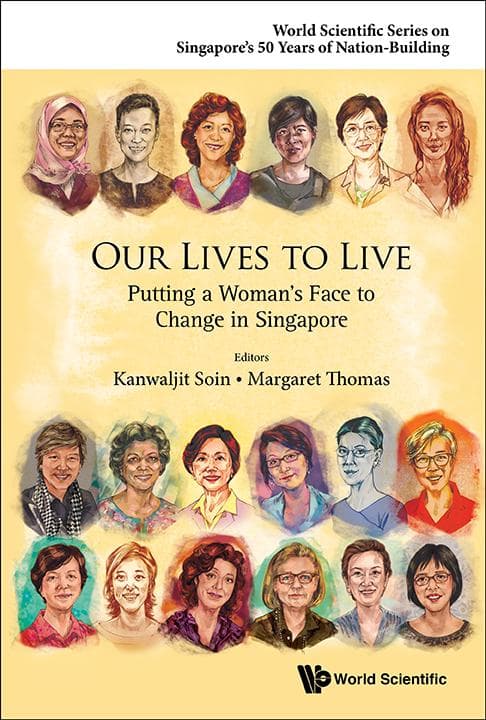
If I could actively choose, I tend to avoid books that are basically a collection of short essays. I prefer books that go deep and elaborate on a point of view. Yet, when I was doing the research for one of my podcasts that looked at women’s issues in Singapore, I was told that this book would provide a lot of the foundational research I needed. I was not disappointed – Our Lives to Live is a compendium of around 30 short essays written by illustrious and thoughtful women in Singapore to celebrate Singapore’s 50th anniversary some years ago. While slightly dated, a lot of the perspectives shared are powerful, especially for areas I have little to no exposure to, including competitive sports, literature and even Women of Faith.
The battle is between individuals and the larger forces of society, including popular culture, the consumer industry (the baby industry insisting still on blue for boys and pink for girls), teen culture norms of femininity and masculinity, religion, and underrepresentation of women on boards of companies and politics. An irony of the penetration of Western capital and talents into global cities (Singapore being one) is that many of the expatriate bearers of the “ideology” of gender equality act mainly out of political correctness rather than as true believers.
Aline Wong, Former Chmn HDB
The fight for gender equality is an ongoing one in Singapore, but it has been with its fair share of victories, including the progressive Women Charter in 1961, pre-independence. But we live in a time where the conversations around gender roles and norms are being hijacked by a meta-debate on “Western vs Asian” values. It could be argued that the implied debate between liberal and conservative values borrows terminology and logic from the West on both ends, but I agree with the sentiment that we need to go back to an articulation of why gender equality is important for us as Singaporeans, notwithstanding what’s happening in the rest of the world. How have we seen women treated in the generations before us, and as a society, why should we care about issues such as representation, wage parity and the reduction of domestic violence.
To the average Southeast Asian woman, the opportunities and decisions they have to make are not always so clearly defined or available. For most women across Asia (especially in rural parts of certain countries like Thailand and Indonesia), access to education (up to a tertiary level) is not a given and hence, neither is social mobility in other countries as “meritocratic” as that of the paths found in Singapore.
Chye Shu Wen
There are two concepts I took away from this book. The first is that victories in the gender front are not applied equally to all women. The second is that a central element in the progression of gender issues is in the provision of choice, in a manner that is not bounded by norms. On the first point, Singapore has been long known to be a bright spot in the region economically. We have had standards of living increase, including for women, while the rest of the country struggled with political turmoil. However, there is a grievous impact when women from neighboring countries come to Singapore and rather than be afforded the same level of choice and equality, they are treated to different standards, whether it’s by means of employment classification (i.e. foreign domestic workers) or by means of societal acceptance (e.g foreign spouses), amongst others. These inequalities will always plague the fight for equality and is perhaps the next frontier.
The term “choice” has played and continues to play an important role in feminist movements. It signifies women’s desires for control over their bodies, their families, their work and their lives. In the historical transition from what has been called the second-wave to third-wave feminist movements, it also signifies an important shift toward greater inclusivity – of women of all ethno-racial and class backgrounds and sexual orientations…. “Choice”, however is a problematic concept…Invoking “choice” often implies a strong view of individual autonomy and agency – a view that overlooks the importance of how these choices are shaped; what forces, institutions and actors shape them, and how individuals are strongly constrained in the types of action they can take and even imagine taking.
Teo You Yenn
The legal provision of choice is blunt if not accompanied by societal norms. One can have the ability to choose to be career-focused but if the family insists on procreation as the intrinsic purpose of the woman, the choice in substance diminishes. This is where Singapore also needs to move forward, and where ongoing efforts to develop an understanding of women’s issues in Singapore are important. In a society where cultural pressure and norms have a more than sizeable influence on how people live their lives and engage others, we need to have an environment that allows for advocacy and dialogue. We need to be able to create spaces for people to live their true lives.
There’s a lot more that I learned from this book but I thought to summarize the points I found most immediately relevant. I’m sure the book will speak to readers in different ways.
Here are my ratings:
Readability: 4/5
Intellectual Stimulation: 4/5
Perspective Shifting Capability: 4/5