rovik. reads: nothing to envy
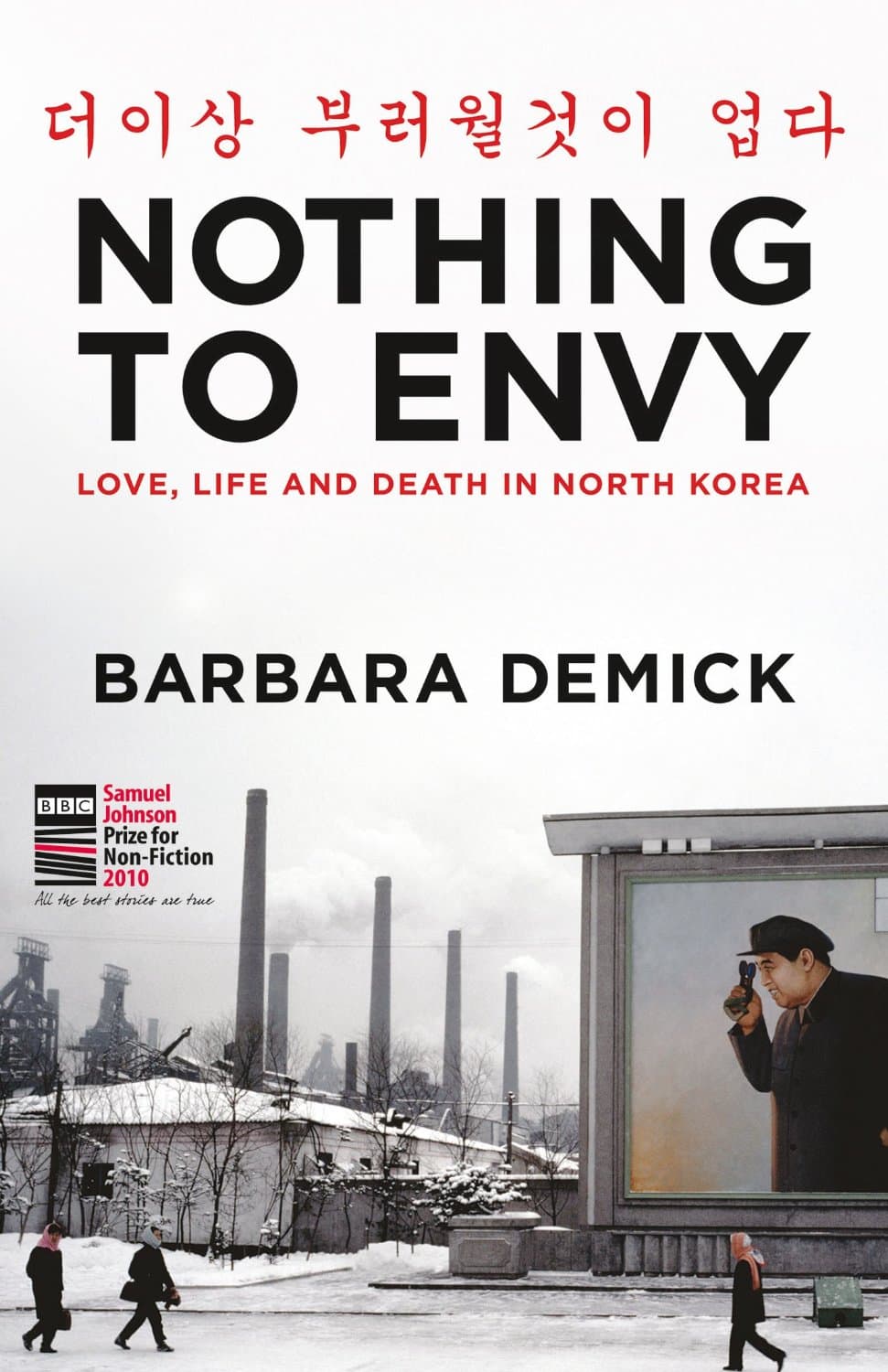
North Korea is a bit of a blackbox to me. From the news and media, I know there’s a dictatorial regime, lots of poverty, and a nuclear threat. It’s obvious now that these are very reductive descriptors for a country that has so many residents and draws from a rather rich history. Some of us tend to think of South Korea as the “main” Korea, sometimes even dropping the “South” from its already shortened name. So when the book club chose “Nothing to Envy” as a way to identify how people find connection in a place like North Korea, I was served a strong dose of perspective. Barbara Demick, a journalist, takes real stories and narratives of defectors and paints as real a picture as I’ve ever known on the country in the North. Spoiler alert: there are real people, having real struggles, with real hopes and dreams for a future.
“North Korea invites parody. We laugh at the excesses of the propaganda and the gullibility of the people. But consider that their indoctrination began in infancy, during the fourteen-hour days spent in factory day-care centers; that for the subsequent fifty years, every song, film, newspaper article, and billboard was designed to deify Kim Il-sung; that the country was hermetically sealed to keep out anything that might cast doubt on Kim Il-sung’s divinity. Who could possibly resist?”
Barbara Demick
I was surprised to learn that initially after the Korean War, it was actually North Korea that developed faster than South Korea. Drawing on the solidarity of its Communist peers in China and the Soviet Union, North Korea increased its manufacturing output and put in place the socialist infrastructure for its way of life. Coupled with the recent battering of the war, it’s not impossible to imagine that the citizens of North Korea would feel more connected to the narrative of the Kim regime, rather than any rumors of the reality outside. Loyalty to the party, the Supreme Leader and the social hierarchies in place were more meaningful than any connection to the global order.
“…the strength of the regime came from its ability to isolate its own citizens completely.”
Barbara Demick
Ironically, connection to party values and national propaganda reduce the ability for people to find connection among themselves. The Kim regime thrived on its ability to encourage citizens to spy and report on one another, in the spirit of showing affinity to the party and its values. Even within families, it was not uncommon for wives to report on husbands when they spoke loosely about the Party. This concept of loyalty to state actually overrides the ability for people to find connection and relationships between each other. This is a lesson not unique to North Korea, especially in a COVID-current time where monitoring and community reporting is coming back in fashion. Will our obligations to the state inhibit our obligations to each other as citizens?
“But now she couldn’t deny what was staring her plainly in the face: dogs in China ate better than doctors in North Korea.”
Barbara Demick
The book tackles a lot more topics beyond just connection and relationships. There are explorations of social inequality, even in a communist state, as well as deeper questions of humanity. The quote above, depicting the moment where a North Korean defector crossed the border into a Chinese farm and found a bowl of rice and meat on the floor, struck me the hardest. It reminded me of the immense privilege we have to live the way we do, and it also alerted me to the need to avoid numbness and desensitization to some of the atrocities happening in the world. It may be impossible to solve every problem but that’s not an excuse to do nothing at all. In some ways, this book helped me find some connection, however superficial, to the lives of those in North Korea, and that was meaningful to me.
Here are my ratings:
Readability: 5/5
Intellectual Stimulation: 3/5
Perspective Shifting Capability: 5/5
Would I Recommend? – If you know little about North Korea, yes!