rovik. reads: lee iacocca – an autobiography
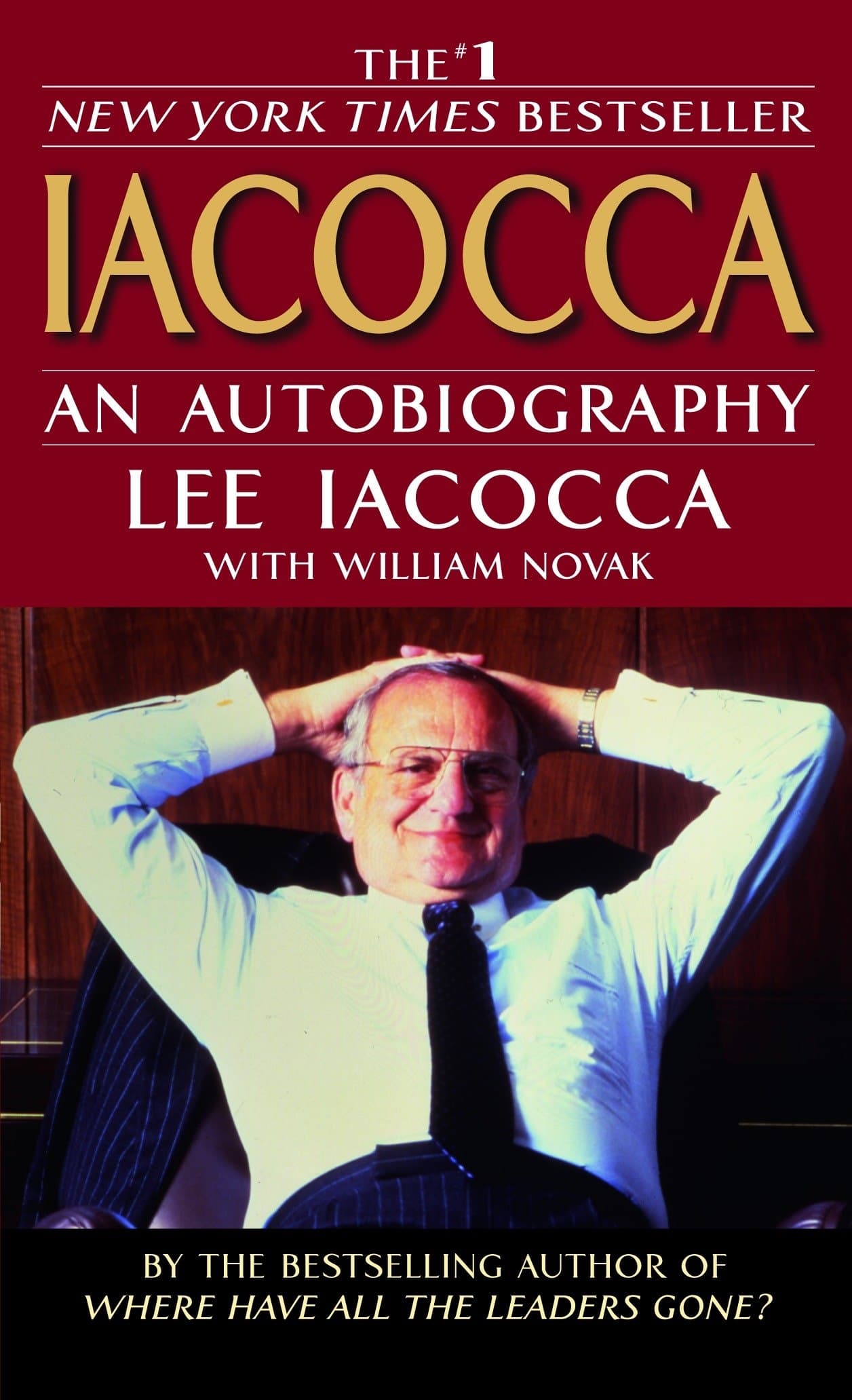
I have been trying to get through books in my library, and Lee Iacocca’s autobiography had been waiting a while. Famous between the 1960s and 1990s for leading the Ford and Chrysler brands, back when both were world-leading, Iacocca is both a man of his time as well as a man we can all learn from. His ability to speak straight to the desires of the everyday American made him a renowned figure in the public consciousness, and his resilience through adversity was inspiring. I am impressed I got through his autobiography so quickly – Iacocca definitely has a story worth hearing.
“No matter what you’ve done for yourself or for humanity, if you can’t look back on having given love and attention to your own family, what have you really accomplished?”
Lee Iacocca
Iacocca’s story starts with his parents, two Italian immigrants who start their family in the US. As he grows up, he learns the value of loyalty and family. I enjoyed the line where he mentions that he was never embarrassed about kissing his father on the cheek – he wore his heart on his sleeve. Perhaps this is the story of the typical American businessman: someone who loves his family and career, but who loves his family more.

“I’ve always felt that a manager has achieved a great deal when he’s able to motivate one other person. When it comes to making the place run, motivation is everything. You might be able to do the work of two people, but you can’t be two people. Instead, you have to inspire the next guy down the line and get him to inspire his people.”
Lee Iacocca
From his childhood, we quickly follow the key episodes of Iacocca’s career, from when he joined Ford as an engineer trainee all the way to when he become one of the US’ most famous business leaders. Throughout these episodes, we see how Iacocca dares to think differently about the work that he does. He sees that the beating heart of the automotive sector lies in the people behind it, whether they are the dealers, the engineers or even the “bean counters” that help keep the firm sharp. He looks to build relationships with all of them, and as he climbs the ranks, he inspires his reports to do the same to those working with them. All of this is told through Iacocca’s captivating stories. For example, he shares how he went to bat for a colleague that was accused by Henry Ford II, painted as an erratic tyrant of a Chairman, of being in the mafia. Despite the inability to convince by logic, Iacocca puts his neck out to negotiate an alternative arrangement, thereby saving his colleague from being jobless.
“It’s a good thing God doesn’t let you look a year or two into the future, or you might be sorely tempted to shoot yourself. But He’s a charitable Lord: He only lets you see one day at a time. When times get tough, there’s no choice except to take a deep breath, carry on, and do the best you can.”
Lee Iacocca

Of course, the real test of Iacocca’s leadership comes when he gets fired from Ford, for overshadowing Henry Ford II, and moves to the ailing Chrysler where he needs to take the company from wrecks to health. Here, I learn some US history including how inflation in the 80s caused massive damage to the economy, especially the automotive sector. It is a bit worrying because we are hearing whispers of a similar type of inflation emerging today. Iacocca keeps a steady head and firstly focuses on bringing the right people into the company to help shape the culture up. Iacocca’s gut would serve him well as he brings Chrysler to a profitable position, proving many naysayers wrong.
“Setbacks are a natural part of life, and you’ve got to be careful how you respond to them.”
Lee Iacocca
Again, the anecdotes really pull the story together as Iacocca shares insider perspectives on a number of key events in automotive history. I was inspired by Iacocca’s tenacity and desire to prove that his vision can come to fruition. As a leader, one must believe that with the right people and resources, dreams can become reality. Iacocca does this almost naturally.
Of course, Iacocca is not all sparkles. His honesty can sometimes be striking, especially when his story is read in the 2020s. He has a whole chapter called “Make America Great Again” which evokes jarring memories, purely because of the phrase association. Iacocca also has strong views about labour relations and free trade that are worth considering but ultimately myopic (in my opinion). These are all part of the package in an autobiography, I realise, which helps me connect with the human being behind the story.
All in all, Iacocca’s autobiography is an enjoyable read.
Here are my overall ratings:
Readability: 4/5
Intellectual Stimulation: 3/5
Perspective Shifting Capability: 3/5