rovik. reads: how we disappeared
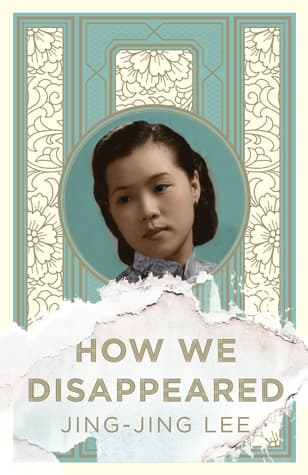
I’ve not been as enraged when reading a book before but How we Disappeared by Jing Jing Lee really lit a fuse. Perhaps it’s because I feel like there’s an amnesia within our nation of what happened only around 60 years ago, to people who are still alive today that we may actually know. How We Disappeared talks about some of the impacts of WW2 to Singaporeans through the historical fiction genre, including the tales of systemized rape (“comfort women” is an unfairly generous term), lost children and generational trauma. I’ve read such stories about other parts of the world but to read a story with such familiar settings hits too hard and makes me appreciate this powerful piece of Singapore literature.
All of it had begun with her waking to the world, the name she had been given. The fact of her upbringing. And then, after the horror during what was supposed to be her best years, how her mother’s words, the shame foisted on her by herself, her family and everyone around her, had dictated the silence that shadowed her every move after the war.
Jing-Jing Lee
How We Disappeared follows the story of Wang Di, an elderly woman who lived through the Japanese Occupation, where as a young girl she was forced into being raped by Japanese soldiers, and Kevin, a young boy who learns about his family’s past and his connection with Wang Di. The perspectives Lee convey are tragically realistic. Some of the non-Singaporean reviewers on Goodread lament that some of the chapters are unnecessary and do not add to the crux of the trauma of the Japanese Occupation but I’d disagree simply because as a Singaporean, I understand that Lee is trying to connect with the current day Singaporean, telling the story of the Occupation through the current reader’s lens. Our amnesia blocks us from relating with the WW2 stories unless we’re able to connect through concepts like inter-generational stories and filial piety.
“Sometimes all you had to do to get someone to talk was to be silent”
Jing-Jing Lee
The story that most people may remember from Lee’s book is that of the comfort women, but deeper to it is the story of how trauma has been internalized and forgotten at a societal level in Singapore. Of course, individuals who had families torn apart or their identities violently damaged as a result of the Occupation will remember vividly their pain, but even then, what outlets are there for them to speak and share their stories as a way to process them? In the success narrative of the Singapore story, perhaps we’ve moved too fast past with the identities of those who have been damaged by what’s happened in our country. This is what makes me angry – that there may be people hurting in Singapore that we have missed out.
I could be a ghost, I thought. One of those lingering souls that people just live with and skirt around, as long as it doesn’t do them any harm.
Jing-Jing Lee
“All that… Everything I just told you. Everything’s true. Her eyes were wide and she looked like she had just realized this herself, or remembered it, right at that moment, that it had happened to her – the things she told me, had been telling me over the past few weeks. And I understood just then that she was reliving each moment while she spoke, while we sat at the table across from each other in her flat. She would have to go to bed alone that night and her dreams would be her only company”
Jing-Jing Lee
As a piece of Singapore literature, How We Disappeared is exactly what I hope from a great read. It uses the Singapore context as a backdrop and influence to add unique perspective and voice while still delivering quality storytelling and emotional engagement. Personally, I’m motivated to read more about how our country is supporting the recovery and rehabilitation efforts of those who have been impacted by the Japanese Occupation. If you know of any, please let me know.
Here are my ratings:
Readability: 4/5
Intellectual Stimulation: 4/5
Perspective Shifting Capability: 5/5
Would I Recommend? – Definitely for every Singaporean