rovik. reads: how to change your mind
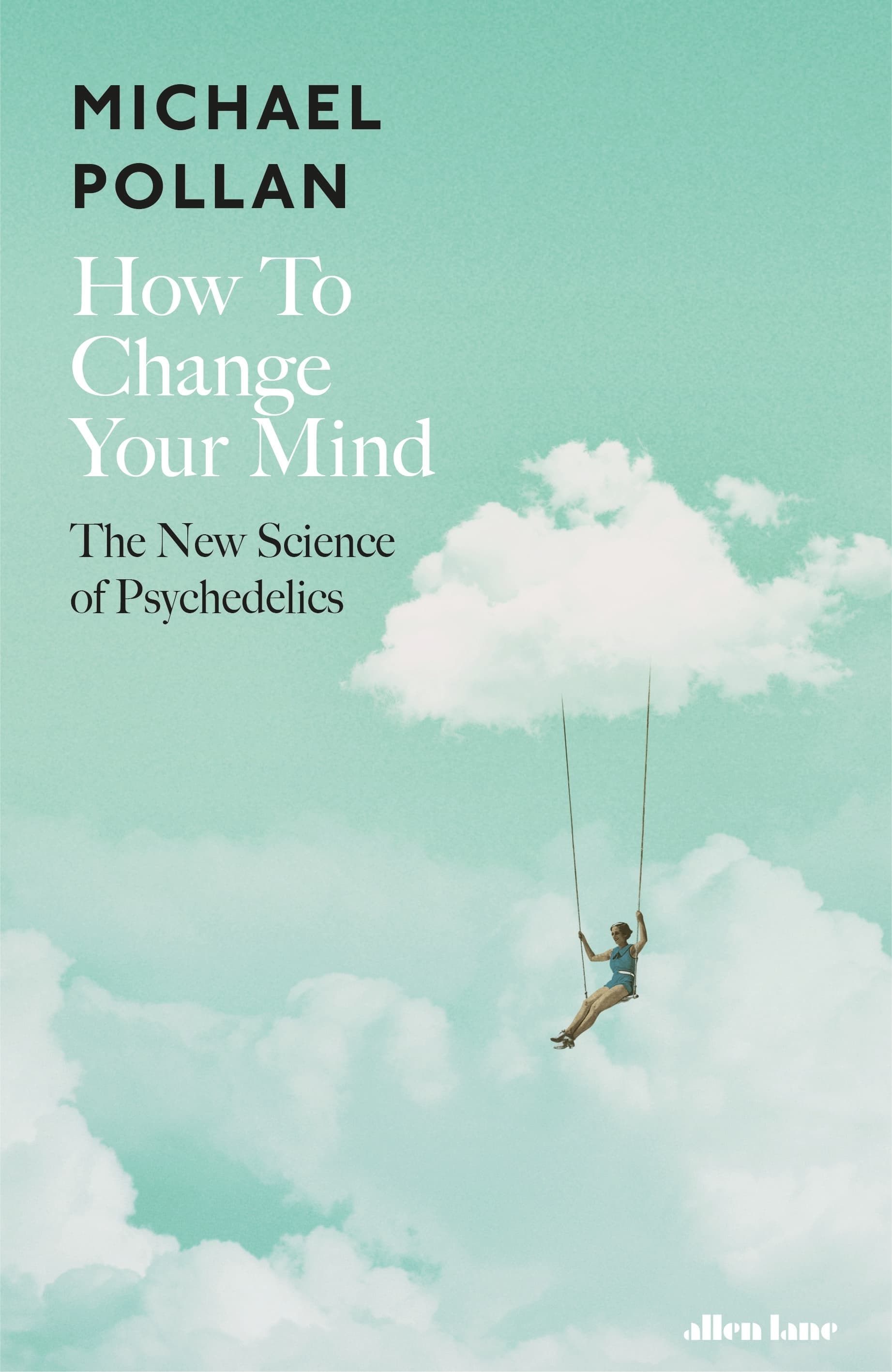
This is probably a controversial topic for many but some controversies are worth exploring. We’d like to think the hippie movement and the story of psychedelics is a distant past, and as someone born in the 90s I could definitely live as such. However, the FDA in the US is exploring a range of therapy methods using currently scheduled drugs such as MDMA and Psilocybin, prompting a newfound curiosity in the story of psychedelics and its probable place in our society. Michael Pollan tries to track this story, putting together an eloquent and intimate look at the developments in the past decade and presenting a challenge to the story we’ve been fed about our minds.
It’s worth providing some context to this conversation. My familiarity with psychedelics has mostly been in the form of bogeyman government warnings, conflating LSD with heroin and cocaine as a monolithic “evil” of society. Of course, as we mature, we recognize the place of legal drugs in our lives, the stuff that our doctors prescribe, and where we rarely question their potential for abuse despite the numerous side-effects they cause. At this point in my life where I’m questioning and critically re-evaluating most of the structure given to my life, a book such as this challenges whether the warnings around psychedelics have actually been warranted.
One good way to understand a complex system is to disturb it and see what happens
Adjacent to this point is the fact that despite the government regulations globally around psychedelics, shamanism and mysticism have always been present in societies in some form or another and most of them depend on some type of psychedelic or hallucinogenic therapy. The fact is that humanity has always craved an exploration of our consciousness and universe, and psychedelics have been unmatched in their ability to achieve a deep sensation in that regard.
Mysticism … is the antidote to fundamentalism
Science can bring you to the big bang, but it can’t take you beyond it. You need a different kind of apparatus to peer into that
How to Change your Mind does a lot of the groundwork for understanding the biological and historical narrative of psychedelics. These are important markers for making sure the conversation is grounded in facts rather than propaganda, especially since ironically for something that has such profound scientific value they have been stigmatized rather disappointingly. The key to psychedelic science is its ability to reduce the dependence on our egos and rigid frameworks, providing the key to seeing the world through a new lens.
LSD appears to disable such conventionalized shorthand modes of perception and, by doing so, restores a childlike immediacy, and sense of wonder, to our experience of reality, as if we were seeing everything for the first time
The story of Psilocybin, the active substance in mushrooms, and LSD is also told through the histories of Timothy Leary, Albert Hoffman, Ram Dass and other notable figures in the American 70s. The unfortunate past of how a scientific movement, that implicated itself so deeply in a cultural movement, fell apart because of the mistakes and missteps of its champions is revealed and distances the science of it all from the historical narrative. What has resulted, however, is the rise of a generation of leaders in government in Western Liberal states that have had experiences with psychedelics and are much more open-minded in seeing its use for actual therapeutic purposes.
Since the revival of sanctioned psychadelic research beginning in the 1990s, nearly a thousand volunteers have been dosed, and not a single serious adverse event has been reported.
Pollan describes his own personal use of psychedelics, talking about mushrooms, LSD and a bonus, the toad. He describes the practice and how to achieve maximum utility from one such experience.
Something important and special about psychadelics: the critical influence of “set” and “setting”. Set is the mind-set or expectation one brings to the experience and setting is the environment in which it takes place. Compared with other drugs, psychedelics seldom affect people the same way twice, because they tend to magnify whatever’s already going on both inside and outside one’s head.
Most of us would probably question why we should allow the legal use of psychedelics at all. So what if they provide a transcendental experience? Pollan provides two reasons. The first is the spiritual reason, analyzing how a psychedelic experience is a useful rite of passage at critical junctures in one’s life (such as one’s mid-life crisis) where our attachments to ego and routines prevent us from recognizing pains and opportunities in our lives.
The efficiencies of the adult mind, useful as they are, blind us to the present moment. We’re constantly jumping ahead to the next thing. We approach experience much as an artifical intelligence program does, with our brains continually translating the data of the present into the terms of the past, reaching back in time for the relevant experience, and then using that to make its best guess as to how to predict and navigate its future.
It uses science, which modernity trusts, to undermine modernity’s secularism. In doing so, it offers hope of nothing less than a re-sacralization of the natural and social world, a spiritual revival that is our best degense against not only soullessness, but against religious fanaticism. And it does so in the very teeth of the unscientific prejudices built into our current drug laws
The second, and more important in my opinion, is the clinical reason. Psychedelics have shown strong promise in being used for therapy for cancer patients and addicts and is increasingly being tested for its ability to solve depression issues. These are the prevalent problems of our generation, the inability to grapple with reality and the forces of society and psychedelics exist in a small class of treatments that actually provide a truly transformative experience in the mind. Of course, there are institutional issues worth considering, such as how the business model works and if it could potentially discriminate against minorities, but these are issues that clinicians and academics are beginning to embark on in the West.
Existential distress at the end of life bears many of the hallmarks of hyperactive default network, including obsessive self-reflection and an inability to jump the deepending grooves of negative thinking. The ego, faced with the prospect of its own exteinction, turns inward and becomes hypervigilant, withdrawing its investment in the world and other people
I actually really enjoyed this book. Michael Pollan is a great storyteller and he does a masterful job of correcting a historical narrative that has unfortunately been plagued with the modern political influence that is symptomatic of the era. There are further questions to ask of course. Even if available, how controlled should such drugs be such that they are appropriately administered? Can countries such as Singapore ever be pragmatic enough in exploring the use of psychedelics in a country facing increasing mental health issues without the socio-cultural movement backing it? How can we complement or substitute such ego-reducing experiences?
This opened up a whole new field of inquiry for me and one that I am personally interested to continue exploring intellectually. The language and structure of the book have compelled me that there’s an understanding composed within this perspective of our existence that is worth the pursuit.
Here are my ratings for the book:
Readability: 4/5
Intellectual Stimulation: 5/5
Perspective Shifting Capability: 5/5
Would I Recommend? – High recommendations