rovik. reads: first they killed my father
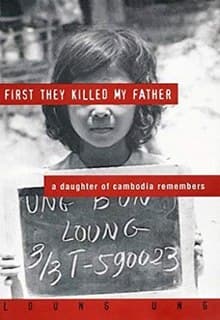
The Book Club found itself in a new theme of War and we chose to start off with a lesser known saga – the Cambodian Genocide. First they Killed my Father (FTKMF) is a tragically emotive book on the coming of age of Loung against the backdrop of Pol Pot’s regime. The book’s title spares no punches, sensitizing us to the reality that many will die by the end of the book and that our goal should not be to minimize the sadness but to instead find a way to grapple with it all.
Loung lives in Phnom Penh, the Cambodian capital, with her family. The Cambodia-Vietnam war is raging nearby but as far as Loung is concerned, she’s simply a 5 year old girl enjoying the pleasantries of life. All of that is snatched from her when the Kampuchea roll into the city, claiming victory over the Vietnamese forces and pushing all the locals into the countryside under the guise of protection from anticipated bombings. Of course, this is part of Pol Pot’s vision of building an self-sufficient agrarian society that does not depend on external support and that can move towards a warped concept of communism.
“When I ask Kim what a capitalist is, he tells me it is someone who is from the city. He says the Khmer Rouge government views science, technology, and anything mechanical as evil and therefore must be destroyed. The Angkar says the ownership of cars and electronics such as watches, clocks, and televisions created a deep class division between the rich and the poor. This allowed the urban rich to flaunt their wealth while the rural poor struggled to feed and clothe their families. These devices have been imported from foreign countries and thus are contaminated. Imports are defined as evil because they allowed foreign countries a way to invade Cambodia, not just physically but also culturally. So now these goods are abolished. Only trucks are allowed to operate, to relocate people and carry weapons to silence any voices of dissent against the Angkar. “
We chose to read this book as an opportunity to learn about the possible effects of war, on the individual, on the family and on the nation as a whole. Though taking a personal narrative style, Loung communicates all of this as honestly as she can, viewing herself back as a young child while having the maturity of an adult writer. She conveys her regrets at not being a better contributor, her trauma of almost getting raped, and even her increasing numbing to the hostilities of the regime.
“This is what the war has done to me. Now I want to destroy because of it. There is such hate and rage inside me now. The Angkar has taught me to hate so deeply that I now know I have the power to destroy and kill.”
There is a lot to unpack within the book as Loung shares her journey from the beginning of the regime change all the way to her escape to the Vietnamese end. She is betrayed by her uncle’s family, put to work in an agricultural commune, privy to her dad’s execution, forced to run away and made into a child soldier. So much happens that she dissociates herself from her old self, finding ways to justify the horror and pain.
“I think how the world is still somehow beautiful even when I feel no joy at being alive within it. ”
When people think of war, genocides like what happen in Cambodia oft get overlooked. Yet, this series of events are not only real but also recent. The Cambodia of today still has many remnants of the Kampuchea and there is a whole generation that’s simply gone. I cannot even begin to fathom the healing needed at each level. When I visited Cambodia a couple of years ago, I recall only being familiar with Angkor Wat and some of the other attractions in Phnom Penh. Had I known that only 40 years ago, blood was shed on these streets, I may have taken a more somber approach. War and Genocide, while justified in the political minds of leaders, cannot ever be justified when measured against the lives lost and families destroyed as a result.
Here are my ratings:
Readability: 5/5
Intellectual Stimulation: 4/5
Perspective Shifting Capability: 5/5
Would I Recommend? – Yes, for sure, but be prepared for the tragedy