rovik. reads: blackout
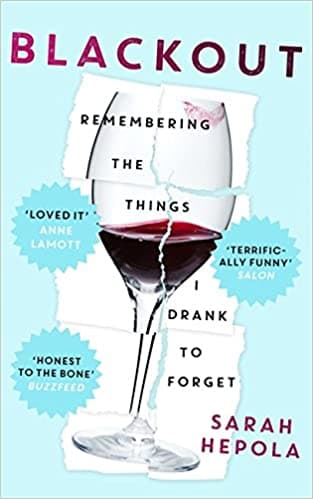
What does reconciliation with one’s self look like? That was the curiosity that led me to pick Sarah Hepola’s Blackout for our next book. Sitting neatly in the category of addiction memoirs, the book tells the story of Sarah’s journey to sobriety but not before airing all her honest retellings (as far as she could remember) on her blackouts as a younger woman. There’s a lot of themes in the book, including the environmental factors that encourage drinking, society’s expectations of women and how platforms like the AA are run , but we focus on the healing process and what was necessary for Sarah to finally stay sober.
“Be kind to drunk people, for every one of them is fighting an enormous battle.”
Sarah Hepola
Here’s also where I make a bit of a confession – I chose Blackout also because I was hoping to find some way to explain my youth, where drinking was a big part of my identity. Sarah successfully puts words to feelings and memories I experience but cannot articulate. Most of the time (but not all the time), those of us who drink excessively to the point of drunkenness aren’t doing so because we enjoy the alcohol but because we want to numb the discomfort of our reality. There could be all sorts of things happening, whether it’s trauma, transitions or hurt, but very few people intentionally want to fall down stairs or vomit their guts out.
“That is true strength. To want what you have, and not what someone else is holding.”
Sarah Hepola
“Own your own feelings, skepticism, irrational rage. Stop pretending to be someone you aren’t, because otherwise you have to go into hiding whenever you can’t keep up the act.
Sarah Hepola
In her memoir, Sarah “quits” drinking many times, once even up to a whole year. Her final commitment to sobriety comes when she takes the journey to self-acceptance. Often times when we drink, we do so because we cannot accept who we are. We aspire to be the someone else – a glamorous socialite, the center of attention, the object of admiration. We cannot stand failure because we’ve been conditioned to hate feeling low, but life draws value from both discomfort and comfort. Reconciliation with self starts with acceptance of self, and acceptance that discomfort is part of the experience.
“God was for weak people who couldn’t handle their own lives, and it took me a long time to understand that, actually, I was a weak person who couldn’t handle my own life, and I could probably use all the help I could get.”
Sarah Hepola
There is a consistent mention of the role of support systems and community as well in the road to healing. Sarah’s friends hold her accountable and give her honest feedback that the road she’s on is dangerous and not welcome. She goes to AA meetings which give her the space to take the journey to healing. Her parents hold a non-judgmental posture for the most part, focusing on how they can hold space for her to recover. The fact is that Sarah is immensely privileged to have the resources that she has, together with the fact that she keeps her job despite her many drunk escapades. But community “calls her in” rather than “calls her out”. It held her accountable while giving her space to heal and re-integrate. Of course, one of the places she found the most help was in her spirituality with God, where she was also able to accept that we are not meant to be able to handle our own lives. We are broken and imperfect, all of us, and an identity in God gives us comfort that someone else can hold us together.
All in all, Blackout was a very readable and entertaining book. Sarah Hepola is a captivating writer with a strong personal voice and she was able to help me with understanding some of my own pains with identity that I’m working through. If you wanted a good read to process your own alcohol issues, I’d definitely recommend this book:
Here are my ratings:
Readability: 5/5
Intellectual Stimulation: 4/5
Perspective Shifting Capability: 4/5