rovik. reads: beyond religion
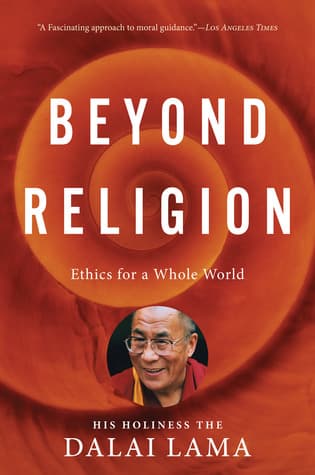
When the book club chose the topic of spirituality, there were a number of questions we were keen to explore. Some of them were “How does spirituality look like in the modern era?” and “Can there be morality in the absence of spirituality and religiosity?”. Presupposing these questions was an understanding that major religions no longer have as strong as an influence on our values and that “individual spirituality” was taking over. The Dalai Lama’s “Beyond Religion” therefore provided a useful perspective on whether there can be common space created between religions, or in his case, beyond religion.
“For a considerable portion of humanity today, it is possible and indeed likely that one’s neighbor, one’s colleague, or one’s employer will have a different mother tongue, eat different food, and follow a different religion than oneself. It is a matter of great urgency, therefore, that we find ways to cooperate with one another in a spirit of mutual acceptance and respect.
In such a world, I feel, it is vital for us to find genuinely sustainable and universal approach to ethics, inner values, and personal integrity-an approach that can transcend religious, cultural, and racial differences and appeal to people at a sustainable, universal approach is what I call the project of secular ethics.”
Dalai Lama
The concept of secular ethics was an interesting one to ponder, especially coming from a religious leader. As much as the Dalai Lama caveated that he took a neutral view on the topic, it is difficult to detach his role from his writings. Was it because he was intending to be the “last Dalai Lama” that he had to leave his teachings in a secular way? Or was it because he wanted more people to get familiar with the idea of meditative practice, as a way of propagating Buddhism?
We can only interpret, but nonetheless, the question underpinned real concerns around the future of our legal and moral systems if there wasn’t an authoritative or universal view of what was right and wrong. How do we come together if we practice our spiritualities differently?
“We all appreciate in others the inner qualities of kindness, patience, tolerance, forgiveness, and generosity, and in the same way we are all averse to displays of greed, malice, hatred, and bigotry.
The first beneficiaries of such a strengthening our inner values will, no doubt, be ourselves. Our inner lives are something we ignore at our own peril, and many of the greatest problems we face in today’s world are the result of such neglect.”
Dalai Lama
The Dalai Lama tries to triangulate some common motivations and afflictive issues that we face in our humanity. Some are obvious such as our recognition of our shared humanity and interdependence, and others are only familiar because of previous exposures I’ve had (e.g. learning about cycles of experiences and how our thoughts and emotions influence our behaviors). He makes a case for ethics and spirituality, arguing that both our inner lives as well as the lives of others benefit from having a spiritual living.
“It is clear that something is seriously lacking in the way we humans are going about things. But what is it that we lack? The fundamental problem, I believe, is that at every level we are giving too much attention to the external, material aspects of life while neglecting moral ethics and inner values. By inner values, I mean the qualities that we all appreciate in others, and toward which we all have a natural instinct, bequeathed by our biological nature as animals that survive and thrive only in an environment of concern, affection, and warm-heartedness-or in a single word, compassion. The essence of compassion is a desire to alleviate the suffering of others and to promote their well-being. This is the spiritual principle from which all other positive inner value emerge.”
Dalai Lama
The big takeaway for me was that secular ethics, in the Dalai Lama’s terms, is driven by compassion, tempered with discretion. Compassion involved a sense of affection and concern towards others, while discretion required a sense of consideration and wisdom in how compassion is effected. If this was the common denominator for values between the various religions as well as those who were explicitly areligious, it wasn’t a very inspiring set of guidelines.
Perhaps the power is in its simplicity, but I’ve also recognised that my need for spirituality extends beyond just an instruction on what is right or wrong. Rather, spirituality to me helps me understand my place in the world and how we can navigate life in this universe. It is a way of being that embraces the mystery, beauty and adventure of life. In this regard, secular ethics falls short of exploring why we exist. But it doesn’t do a bad job of getting us started on a good track.
Here are my ratings:
Readability: 5/5
Intellectual Stimulation: 2/5
Perspective Shifting Capability: 3/5