rovik. reads: being mortal
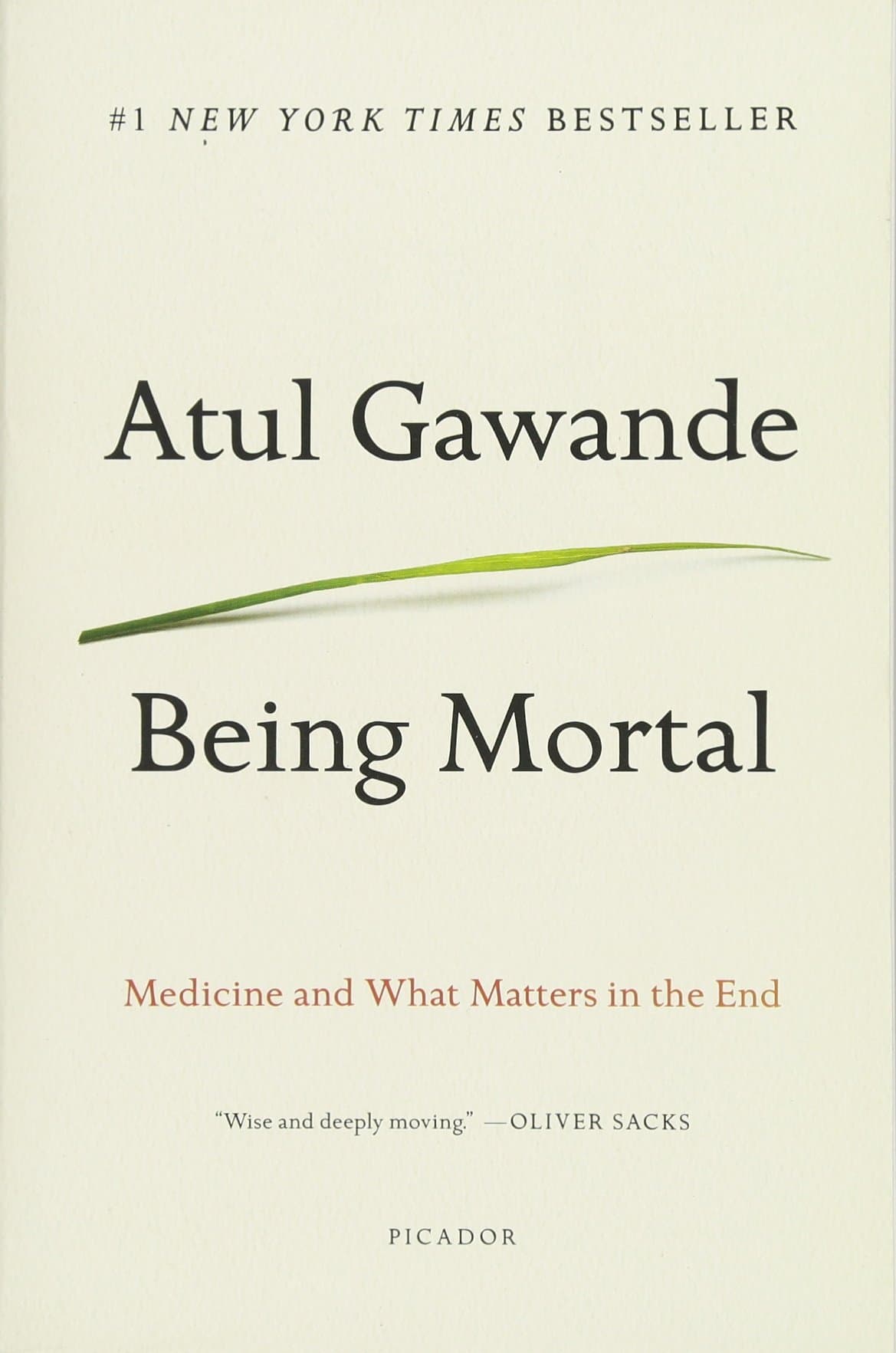
Thinking about what lies at the end of the journey is not something everyone likes to spend time on. We’re busy focusing on the now. Covering the cost of rent, choosing the next big festival to attend, or even trying to organize that annual family reunion – these are the kinds of activities that occupy our attention in the near to medium term. Yet, when it comes to the inevitable end, we are not prepared to think about what it meant to have lived, and especially what it means that we are about to die. Being Mortal embodies that challenge to the narrative that mortality is the devil, and shows how we can see our lives in richness, even as we age.
“In the end, people don’t view their life as merely the average of all its moments—which, after all, is mostly nothing much plus some sleep. For human beings, life is meaningful because it is a story. A story has a sense of a whole, and its arc is determined by the significant moments, the ones where something happens. Measurements of people’s minute-by-minute levels of pleasure and pain miss this fundamental aspect of human existence. A seemingly happy life maybe empty. A seemingly difficult life may be devoted to a great cause. We have purposes larger than ourselves.”
Gawande starts the book by questioning the very value of life. What have we actually gained by living for so long – is it the hours experienced or the muscles gained? These are but means to a profound life where we have the mental and emotional capacity to experience our universe on relative terms. Yet, when we go to a hospital for our medical needs, the focus is on exactly the opposite. It is on extending our lives and restoring us to our normal state once again. This makes a lot of sense when we are young and able, but it should certainly strike itself as odd when we are old and ageing. Why are we so eager to extend our physical lives if it does not afford us the ability to live profoundly?
“Being mortal is about the struggle to cope with the constraints of our biology, with the limits set by genes and cells and flesh and bone. Medical science has given us remarkable power to push against these limits, and the potential value of this power was a central reason I became a doctor. But again and again, I have seen the damage we in medicine do when we fail to acknowledge that such power is finite and always will be. We’ve been wrong about what our job is in medicine. We think our job is to ensure health and survival. But really it is larger than that. It is to enable well-being. And well-being is about the reasons one wishes to be alive. Those reasons matter not just at the end of life, or when debility comes, but all along the way. Whenever serious sickness or injury strikes and your body or mind breaks down, the vital questions are the same: What is your understanding of the situation and its potential outcomes? What are your fears and what are your hopes? What are the trade-offs you are willing to make and not willing to make? And what is the course of action that best serves this understanding?”
The book is a manifesto on overturning the state of care for the aged and elderly. Rather than view aging as a disease that needs to be treated, Gawande advocates for holistic care that helps people recognize their golden years and to age with pride. Palliative care in this domain is not just a physical domain, but also a sociological and psychological one, where those on their final laps are given agency to decide how they want to live their final years and to do so without pain and suffering. Hospice care also focuses on providing the environment to encounter death in a meaningful way, from encouraging families to cherish time well spent all the way to making funeral arrangements while still lucid. Aging and death are inevitable, but that doesn’t mean it has to surprise or dominate one’s life.
“We’ve been wrong about what our job is in medicine. We think our job is to ensure health and survival. But really it is larger than that. It is to enable well-being.”
I recall reading Breathing Air slightly more than a year ago and seeing my view on life drastically shift. I would add Gawande’s Being Mortal to that category. Gawande is a compelling writer, with much personal and professional experience to lend to credibility. He has taken a view of the world that was painfully wrong and found a space for opportunity and reform. His chapters are hopeful and encouraging, and I feel like I know better about how I want me and my family to age. It is difficult to talk about such topics but Gawande provides a easy dip into the pool of mortality conversations. I’ve definitely been blessed by this book and would give it my strong recommendation.
Here are my ratings:
Readability: 5/5
Intellectual Stimulation: 5/5
Perspective Shifting Capability: 5/5
Would I Recommend? – Absolutely!