rovik. reads: anger and forgiveness
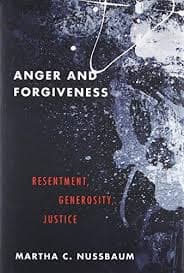
Ethics pervades a lot of domains but when it comes to anger, we tend to follow reductive norms. Anger, to most people, is emotionally justified, especially if the wrong is demeaning and insulting. With masculine culture under review and increased prominence of political anger and protests, I was curious about how we think about forgiveness and anger, especially in relation to themes of accountability, oppression, and guilt. Thankfully, Martha Nussbaum had done a lot of the mental work, exploring the philosophy of anger and applying the principles of Mandela, Gandhi and King Jr. to develop a new view of how we should approach the depths of anger.
Nussbaum tackles the topic in a systematic way. Her first chapters are an exploration of the perspectives around anger, starting with the metaphor of the Athenian Furies and then proceeding through the thoughts Aristotle, Richard Lazarus, Joseph Butler, and many others to find her own voice. Nussbaum highlights the key logical and moral errors of our justification of base-anger, the anger we are oft used to seeing as the spark that incites violence and protest. She states that in our attempt to achieve payback, we fail to understand that no material loss is revived and that in our attempt to reclaim status, we indulge in narcissistic endeavors which is morally lacking. Instead, Nussbaum features a new form of anger called “Transitional-Anger”, which is anger that recognizes a wrong but focuses on preventing future wrongs of the same manner and is pointed to the future rather than the past. Such anger is the only productive form of anger in Nussbaum’s opinion.
Nussbaum’s exploration of forgiveness takes on a similar critique. In her analysis, she notes that most forms of forgiveness originate from a Judeo-Christian practice and is in practice, transactional. Forgiveness today requires some form of confession or act from the accused in order to receive relief. Nussbaum advocates for unconditional love, a love that drowns out anger and reduces the need for the victim to ascend some form of moral superiority in order to forgive the accused.
“Mohandas Gandhi, utterly repudiating anger, and apparently successful in not feeling it, showed the world that non-anger was a posture not of weakness and servility but of strength and dignity,”
The rest of the book explores the application of these principles in the different domains of life, from family to the “middle realm” (work, public etc.) to our politics. Nussbaum susses out how the application would look like in these domains, especially since we tend to operate with different levels of vulnerability and involvement at each stage. It was interesting to see Nussbaum advocate for even the oppressed to practice a form of anger that is beyond just seeking payback and status and that is more akin to the likes of Gandhi – at odds with a lot of the current forms of protest.
I liked Nussbaum’s work a lot. She does the legwork for a lot of the ethical exploration I am curious about and does so in a very readable manner. There are some high-brow references to different scholars but it is impressive how accessible her writing is.
My main critiques lie in two areas. Firstly, Nussbaum is selective in her discernment of how “role models” such as Mandela and King Jr. evoked anger, citing them as moving towards a productive use of anger. Yet, it is well known that King Jr. grew angrier as his campaigns progressed and he was visibly more evocative over time. One could argue that the civil rights movement was a means to revive status of a whole community and anger, however base, was a necessary feature of that movement. Perhaps it is Nussbaum’s desire to use such role models and project her views onto them that forced this incongruency, but I can still appreciate the ethical prerogative of focussing on Transition-Anger.
The second critique is in the consequential adoption of Transition-Anger. Transition-Anger requires high emotional maturity and contextual sensitivity. It is not an easy mindset to operate in and Nussbaum’s lengthy book on it is a good example of the kind of philosophical exploration necessary to be convinced of its benefits. Yet, we operate in a much bigger world where people have different capacities and sensitivities and I’m not sure if Nussbaum’s prescription can be adopted by the masses. Our book club agreed that perhaps it’s on us to think about how we want to apply this new perspective and find ways to translate that to examples our peers can follow but I realize that that is a tedious process.
I am very glad we chose this book. While it’s not as controversial as some of the other books I’m used to, I found my perspective shifting slowly but surely as Nussbaum explores the various domains of anger and forgiveness. In that regard, Nussbaum is a skillful thinker and writer and someone worth following.
Here are my ratings:
Readability: 4/5
Intellectual Stimulation: 4/5
Perspective Shifting Capability: 5/5
Would I Recommend? – Yes!