rovik. reads: a human being died that night
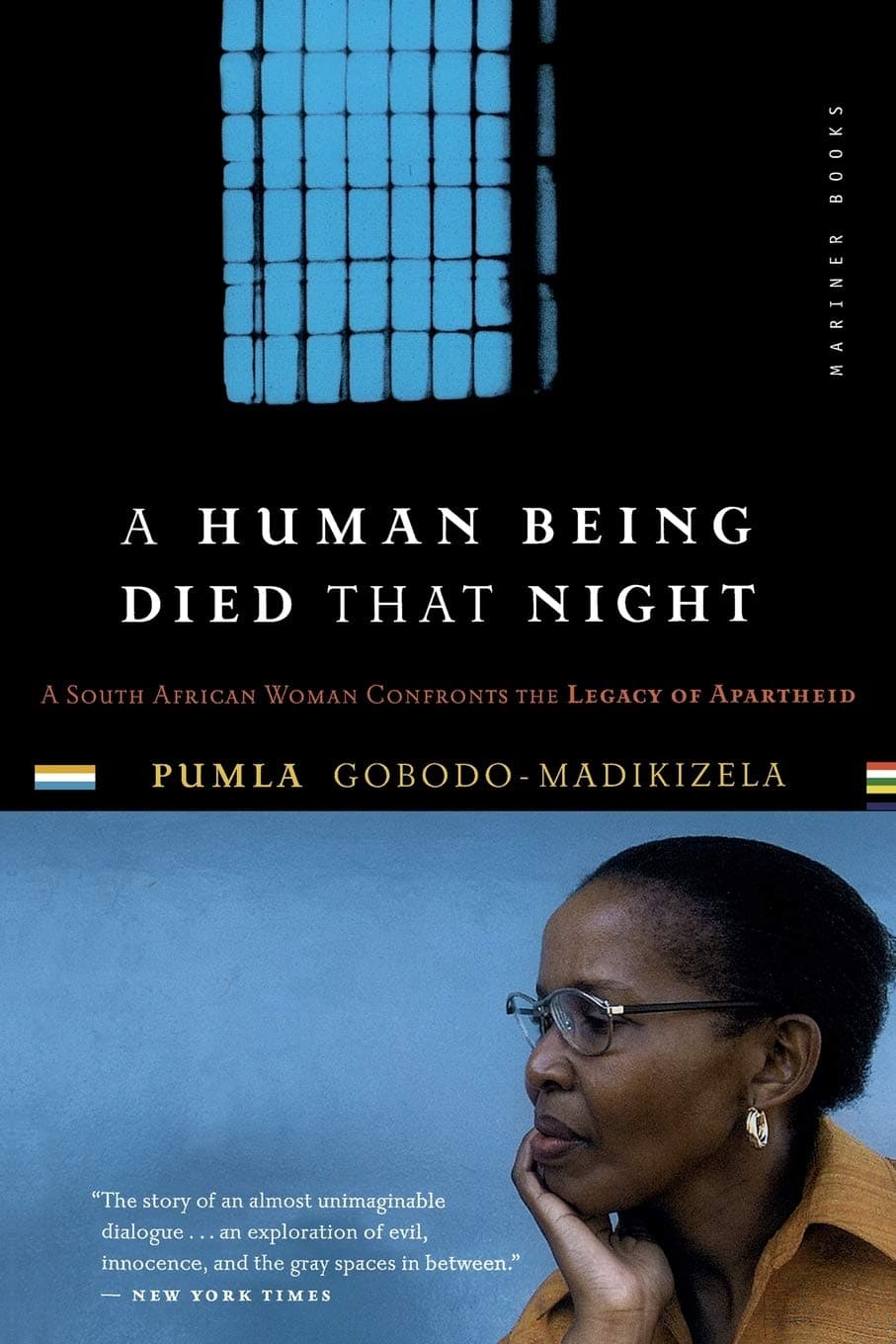
Rounding up the topic of Reconciliation for the book club, we were introduced to Pumla Gobodo-Madikizela’s A Human Being Died that Night, a literary accompaniment to some of the scholarship she had already done on the role of Truth and Reconciliation Committees (TRCs) in healing societies. She draws on a series of interviews she had with Edward De Kock, known as Prime Evil in Apartheid South Africa, who over time indicates remorse and forces Pumla to explore the possibility and implications of forgiving someone who killed many.
South Africans face the challenge of how to embrace the past without being swallowed by the tide of vengeful thinking. The Truth and Reconciliation Commission was a strategy not only for breaking the cycle of politically motivated violence but also for teaching important lessons about how the human spirit can prevail even as victims remember the cruelty visited upon them in the past. If memory is kept alive in order to cultivate old hatreds and resentments, it is likely to culminate in vengeance, and in a repetition of violence. But if memory is kept alive in order to transcend hateful emotions, then remembering can be healing.
There are many people who find it hard to embrace the idea of forgiveness. And it is easy to see why. In order to maintain some sort of moral compass, to hold on to some sort of clear distinction between what is depraved but conceivable and what is simply off the scale of human acceptability, we feel an inward emotional and mental pressure not to forgive, since forgiveness can signal acceptability, and acceptability signals some amount, however small, of condoning. There is a desire to draw a line and say, “Where you have been, I cannot follow you. Your actions can never be regarded as part of what it means to be human.” Yet not to forgive means closing the door to the possibility of transformation
Pumla Gobodo-Madikizela
Sometimes I get depressed thinking about all the atrocities humanity has had to endure, and to be honest, continues to endure. It’s a reminder of the brokenness in our world and the dearth of morality that can be achieved. Yet, I’m also curious and intrigued in how societies move forward. How do include language and processes in our environments for victims to not just get justice but also healing to move forward in strength? How do we create pathways for perpetrators, who have committed vile acts, to recognize their humanity and develop remorse as a consequence of finally being aware of the weight they have to carry? TRCs focus on “truth-telling”, a form of providing testimony that engages all members of the community and allows us to move forward in a space of accountability. Often used in communities that have endured unconscionable acts, TRCs suggest a different form of justice.
“A genuine apology focuses on the feelings of the other rather than on how the one who is apologizing is going to benefit in the end. It seeks to acknowledge full responsibility for an act, and does not use self-serving language to justify the behavior of the person asking forgiveness. A sincere apology does not seek to erase what was done. No amount of words can undo past wrongs. Nothing can ever reverse injustices committed against others. But an apology pronounced in the context of horrible acts has the potential for transformation. It clears or ‘settles’ the air in order to begin reconstructing the broken connections between two human beings.”
Pumla Gobodo-Madikizela
Pumla does a great job exploring some of the nuances in this space – on whether perpetrators who are “truly evil” can ever walk back the line, and even then, whether the act is merely performative or indeed genuine. I enjoyed this quote on what a good apology sounds and feels like – it is focused on the target of the apology rather than one’s self. An apology does not chart a future, but it ensures the present is coherent.
“Forgiveness does not overlook the deed. It rises above it.”
Pumla Gobodo-Madikizela
Of course, the question is then whether groups, communities and societies should accept the apologies given by perpetrators, assuming that they come from a place of authentic remorse. Pumla suggests that forgiveness does less for the perpetrator than it does for the victim – in a lot of ways, the victim re-assumes dignity and a balance of power in the act of receiving the apology, and in forgiving, demonstrates that they are above the misdeed. This, of course, is not easy and is extremely difficult in times of great pain, but these are important journeys for victims to craft new identities in a place of strength rather than a place of languish.
There are some amazing stories in this book – Pumla takes chapters of the Apartheid and describes them with texture and emotion, layering her perspectives on healing and reconciliation. I learned a lot about the pain experienced in the South African community and the struggle they face moving forward as a united country. I’d strongly recommend this book.
Here are my ratings:
Readability: 5/5
Intellectual Stimulation: 4/5
Perspective Shifting Capability: 4/5