rovik. at the theatre: tartuffe the imposter
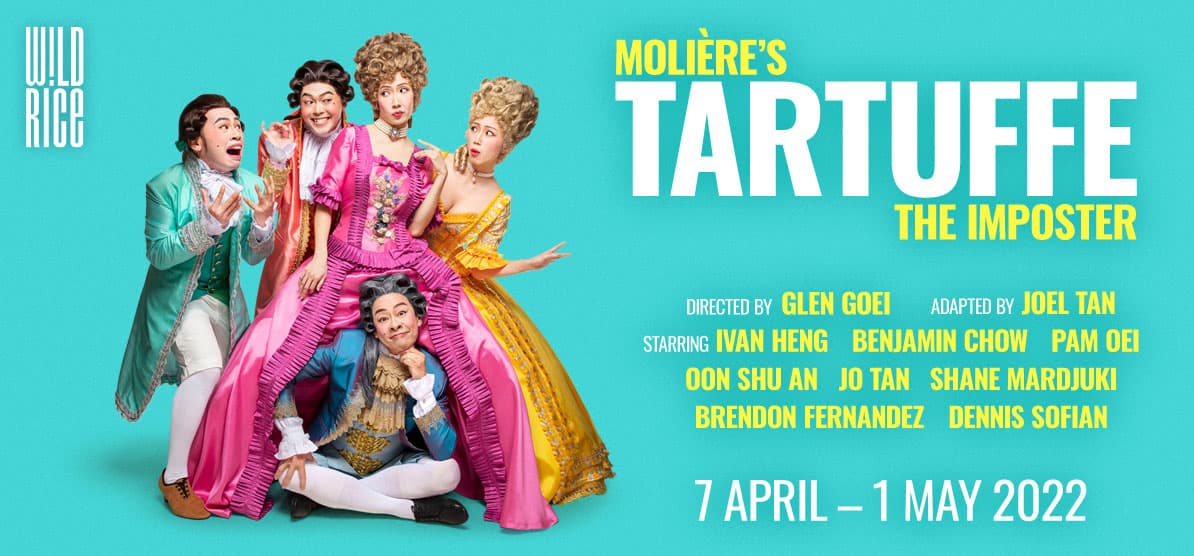
I haven’t been to the theatre in a long time, but with announcements of eased restrictions, I was keen to visit the stage again. Having already decided to make a small contribution to Wild Rice to support the theatre company in their recovery from COVID-19 related pressures, I was pleased to enjoy some of the discounts I got on choice seats. Tartuffe struck me as a colourful performance, with the comical over-embellished setting of aristocratic France where religious piety and individual liberties come at odds. Adapting Molière’s iconic play, the Wild Rice version touches on themes many Singaporeans will find familiar.
The show is simple in its premise: Tartuffe, a con-man, is invited into Orgon’s household after striking the aristocrat with his religious sanctimony. After all, for a man who has material wealth, virtue and moral superiority present themselves as new prizes to seek. However, Tartuffe begins to influence Orgon to establish rules in the household that run afoul of the wishes of the rest of the family, which include Elmire (his strong-willed but sacrificial wife), Mariane (his “dangerously independent'”daughter) and Damis (his homosexual son who is smitten in love). As tensions erupt into conflict, and Tartuffe’s true character reveals itself, the audience is flighted into an all too familiar battleground where moral codes are presented as both necessary guardrails and invisible prisons for those in our society.
There is a Singaporean flavour to Wild Rice’s adaptation of Tartuffe. Characters sometimes break into voice patterns (intentionally or not) that remind audiences that we are ultimately watching a performance, alongside providing some comic relief. There are also throwaway pop culture references that I found to be cheap laughs during intense scenes.
Perhaps the most significant adaptation was Wild Rice’s overt focus on the role of moral policing in the space of homosexuality – a theme not significant in Molière’s original script but relevant for contemporary Singaporean audiences. Tartuffe, a man who dares to fornicate with Orgon’s wife, wields a double standard on forgiveness and redemption when it comes to Damis, who is caught with his boyfriend. When he is later proved to be an imposter, in his attempt to protect his reputation and avoid criminal punishment, Tartuffe then convinces the king of the need for strict moral laws and the importance of setting an example with Orgon and his family. This is new material to Molière, written by Wild Rice to remind audiences that the growing religious influence in secular politics should not be overlooked. It comes across as slightly preachy, especially with the closing monologue, but I agree it is a more relatable message than Molière’s original ending.
The Tartuffe production has just completed its run, but I would definitely recommend keeping it on your list for future reproductions. It is both entertaining and educational for audiences. Here are my ratings:
Script: 4/5
Performance: 4.5/5
Production: 4.5/5
Overall: 4.3/5