rovik. at the theatre: pulau ujong
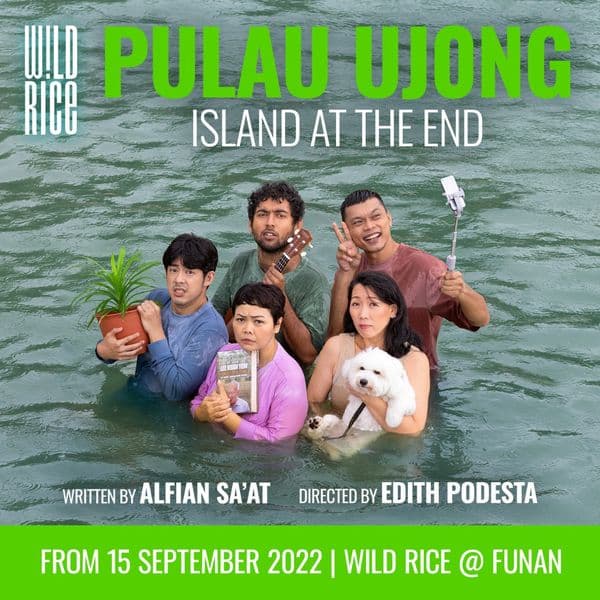
All the COP27 posts reminded me that I have yet to post my reflections on Pulau Ujong, my final Wild Rice play for the year and one that touches on the climate crisis. Written by Alfian Sa’at, Pulau Ujong is part oral storytelling and part documentary, exploring Singapore’s relationship with our natural environment and the issues surrounding it. One of the few original productions I got the privilege to watch this year, Pulau Ujong reminds me that Singaporeans need to confront the various contradictions in their approach to environmental conservation. The good news is that there are already many voices speaking up about it.
The cast for Pulau Ujong is small at around five people, but these actors have a range that spans more than 20 different characters over the span of two and a half hours. Playing iconic activists such as friends Qiyun Woo and Madhumita, mythical characters long held as environmental allegories, or even the inner voices of animals and crops, the cast of Pulau Ujong is able to put together a production that is simultaneously colourful but droning in its message on the dangers of climate change and environmental degradation.
There are attempts to provide diversity in the production, whether through format interventions (such as a surprise rap performance) or through the exploration of related topics such as labour rights. However, the primary format of oral storytelling loses its lustre after the first half of the show. We all learn a lot more about Singapore’s relationship with the environment and how it contradicts itself between material aspirations and environmental ambition, but we are all just slightly depressed and bored with the topic by the end.
The topics covered are admittedly important. There are many insightful segments such as when we learn about how there are generational differences in the approach to climate activism, despite sharing the same goals, or in how our obsession with the media has exerted its own corruption on the world of environmental advocacy. These require attentiveness on the audience’s part though as the messages are sometimes delivered as draggy monologues. Perhaps that in itself is intentional – that the messages are too important that audiences should not be expecting excessive entertainment.
All in all, I think the show can be stretched a lot more to really engage audiences – perhaps verbatim theatre using oral storytelling is not the best format. Nonetheless, it is significant that we have something to educate ourselves on Singapore’s environmental scene, even if it is just mildly entertaining.
Here are my ratings:
Script: 3/5
Performance: 4/5
Production: 3/5
Overall: 3.67/5