rovik. and friends discuss: tyranny
Some of our biggest foes tend to be the same darkness cloaked in different robes. In a society that espouses stronger values of democracy through the internet and promotes a freer world through market access, it is easy to simply accept that tyranny is long left behind in a former age of fascism. Rather than analyze any single tyrant, in particular, our group decided to have a discussion on what exactly tyranny is constituted by and how it manifests itself, expanding the conversation to seeing new forms of tyranny from the personal to the corporate level.
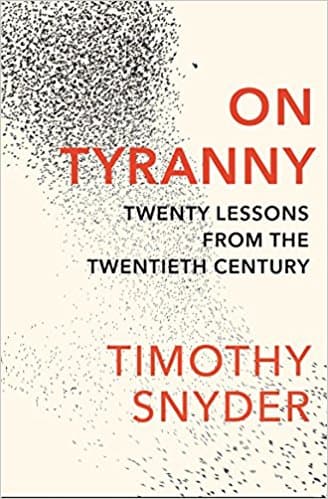
Unlike other open-ended discussions, we actually relied on one book for a series of 20 short essays that pinpointed specific traits of tyranny. This allowed a broad discussion across interests. The book is called On Tyranny by Timothy Snyder.
The first idea of tyranny that I found enlightening is that it often operates under the guise of revolutionary subversion and escape. Tyranny begins with the idea that what is currently in front of us is all a massive ploy that restricts us from achieving more, often creating villains in the process. These villains could as recognizable as ‘immigrants’ or as ambiguous as ‘the ultra-rich’. Without denying the possibility that these groups could be shaping (more likely, without even knowing that they are) the national landscape, the creation of a grand drama provides the best platform for tyrants to consolidate power and achieve results. These often take the form of knocking down independent institutions, deriding the free press, replacing language and correcting contexts to be in their favour. Tyranny begins with the powerful lie that you can only achieve what you want with the help of the tyrant. I found this fascinating because while I have a slight cynicism towards vast governmental oversight, I was able to map some of the methodologies described here to personal encounters. From abusive relationships to intolerable student associations, tyranny has not been absent from my communities. The idea also could extend to the massive expansion of multinational firms and organizations that take advantage of the governance gap to exploit situations to their benefit. Facebook, under the guise of ‘Connecting the World’, has created a pseudo-kingdom where people are often subjected to its decisions with very little actual room to escape. The internet too, a tool to enable wider participation, has now become a platform for people to create walls and to enable the proliferation of untruths. Rather than sound like a conspiracy theorist that’s listing out anyone who has extensive power, I’ll caveat with the consideration that identifying elements of tyranny assist us in foreseeing trends and protecting ourselves against abuses, regardless of how docile a tyrant’s goal may seem. It is worth being alert and having a healthy level of cynicism.
What can one do to protect themselves from tyranny? The libertarian in me values the protection of individual life and the ability to practice life without forceful influence from others Such protections disable the state (and other tyrannical parties) from abusing relationships to their own end with disregard of my own interests. Protecting institutions, participating in community-level projects, advancing dialogue in the neighbourhood – these are all initiatives that remove overdependence on the potential tyrant and provide humans with the ability to be in charge of their own destinies in regard to others. The liberal critique is often that such a view comes from a position of privilege, one that I am willing to concede to. Often, minority or historically disadvantaged communities require some sort of state intervention and reshaping to correct injustices and level playing fields. The danger, of course, is that minorities also tend to be oppressed by similar affordances. One only needs to look at Trump’s use of Obama-era policy mechanisms to reverse the targetting on minority communities. Once again, it seems that the long-term solution of community-driven intervention led by individuals without the ability to consolidate excessive power should be a priority. State and corporate activities should be supportive and encouraging of such initiatives with policy tools that augment. There are obvious limitations but I personally value the prevention of some sort of neo-fascist wave over any short-term stop-gap.
I’ll admit my views on tyranny and its current form in society is still in the process of being shaped. I am unsure of what exactly the individual’s ultimate goal should be and how that also affects decisions at every level of politics. What I do know is that I hate how humanity fell under the allure of tyranny in the past century, and I would hate it if we did it again.