rovik. and friends discuss: the state of modern education
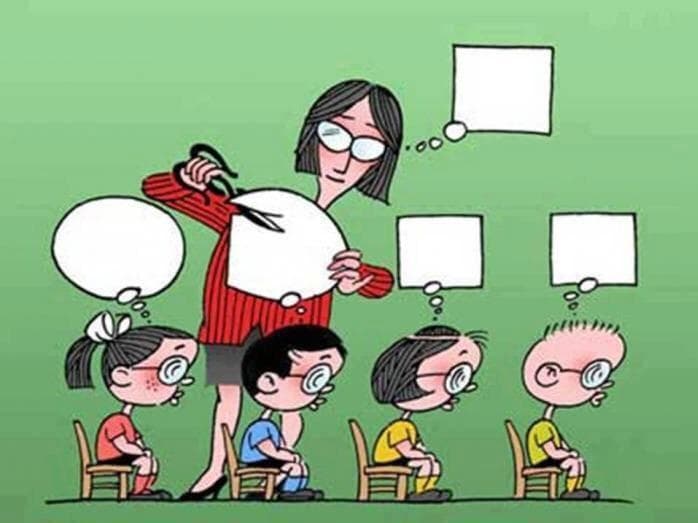
One of the things I’ve learned as I grow up is that teachers don’t have it easy. It’s a difficult world for someone who has to balance being a bastion of knowledge and hope for the next generation, an enabler for the workforce of the future as well as a regular citizen, earning money to pay bills and build a living. So when our discussion group decided to pick up the topic of Modern Education, we recognized that we were wading into territory that had established points of debate for centuries but also was continuously a tiring one because of the range of stakeholders present. How does one figure out education? We had a few thoughts.
This discussion this time, unfortunately, didn’t draw from a lot of resources so if you do have interesting articles or books, please do share! I would love to read them.
In order to contextualize the conversation, it’s probably important to recognize that we are talking about the core education process, from elementary school to high school levels. We did wade into higher education territory, mainly because we all have had recent exposure to a college education, but the topics were ultimately transitive.
We recognized early on that education has multiple goals and the discussion is normally skewed because some parties focus on one priority without consideration for others. The ones that we identified are as follows:
- Providing core skills and knowledge for a career
- Building useful habits and practices for a career
- Building useful habits and practices to be a decent human being
- Inculcating a love for learning
It’s interesting that only Priority #1 deals with the actual topic matter. Priorities 2-4 focus on the methodologies and environments of teaching, features that are often highly dependent on finances and talent. Education is ultimately a political matter, facing conflicting influences from elected representatives, parents, staff, administrators and recently, students themselves. What used to be a simple institution that was taken as sacred is now a war zone for mismatched ideas and ambitions. Recognizing this messy condition is an essential preamble to entering this conversation because any notion that education is a clearcut discussion is highly misguided and dangerous. There’s a lot to talk about, as our group realized, but I’ll focus the post on how I imagine the ideal school to look like.
The Ideal School
If you’ve followed my blogs since the early days, you’d know that I do have a goal of establishing an educational methodology and school at some point in the future. It’s driven mainly by an innate dissatisfaction with the educational environments I was exposed to. I always felt shortchanged by the schools I was a part of, with moments of relief provided by some exceptional classes and tutors. I’ve been pretty fortunate with my education at that – all the schools I’ve been part of have been a great privilege and are well recognized as leading institutions. But if even that is underwhelming, what is the ideal? What is the school that I would prefer? Let’s tackle it by priority.
Core Skills and Knowledge for a Career
When thinking about what to teach, it seems pretty clear-cut. In elementary school, teach the building blocks – mathematics, languages and the sciences. Middle school, broaden the topic matter and allow semi-specialization. High school, deep dive into topics you like and finally in higher education, develop expertise in a field. It’s a pyramid methodology that ultimately is meant to balance a broad understanding of the world with a highly developed focus on a topic matter. For the most part, I agree with this perspective.
As someone who is affiliated with the Economic Development Board in Singapore, I also have a very pragmatic view of education. Schools should teach subjects that make students ready for a changing workforce. Skills like learning to work with a range of computer software, data analysis, and visualization are all topics that probably need to make their way into education curriculums earlier so that youth can deep dive into them as soon as they want to. The truth is that the breadth of knowledge exponentially increases as the world evolves, and while the mathematics, languages, and sciences will not stop being essential, other topics are joining their leagues.
Creative arts also shouldn’t be an afterthought. The ability to understand how people think and communicate is something you perceive much easier when grappling with the arts. Kids must struggle with communication early on to understand that people of all ages interpret things with biases and perspectives, and that is part of the process.
This is a controversial view because it’s opposed to some western views that see education as an emergent process, where children should choose what they want to learn and develop interests that drive their ambitions. It’s very much tied to Priority 4, learning to love learning. I don’t think they’re mutually exclusive. I think the core fields are huge by themselves that you can allow exploration and curiosity within a contained space. It’s like swimming in a gigantic swimming pool – it’s better than the ocean as well as the kiddy pool.
Building useful habits and practices for a career
This priority has always been a struggle. Some would argue that this is even more important than Priority 1 simply because you hardly remember half the stuff you are taught in school anyway. Learning how to present an idea, how to write a report, how to network and how to work with others are all examples of useful career skills that are better taught by doing rather than in a lecture setting. I think all of us agree that these are useful, but what is the best way to impart these skills? We’ve seen schools adopt all kinds of group and project-based work, encourage internships and practicums and even have requirements outside of the classroom. Yet, there are still so many people who fail to have these skills in the workforce. I’ve seen them.
The truth of the matter is that a lot of it has to do with the way society is currently designed. Education has become less about learning and more about signaling, even before college. Every school you attend and every activity you participate in is a proxy for demonstrating what you know and who you are. But as the requirements become clearer (e.g. jobs want all-rounded people), students (and their parents) simply fulfill the checkboxes without actually developing the skills. Modern education fails here because the system doesn’t incentivize the right features.
Schools must simultaneously demonstrate quality and satisfy paying parents, and so students end up getting qualified even if they barely pass the requirement. Companies have a fair request in asking for skills that are necessary for the workforce. So whose burden is it to bear to actually properly validate students? Perhaps external validators should come in, similar to how national exams are run by exam boards. Would this put too much pressure on students – I think so. I can already imagine parents fretting over a child’s ability to ‘prepare a report on market derivatives’. But I think it’s a step in the right direction because the overall standard of the workforce will improve.
Building useful habits and practices to be a decent human being
If you’ve thought my first two discussion points seemed a bit too utilitarian, it’s because I felt the need to compartmentalize my arguments. It is here, about being a decent human being, that I actually have the most passion for the potential of education. I do think education has a huge role in shaping our characters and principles, but I am a skeptic of moral and civic education. I did have my fair share of classes on the need for religious and racial harmony, as well as how to practice compassion. We had our debates on why certain historical elements were plain wrong. Those are necessary to shape our understanding of the world.
But to be honest, I only chose my principles for real when I was confronted with difficult situations. I became independent when I was told I wasn’t doing well in my extracurricular and had to buck up. I became concerned about social justice when I realized that the Chinese population in Singapore have an implicit bias against minorities vis a vis me. I valued family and friends when one of my close friends left me in a difficult moment and I had them to lean on. It’s providing opportunities for growth and reflection that provide these rich moments.
So far the reliance has been on providing unstructured opportunities for these, either through extracurriculars or special activities such as outdoor camps and excursions. These are important. However, the reflection activity that normally accompanies it ends up being contrived if not executed well. I also wonder if structured moments of growth are possible, ritualized and made part of the process of going through school, similar to orientation and commencement. These become crucial in shaping and imparting useful principles to students and are necessary for every modern school.
Inculcating a love for learning
Most students will go through the education machine, gritting their teeth and waiting for freedom. I’ve heard parents and teachers endlessly mention “Just study hard till you get a good job and life gets easier.” It’s probably one of the great lies we’re told, both because life does not get easier but also because learning does not end. Learning is necessary post-public education for the very reason education is even necessary – you need to master knowledge to do new things, and new things by definition will always exist.
Getting students to fall in love with the process of learning happens through balancing accreditation with affirmation. The notion of ‘Everyone gets a gold star’ being wrong comes from a belief that education is supposed to be a race. It’s not. Effort does count, and enabling multiple styles of learning is a part of that. It could mean that different schools suit different learning styles, but everyone ends up more or less at the same milestone. It could also mean one school allowing for freeform and self-driven learning (similar to the gigantic swimming pool ideology). The point is that education should not be seen as a ‘period of life’ but an everlasting process that happens to get kickstarted early on.
___
I haven’t tackled a number of relevant issues in this post. How do we deal with the politics of it all, and how does an education system look like as a whole, beyond just the school. All of these are important and I’ll try to write future posts on them. For now, I want to know your thoughts on the current ideas. Most of them, in my opinion, are not immensely controversial, but altogether, could you imagine such a school? Why or why not?
Looking forward to it!