rovik. and friends discuss: talking to liberals
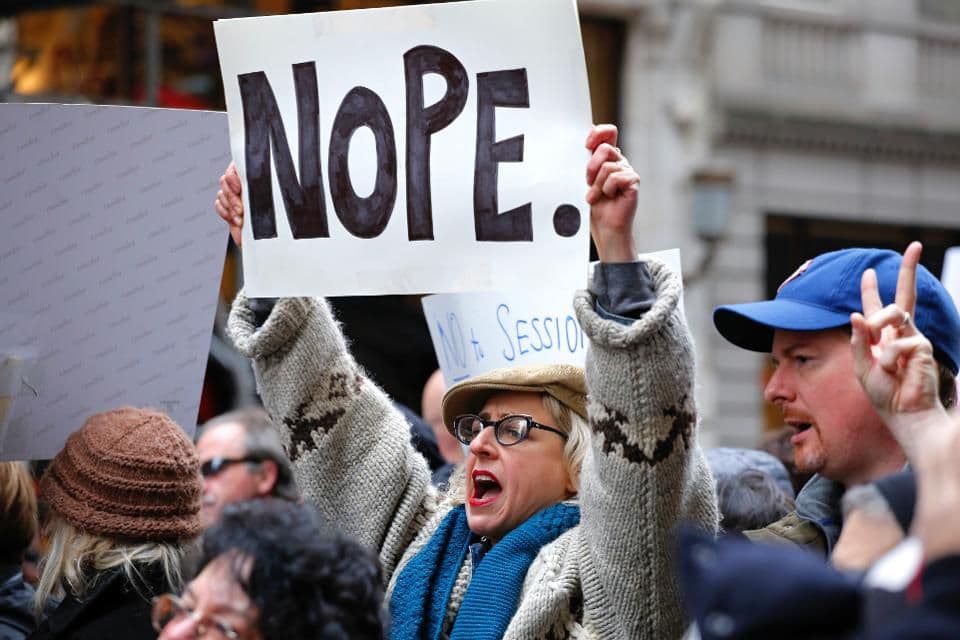
I am often confused with my own politics, not because I do not know my own values and principles, but because I do not wholeheartedly identify with any political party or movement. I always find myself supporting the overall goal of a movement or the majority of the tenants of a party’s manifesto but also not in favour of the methodology or other key tenants that come with the package. Most of the time, I’ve found myself on the progressive side of the camp and holding strong libertarian beliefs, which regularly brings me to conversations with liberals and other politically left individuals. Still, it is here where I struggle to have conversations about politics because as I seek to form an informed opinion or have a productive debate I, and many others who have commented before, cannot get into the heart of the issue without feeling like we’re on a minefield. That is what our group tried to problematize and discuss today.
As always, here are the key resources we drew from:
- What is epistemic violence – StackExchange Forum
- WaPo’s Attempt to Help Liberals Argue With Conservatives Mistakenly Reveals Why We Struggle to Get Agreement – Reconsider Media
- Why Liberals Aren’t as Tolerant as They Think – Politico
- Is There Such a Thing as Too Much Freedom? – Slate
- “You Are The Problem Now!” Has Liberal Backlash Against Trump Supporters Gone Too Far? – HuffPost
- Why I’ve left my liberal comfort zone – and found conservative friends – Christian Science Monitor
- The case against no-platforming – Financial Times
It’s important to note that this post doesn’t reflect my political opinions as much as it shares my personal growth in developing those opinions. Dialectics does require accepting that there are inherent contradictions in some arguments and that we have to sometimes problematize the situation to develop a better argument. As a left-leaning individual, I feel compelled to recognize that a lot of our views are getting misrepresented and misheard, and seek a better way to resolve the issue.
Problematization of the Issue
As mentioned before, I believe that a lot of social issues the left normally campaigns for are important. Topics like gender equality, legalization of homosexuality, fair trade, race equality and avoidance of war are issues (amongst others) that I can both argue fervently for and also be resolute in. These arguments tend to happen for me in places of small-P politics like the bar or the living room, not in places of big-P politics like a parliamentary discussion or a rally. Yet, in both these areas, there are a number of problematic patterns that emerge:
- The shutdown of debate on the following terms:
- The other party is pushing a dangerous agenda
- The other party does not deserve a platform
- The other party should not be centred as they are not the main agents
- The other party will make others feel threatened
- The misrepresentation of the other’s views as
- Ignorant
- Evil
- Oppressive
- Participants speak past each other instead of engaging with issues of conflict
- Participants attack personalities instead of arguments
The list is not exhaustive and neither does it represent all political discussions – I’ve definitely been witness to some productive discussions in the right settings – but a good majority of discussions I’ve seen or been in have had these patterns. A good example is a conversation between Sam Harris and Ezra Klein on their podcast. We tend to assume bad faith on the other’s part, a position that vilifies and other-izes the person we may be trying to understand.
There are a number of reasons for this, as the articles above go through. One of the key ones that I found interesting is the completely different frames of arguments that camps operate in. As Slate points out, often camps believe in similar values, just manifested in different ways. Personally, I’ve never been convinced or convinced anyone on my own terms. I’ve always had to cross the river and argue on their terms to make them realize their views have contradictions only my view has resolved. Yet it is this very hesitation to cross the river lest we legitimize the other’s view that prevents productive conversation.
There is also a tension between two liberal principles: one which states that a person who is not the oppressed should not necessarily speak in arenas for change and the other which states that the oppressed should not need to always speak on behalf of their identity. There is a lot more nuance to these principles. For example, it is important to provide oppressed voices with a space to develop both their views and agency over their own empowerment. It is also important to recognize that a person’s life should not be completely restricted to representing one identity, a person of colour is also a father, a doctor and a recreational basketball player for example. But, it is also impossible for change to happen without allies and the development of a personal relationship with issues. How can someone who has no clue of what an issue stands for learn without participating in their own dialectic process? Once again, the denial of access to participation other-izes and increases the tribalistic nature of the stance.
The last issue that I personally find the most problematic is the elitization of liberal values. Some issues are easy to understand: everyone with agency should have the freedom to love. Some aren’t: our physical body and our gender expression can be two different things. What I don’t get is the simplification of a lot of these debates into “If you don’t know this, you’re stupid or evil”. I’ll be the first progressive to agree that a lot of these views require major perspective shifts and sometimes some intellectual work. Yes, most of these issues are heartfelt and therefore even without virtue of intellectual argument already important. Immigration, for example, is a matter of acceptance and human solidarity and so discrimination seems wrong. But a lot of times it is in the details that opponents have confusions. Again, affirmative action and trade agreements like the TTP are issues that really require intellect and stamina to understand in practice, and failure to comprehend these issues should not simply be seen as a value judgement. Many times, it can be intellectual laziness or even less surprisingly, a lack of formal education in that category. Not everyone is a political science or gender studies major – how can we demand the world all rise to the same level of argumentation in a short period of time? It is this very liberal elitism that has produced the likes of Ben Shapiro and Jordan Peterson, conservatives that thrive on ‘scientific’ and rhetorical foundations, and have provided an equally difficult-to-engage form of conservative elitism.
What’s the solution?
Alright Rovik, you may say, fair game – there are areas we have problems with. How should we reframe the debate? I think we need to go back to the heart of politics as issues about real people. Frequently we talk about these issues as if we are the only ones affected by them. Ezra Klein once said something I find interesting: Politics is a zero-sum game today, but policy can be a positive-sum game. If you truly care about the small-P politics, then we need to reframe the debate on middle ground terms, seeking empathy and understanding, especially if the other party comes in good faith. Of course, there can be bad-faith conversations where the person is simply seeking to misrepresent views or spread a harmful view, and those cases need to be handled appropriately. However, most political arguments are won through personal conviction. I don’t necessarily believe in compromise for everything, middle-grounds can be won by one side completely, but they are best won in the middle ground.
Furthermore, we should hesitate from vilifying anyone who possesses an identity that is not the main agent of conversation. I am not convinced that legitimacy can be developed only simply because one identifies with the target of conversation. Legitimacy can be developed through studious analysis, argumentation and good-faith interest in the overall health of the parties involved. Yes, the oppressed and agents of conversation must be given space and platform to be represented but it is not necessarily the only view that is important. We must seek to make the whole system convicted, not create a schism within society.
Finally, we must accept that a lot of our views and policies can be elitist in nature, especially when engaging with others. I remember the video where debate on voter identification laws was put to the test with black voters, challenging rhetoric on discrimination. We must be introspective on our own views and ensure that if we argue with others that we are slow to criticize if the issue is inherently complex. Let us not be quick to simplify issues that are not and should not be simple.
Revolution can start with protest and uprising but is sustained through negotiation, argumentation and conviction. We seem to be good at the start, but we need to get better at the continuation. There’s a lot at stake and we need to be better at ensuring the issues we care for getting widely accepted.
What do you think? Disagree? Have a good faith argument with me in the comments section below!