rovik. and friends discuss: gender bias
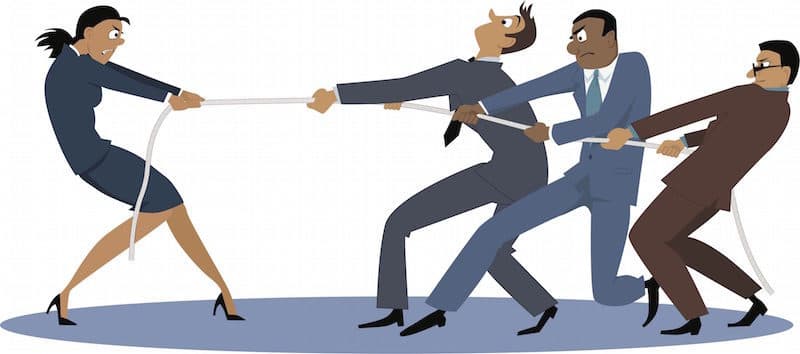
#MeToo is trending and it’s a sobering reminder (as if we needed any more to start taking it seriously) that people, especially women, face sexual abuse and harassment at a prevalence rate that’s way too high. My discussion group talked about Gender Bias in Society at a recent session, and while we didn’t talk explicitly about sexual harassment and assault, the themes are still relevant and related. This was a stickier topic for various reasons, the first being that we only had one female member out of six who at many times had to speak to her experience to validate or invalidate points, but I feel slightly more comfortable now navigating some of the nuances around this topic.
I’ll start with something a bit more personal – my own male experience. I first recognized my power as a male in college. I would be able to go to parties and due to the fraternity-favoring culture, I would have attention given towards me, both from men who were trying to recruit or evaluate me as well as from women, for various reasons. It took me a lot of exposure to different platforms and educational discussions to realize the socially embedded power I held as a man, and more importantly, to realize that I had taken advantage of them already.
While I cannot claim to understand a man like Harvey Weinstein and how he can force women beyond their pleas simply to satisfy his own selfish desire, I can speak to being in the grey area in my development as a man. That grey area where being in male-dominated spaces made me comfortable talking about women as something to be ‘won’ rather than people to be engaged with. That grey area where my masculinity was more prominent in my thoughts than a women’s foundational sense of self. That grey area where I could excuse away aggressiveness as ‘being a man’ instead of a problematic behavior. I was there and thankfully, I was quickly dragged out of it, both by good friends and ironically enough, by members of my own fraternity. I’ve always spoken of the power of gendered spaces to be transformative if channeled to the right resources, and to this day, I am happy that I was given the opportunity to check myself and recognize the toxic influences that I had allowed to permeate my life. If you track my blog, you can see that I started writing more about equality, being in support of feminism, masculinity and various other gender-related topics around this time. These are anchored in real experiences, both mine and from friends who have had the courage to share.
I speak of these influences as if they’re unusual, but they’re not. I know many male friends who have gone through this development, in some form or another. Some are still stuck in the grey area and need a lot more work to knock out the toxicity. These influences appear in our televisions and books, in our family discussions and in the performativity of society. They’re everywhere, and many are also stuck in the grey areas. In fact, they’re not even grey, we only distinguish them as milder because they stop short of physical assault and rape, but they’re just as damaging in both men and women sense of selves. We require good role models and a cultural shift to rethink how males and females and the non-binary operate within our society. It is scary writing about this, especially in a blog where people from various backgrounds come to, but I think it’s important to know that my development has not been without its problems and I must learn to be responsible for them, and more critically, work to right the wrongs.
That’s the connection to our topic. Recognizing, firstly, the roles gender play in society and rethinking them to achieve a better society.
Here were our readings for the discussion:
- Exclusive: Here’s The Full 10-Page Anti-Diversity Screed Circulating Internally at Google
- Gender Bias in Science- Psychology Today
- Gender Bias in the News – The Atlantic
- Proskauer Gender Bias Suit – LegalWeek
- Study shows Gender Bias in Science is Real – The Scientific American
- Unconscious Gender Bias – The Huffington Post
As a simple metric, I also encourage everyone to take this test by Harvard’s Project Implicit that tells you where you stand on unconscious gender bias.
There were two main discussion themes: 1) Is Gender Bias rationalizable? 2) What can we do about unconscious Gender Bias?
Is Gender Bias Rationalizable?
As a thought exercise, the group felt that it was important to be unanimous in our justification that gender bias was not rationalizable. We knew that for the social justice mechanism to work, it must be able to stand the biggest argument from critics: that men and women are inherently different and are suited to various capabilities. This is the primary argument pushed by the Google Software Engineer in Reading #1, and one that I’ve heard many times. The common tropes are that women are ‘more empathetic’ and are suited for ‘feeling-jobs’ while men are suited for ‘analytical-jobs’. It’s just coincidental that these ‘analytical-jobs’ are also better paying and more closed off to women regardless.
Here, I take a side-step to criticize science.
Hey Science. I think you’ve been pretty cool for the most part. I’m an engineer by training, and so I’ve always depended on you. But your openness and unabashed love for exploration also can be problematic sometimes, especially when you present views that aren’t properly reviewed or justified. The media sensationalizes your bad findings to make them seem groundbreaking, when in fact, it’s just poor research. How can we trust you if we’re not academics but still want to believe in rationalized truth?
Yes, a lot of the science cited by these ‘controversial’ articles is incomplete and equally refuted by other scientists. More importantly, it’s important to note that many of these anatomical differences rarely can be mapped to function. A women’s inclination to be more empathetic should not be sufficient rationale for her inability to get an analytical job she deserves. Someone’s anatomical and biological functionality is different from functionality that is tied to skill and ability. Only women can give birth but both men and women can (and have) made discoveries in new fields.
The same rationalization is important to be taken the other way. As the rhetoric goes, equality is both a men and women issue. We talked about how men are less likely to get jobs in childcare simply because women are seen as better caretakers and men are seen as sexually aggressive. This is where it gets tough. We have seen systemically how men have been enabled to take advantage of women if they so please. It doesn’t surprise me then that a lot of parents aren’t keen to let men be their babysitters, but it’s a question worth exploring. The ideal is men can be allowed societally to take on roles that are traditionally seen as ‘less masculine’ if they are roles that the men find purpose and fulfillment from. How then can you convince parents to allow men to be their babysitters or work in their childcare centers if the statistics show men in high numbers accused of sexual assault? I would argue that the sexual aggression of a man is more of a societal/cultural trait rather than a biological trait, and there are questions that can elucidate if the applicant is truly fit for the job and not problematic. It again distinguishes the individual from the stereotype, which is how it ought to be for every job.
What can we do about unconscious Gender Bias?
Everyone in the group agreed that we don’t agree with Gender Bias in society. It took us some maturity to recognize that we still unconsciously bias ourselves when we encounter gender, even with females on other females. When someone tells us about a doctor they talked to, we imagine a male instead of a female. When someone tells us about a secretary they had issues with, we immediately think of a female instead of a male. We’ve engendered roles to the point where we struggle to imagine a society where men and women both have a fair shot at each job.
This explains the pay gap, the glass ceiling and various other gender-based phenomena in society. This is extremely tough because a lot of these thinkings permeate our lives through popular culture, religion, and conversations with our friends and family. How do you fight the subconscious?
I think the first step is to simply accept that gender, just like race, SES and other identity factors, play a role in our society and our workplace. That starting point allows us to see that we can do more to enable equality of access, ascension, and adoption for women in any industry and field. Women-centric spaces can be created, not to alienate men, but provide women who are already underprivileged in terms of resources, the ability to compete equally with men. Open conversation in pay and position negotiations allow superiors to realize that such conversations have different implications for men and women based on their unconscious bias. Enabling women to play an influential role in decisions, simply by not mansplaining or blocking them, provides the maximum utility both for the individual and the firm.
The full participation of women in the workforce is good for everyone. The only people that are negatively affected are the men at the top who don’t want to lose their jobs. But as a consumer, we should be excited that fair competition for roles allows the best person for the job. We need to reframe our thinking and work from the point of view that recognizes gender bias as an unfortunate part of our lives.
____
There’s a lot more that was discussed and more nuances to unpack but these two themes summarize the major themes pretty well. As we can see, it’s a topic that has been addressed for a long time and the fight is far from over. Perhaps the most unfortunate thing about all of this is that we discuss these topics so thematically that we forget that we’re ultimately talking about real people. These are peoples with feelings and aspirations, and yet we distill them to concepts that allow us to be abstract in our engagement.
It’s important that we keep talking, and more important that we keep doing. The good fight must have its champions.