rovik. and friends discuss: dealing with social media
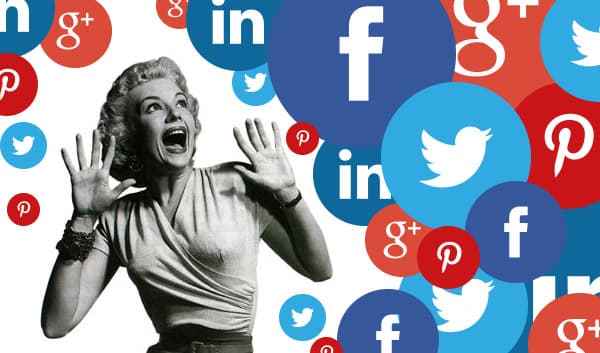
I don’t think I could imagine a world without social media. I started using Facebook around 4-5 months after it became publically available and have been an early adopter and experimenter of most other platforms since then. In some ways, social media gives me the space to maintain friendships that span across the globe and also continue to be a content creator that adds value to those communities. Yet, my understanding of social media is maturing as a result of two factors: the first is the recent tide of news reporting on how platforms have been infiltrated by malicious threats and the second is the range of academic readings that I’m exposed to that reveal a much more complex understanding of the topic. The result is a realization that not too many people know what’s going on, perhaps including the social media giants themselves.
My discussion group met to chat about this topic and as always we had some readings to get the ball rolling. Here they are for you:
- Why Is the U.S. So Susceptible to Social-Media Distortion?
- How Has Social Media Changed Us?
- Encoding the Everyday: The infrastructural Apparatus of Social Data
- Is Social Media bad for you?
The tendency to fearmonger on social media’s effect on our lives is understandable. We’ve seen a drastic change in the way we interact, and communication happens almost as equally online as it does offline. For some people, the skew is even more extreme. Yet, I always push back against those who argue that gone are the golden years where face to face communication was the only way people interacted. We live in a new normal now and the focus should be on how do we adjust for the current effects rather than reminiscence on the past that we can (and should) never return to.
It’s been more than a decade since Facebook entered the public consciousness and we can see how our lives have changed. What’s interesting to note is that over time we’ve created a second identity for ourselves – our digital identity and that becomes more understandable as soon as we realize that social media isn’t just another arena for us to conduct our social engagements. Each platform affords the user specifically encoded actions and options that in their way constitute a new form of sociality. Facebook’s ‘Like’ option is perhaps the most notorious example, allowing us to quickly show our support or acknowledgment of something. The closest physical comparison that was made was that of applause, yet the ‘Like’ feature has since evolved to occupy a meaning of its own. What we do online can no longer be compared to be equivalent or substitutable for what we do physically. Sure, some things are more comparable – chatting to someone in a chat application and physically having a conversation for example, but even there we can see distinct differences in how those activities are conducted. So, rather than grieve that most people only constitute themselves as who they are online, perhaps it’s time to recognize the dualistic nature of our digital and physical identities and engage in it not like a zero-sum game but rather as a new addition to modes of expressing one’s self.
This doesn’t excuse any of the platforms, old and new, from the effects they have caused on society at large. Studies have shown that social media can be attributed to a significant source of stress and depression for many people in the developed world. The open availability of social media and the nearly boundless opportunities to engage with a world that isn’t that kind can naturally lead to some problems. Bullying, comparing lifestyles, ‘fake news’ and so many other social phenomena have made their way onto these platforms, taken advantage of strictly encoded affordances and impacted how people use social media. Another factor to recognize is that people have different sensitivities and proclivities, something we are well aware of in traditional psychology. Some people need more structured control of what they’re exposed to, some need tools to assist in developing discipline and some need no additional feature at all. Yet because most social media platforms tend to have a draw and lock-in effect (you don’t want to be the only one not on Instagram, do you?), most people are forced to encounter platforms that are too rigid for their personalities. We preferred platforms that would enable more adjustments and adaptations for each user. Currently, there’s a swath of browser plug-ins and widgets that help do these for you, but why can’t platforms encode these adjustments themselves? For example, why can’t we tell Facebook that we don’t want a newsfeed and it still provides its other features to us? It will be able to maintain its users for a much longer lifetime period without the frustration that builds up with it. The same can be made for almost every other platform – instead of making every user request part of some big feature update, perhaps what is necessary is a recognition that sometimes options should be provided for different user personas. This would truly recognize that social media exists to support a more diverse understanding of society than we currently do.
The last topic discussed was the future of social media. There are some themes here that are widely agreed on to be changing the way we engage with each other. Video is still on the rise as a content medium that has strong engagement rates and can communicate information richly. But even more than that, we’re seeing how live videos are transforming sociality. Not only are people watching live videos online, people are broadcasting more of themselves and having conversations around these videos. The most successful example of seizing this trend has to be HQ, the live game show application that allows people to participate in a trivia game show and chat at the same time. Granted, no one actually reads in detail what’s happening in the chat section but the idea of being able to engage in a live activity online with others is profoundly transformative in how we understand sociality. People are recognizing that their lives can have meaning in relation to others and are continuing to engage with that truth. The other big theme recognized was that of context-specific social media. Right now, we have groups trying to plug-in to existing platforms such as Linkedin to host conversations and sociality for new contexts (e.g. a book club). While these platforms are designed to support such highly generative movements, users are starting to recognize the limitations of these platforms because as mentioned before, the affordances are strictly encoded and not meant to support all forms of sociality. So new platforms are being created to cater to niche markets and they draw richness in those domains. Does the increase in the number of platforms in the market mean that we’re going to see a reduction in average user populations for each platform? I don’t think so. People currently are used to multihoming on different platforms for different purposes, and so we’re going to see an increased specialization of platforms with the shared data economies of scale being achieved through APIs and cookies. The digital infrastructure is able to support this and so it’s definitely not far from being achievable.
So there we have it, an attempt to better understand social media from both technological and sociological perspectives (very typical of a socio-technical product such as the social media platform). It does provide some insight into why we have gotten to where we are and some forecast into where we could be going. The exciting element in all of this is that social media is in no way a final product – it evolves as we evolve and so we can petition through our actions and our voices how we want the platform to be constituted. We are not powerless in this new normal and that should make us feel empowered.
What are your thoughts? Do you agree with my understanding of social media? Have I missed something? Let me know!