rovik. and friends discuss: church and state
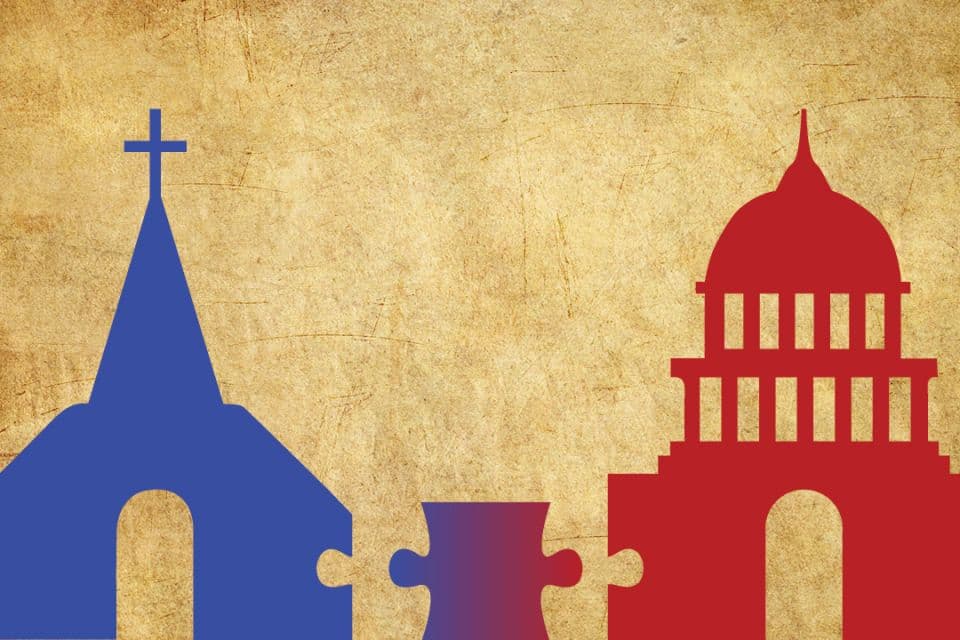
The book club had been focused on spirituality and faith at the individual level thus far, and we thought it’d be a good idea to explore some intersections with larger themes at a societal level. One of the more obvious areas that was rich for discussion was whether religious views and perspectives were inevitable in political discourse. If a law against murder is codified because of the “Thou shalt not kill” commandment, have we breached the wall between religion and politics, or is this just a common-sense natural law that most religions seem to reflect? Let’s just say we struggled through this discussion.
Here are the resources we used in the discussion:
- Religion and Politics: Integration, Separation and Conflict (Ali Mubarak , Lahore, 2009)
- The Real Meaning of the Separation of Church and State – Time.com
- Is it Time for France to Abandon Laïcité? – The New Republic
- The Fate of Secularism in India – Carnegie Endowment
- Spirituality and politics inside a Chinese Buddhist temple – SupChina
- The Separation of Church and State Is Breaking Down Under Trump – The Atlantic
- Church and state – an unhappy union? – The Guardian
- The transcendental nation: The overlooked spiritual dimension of political polarisation – LSE
- Religion and Politics in Africa: The Future of “The Secular” (Abbink, 2014)
- Separation of Religion and Politics: Pragmatic Policy or Utopic Ideal? – Singapore Policy Journal
- America Without God – The Atlantic
Secularism is a messy word
It’s interesting how demographics can influence discussions, but given that most of the group did not subscribe to a major religion, the initial popular position was a strong agreement that we should endeavour towards an absence of religious influence in politics. This is the form of secularism, brandished as French Lacite, that is practiced in countries such as Belgium and Turkey. It believes that common space, also known as public space, should be devoid of any form of religious imagery or conviction. However, there are a couple of issues with this form of secularism. The first is the existing common space may already be built on a foundation of religion. For example, legal institutions in most of Europe are derived from Christian ideas of justice and morality. Secondly, and relatedly, the notion that all religions practice can be inward and private betrays its own blind-spots. The wearing of the hijab, or the Great Commission of the Christian faith requires a participation in public life where religious views are explicit.
There is also the form of secularism that is seen in Singapore and that used to be seen in India, where common space allowed practice of religious beliefs but the state practiced a form of “equidistance” or “principled distance” to avoid appearing as if it favoured one religion over another. This is the form of secularism that celebrated diversity rather than tried to bulldoze it down to a unifying generalisatiion. However, this form of secularism is always vulnerable to misperceptions and special interest agendas that may accuse the state of building vote banks (groups of guaranteed voters by appealing to certain identities) if they attempt to address unique needs to each community. For example, the Congress Party in India experienced flak from the Hindu majority because it attempted to understand and respond to the needs of the Muslim minority in its country, creating an opening for the Hindu Nationalistic BJP to come into power. This form of secularism recognises that religion plays a big role in the public lives of the individual but spends a lot of time and effort to manage the inter-religious dynamics within society.
National Morality
Göpffarth, in the LSE Blogpost, refers to modern countries as “transcendental nations” – that is they’re more than an amalgamation of factors of production and pragmatic functions, they are imagined constructs that must have a narrative and spiritual foundation to hold them together. Countries such as the UK have enshrined the church into its institutions as a way of providing that spiritual scaffold, and countries such as America claim the same, although it could be argued that America by itself is a religion.
With a trend towards decreasing religiosity, increasing notions of self-defined spirituality, and a demand for a secularism that is blind to religious interest, the question remains on how countries can create and sustain spiritual scaffolding that can support the diversity of each nation. How do we a tell a story to ourselves and our children on what is right and wrong, what is acceptable and what is not, when we cannot find common space for our worldviews. This is why the work of inter-religious dialogue is especially important, and why it must also start including perspectives from groups such as Humanists and Atheists. Thankfully, I don’t think we are anywhere near debating whether the law against murder still has relevance, but there are sufficient tension areas in existence for us to see the importance of this work. Arenas such as LGBTQ+ issues, abortion rights, death penalties are laden with moral judgements and a variety of perspectives, but we need to find ways to hold our societies together as we tackle these issues.
Spirituality can be deeply personal but it is also far-reaching in its implication. Understanding how we can move forward is urgently important.