puebla and the colorful adventure
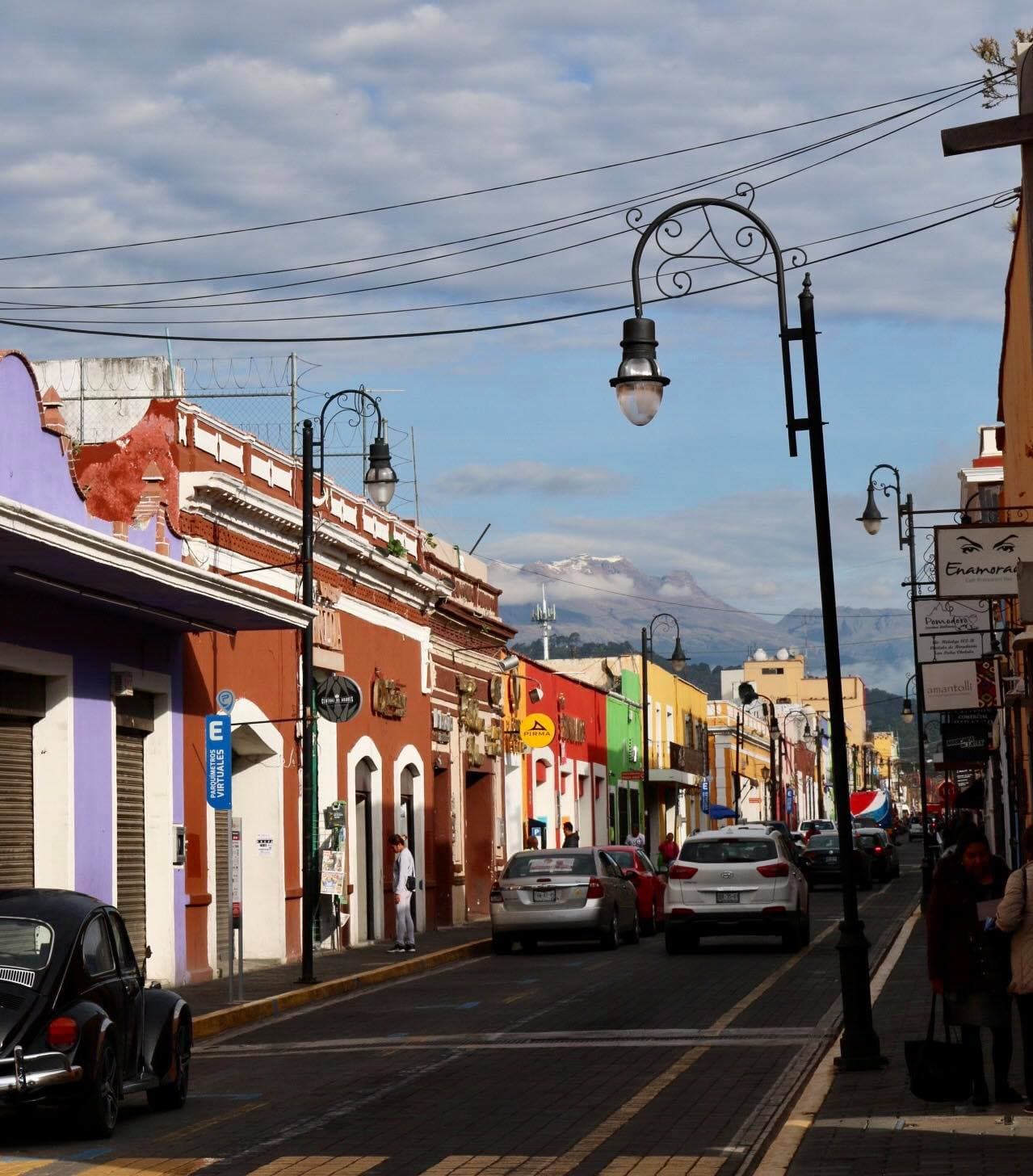
Almost every culture has elements of itself that are revealed partially to the traveller in their home country. For example, I can have Mexican food in Singapore and delude myself that I have been treated to the country’s gastronomical offerings. But somewhere like Mexico is too complex and too colourful a place to try to comprehend simply with meagre selections that make their way outside of its borders, so I made it a personal mission to make my way to the country to finally experience its dynamism for myself. The final destination was Mexico City but I decided to tide my time while waiting for the rest of the travel crew in Puebla, a region known for its cultural and gastronomical richness. Little did I expect to be blown away by the wealth of activities available.
As with most of my travelogues, I will describe some of the top attractions before finally going through my food recommendations. Scroll all the way down if you just want to see the food pictures!
Puebla City


If there’s any good spot to start your exploration in Puebla City, it would have to be at the Capilla del Rosario, an ornate chapel in the southern nave of the Church of Santo Domingo. Puebla is famous for its Mexican baroque architecture and the Capilla is iconic for its 23-carat gold leaf plated interior that was built by the Spanish as a way of displaying the exemplary nature of God. It’s a pretty breathtaking experience walking into the chapel and is rumoured to be the most gold in a church in Latin America.


If you’re looking to find the heart of the city, as with most Spanish colonial cities, you will make your way to the Zocalo, the city centre. This is a square flanked by shopping arcades and important buildings and where locals and tourists alike meetup. Find yourself in the presence of a fountain and other art and historical monuments in this spot, also popular because it’s not too far from any main attraction.


Adjacent to the Zocalo is the Puebla Cathedral, another magnificent structure built in the shape of the Latin cross and exhibiting elements of both late Baroque and also Neoclassical styles. The octagonal altar and tiled roof are pretty stunning on the interior. Mexican churches in general are in a league of their own for being extremely ornate and artistic while still possessing the degree of reverance that is iconic to such churches.


One thing to note is that many of the buildings in Puebla will be tiled with these famous Talavera clay tiles. These are similar to the Moorish Azulejos seen in Portugal and Spain and were brought by the Spanish colonists when they invaded. The tiles are materially different, however, being made by local clay which was abundant, leading to the local Talavera craft. It’s pretty stunning and makes the city a whole lot prettier.


One of the key attractions in Puebla and also a UNESCO Site is the Biblioteca Palafoxiana. This is a library built in a beautiful baroque style and is considered to be one of the first public libraries in the Americas. Founded by the bishop of Puebla, the library functions now more of a lens into the past with a range of handwritten manuscripts for display and a mesmerizing collection of books on the decorated shelves. It’s a very humbling feeling walking into this feat of genius.


If you’re looking for markets, there’s no better spot than the Parian Market, an extremely colourful antique and craft market that is bustling with activity every afternoon. Musicians provide the audial backdrop as you explore this neatly arranged but lively market and explore the range of Mexican styles and handiwork.

While you’re in Puebla, another iconic street would have to be the Calle del Dulce or the Avenue of Sweets. Mexican sweets are a world unto themselves, ranging from the chocolate mole to all kinds of candies and homemade treats, and this one street is filled with stores that are stocked with them. You’ll also find more traditional American-style candies available but definitely treat yourself to some local varieties. Some Spanish may be useful on this street as the traders are definitely not as touristy as you’d expect.


One spot that surprised me was the Museo Amparo, a modern looking museum with a collection of pre-Columbian Mesoamerican art and history alongside a range of contemporary art pieces. It’s a pretty eclectic collection of art all tied to Mexican culture and history and I found myself learning a lot exploring the museum. It’s very affordable to get in and the staff are extremely pleasant here. Don’t miss out on their rooftop terrace with a great view of the city.


Perhaps there’s a lot more to be said about what one can do in Puebla – there are more markets and streets that will continue to amaze you but Puebla is a city to wander in with your eyes wide and nose on alert. It’s collection of baroque styles pervade almost every building, from a random residential estate to the Galleria near the Zocalo. Be sure to also keep an eye out for the beautiful murals closer to the east side of the city, formerly undeveloped but not becoming increasingly gentrified as the youth take over it. There’s a lot to simply appreciate about just being in Puebla City.
Civica 5 de Mayo


Roughly 15 minutes north of Puebla City is the Historica Area of Los Fuertes, a national park dedicated to commemorating the military victory of the Mexican army over the French invaders on 5th of May. It’s the actual site of the iconic battle that gave birth to the Cinco de Mayo celebrations that many Americans and other Westerners celebrate. If you go to the Fort of Guadalupe, one of the key installations involved in the battle, you’ll also get to visit the museum with info about it. The area is normally packed with domestic tourists but if you navigate the area you’ll find yourself at a pretty remarkable view of the city. That by itself makes it worth it, even for the more international tourists with no idea of what Cinco de Mayo is.
Cholula


30 minutes west of Puebla City is Cholula, a student town that’s a lot smaller in size and in better views of the volcanos that are iconic of the region. Expect colorful buildings and traditional squares against a backdrop of dormant volcanos and mountains and clear skies. This city is known for being much livelier in the evenings but don’t let that stop you from enjoying the city’s offerings in the day.


One of my favourite stops in Cholula would have to be the San Pedro Market. This is a traditional Mexican market with your range of local produce, chillies, mole and cooked food all under one roof and just bursting with sounds, smells and sights. I actually enjoyed being touted by the old Mexican ladies in the market as they gave me all sorts of tidbits and tastings to convince me to dine at their establishments. Puebla is known as a gastronomical wonderland for Mexican culture and what better place to witness it than at the market.


Perhaps more famous is the Great Pyramid of Cholula, an impressively well-maintained collection of ancient Mesoamerican pyramids with tunnels and structures that continue to remind you that Mexico is home to a great number of kingdoms that we often forget about. For a small ticket price, you get to explore these tunnels and pyramids yourself, and if you want to you can climb to the top of the hill where the Spanish built a shrine in attempts to quash memories of its more pagan past. The ruins are actually instrumental in understanding a lot of ancient practices and styles and unlike its counterparts in Mexico City, you are unlikely to have to compete with other tourists for time at the site.
Food


Onto food! Almost every Mexican I’ve talked to has raved about the quality of street food at Puebla so I was excited to wet my taste buds. I knew the first meal of my whole trip would have to be a taco and so I made my way to Las Ranas, a famous Al Pastor (skewered barbequed pork) place that blew my mind. They have a range of offerings including medium-sized plates to share but if you stick to their corn tacos you will not be disappointed. The meat is rich in flavours and the offering of garnishes compliment the smoky barbeque flavour with acidity and sweetness.

For beef tacos, look no further than the Antigua Taqueria La Oriental, a similarly styled restaurant that specializes in tacos with shawarma style fillings. The tacos are distinctively Mexican however and with a range of good desserts, I found myself spending a decent amount of time at the restaurant.

You may be familiar with the Mexican Torta, a sandwich with local ingredients. But in Puebla, one must definitely try the Cemita. Firstly, unlike the torta, the bread for a cemita is similar to a brioche, made with egg and then covered with sesame seeds. It also has a pretty standard style, traditionally served with milanesa (breaded meat), tons of string cheese, the papalo herb and a healthy serving of avocado. These are common in food markets in Puebla but I was stuffed by the delicious portions at Cemitas La Poblanita and would recommend it to any traveller as well.

Of course, how could we talk about Puebla without talking about the mole, the iconic dish of the region? Mole is a Mexican curry style dish that is rumoured to originate from an attempt to quickly make a dish to impress a visiting bishop, mixing together a range of chillies and ingredients. The Poblano dish is famous for its chocolate undertone, providing a rich and complex flavour that cannot be matched. It is normally accompanied with rice and tortillas and served over the chicken thigh. The serving at La Mexicana was a premium one for a good price.

Finally, don’t let my simple list of food stop you from sampling the wide variety of food offered on the streets of Mexico. I found myself simply braving the lines and grabbing cheap food in markets and off carts. This ‘Spanish-Flag Gordita’ for example was from a nondescript market stall owned by Silvia in San Pedro Market, and it was absolutely delicious for only 50 Cents (USD). Ingredients and styles are assuredly regional and just interacting with locals bring smiles to your face in this part of the world.
___
Puebla was a treat of a region to visit in Mexico, one that completely exceeded my expectations. Go expecting colour, noise and all sorts of flavours and you will find yourself still surprised by what the places can offer you.
Here are my general tips for the region:
- Puebla is reached by taking a coach from the CDMX airport. Estrella Roja runs the most frequent service and costs only 15 USD each way for a 2-hour journey, including water and charging source. You can often simply buy tickets at the stand so don’t worry about making online reservations.
- ATMs do exist in the city centre but they are concentrated on one street so I’d definitely recommend grabbing cash early on either at the airport or a bank. Restaurants and museums do accept credit cards but the street stalls and markets don’t.
- Puebla is pretty safe, especially in the day. I rarely ventured out past 9PM so I wouldn’t know a lot about nighttime safety. I was approached a couple of times but because of my lack of Spanish, I did not know if I was being harassed or touted.
- Accommodation-wise, it did seem slightly tough to find good hostels in the area as a solo traveller. I stayed in Gente de Mas B&B which was a pretty no-frills establishment that had good service but it was pretty much swarming with mosquitoes which were annoying. I’d recommend it for short stays but would otherwise encourage paying a bit more and staying somewhere air-conditioned.
- The city itself is very walkable and Uber is not only available but extremely cheap. No problems getting around at all. One can even take Uber between Puebla City and Cholula for less than 8 USD.
I hope you find just as much adventure as I did in Puebla, it truly is a place worth visiting.