provençal magic: marseilles and the calanques
Anthony Bourdain once called Marseilles one of the most under-rated cities in Europe. Easter Break demanded an adventure and I had been trying to hit more parts of the world that weren’t flooded with tourists. So I flew into France’s second-biggest city and prepared myself for the widely-known ‘dirtier cousin’ of the French Riviera. What I found was a rugged, raw and rowdy experience that is more emblematic of true beauty, hidden in pockets but astoundingly captivating.

The heart of Marseilles starts at the Marina. The city is France’s biggest port and so it’s not surprising that its waterfront is well developed and full of activity. The marina is filled with yachts and boats. but the surrounding landscape, especially with the Basilica in the eastern corner, makes for a great walk around.

One of my favourite parts of the marina was the Miroir ombrière, which is a giant mirror held as a shelter. Not only is it a good photo spot, the mirror provides reflections of the marina that truly capture the glimmer and beauty of it.

If you go to the marina early in the morning, between 7-9am, you will find the seafood market full of life as fishermen come in with their fresh catch. If you’ve been curious of produce from the Mediterranean, this is the place to see the variety of seafood that is available in the sea. From octopi to sardines to langoustines, the range of fresh food that you could either purchase for yourself or simply keep in memory to ask at a restaurant later is one of the most expansive I’ve seen.

If you walk along the western edge of the marina, you will reach Fort St Jean, a fort built in the 1600s to initially be used by the Knights Hospitallers of St. John. It’s quite an imposing structure and if you walk along the outer edge of it, you’ll get a great view of the port. The fort is now partially repurposed as the Museum of Civilisations from Europe and the Mediterranean (MUCEM) and is attached to a newer modern building through a bridge. The museum has a lot of cool exhibits on Mediterranean civilisations and history that cost less than 10 Euros to access, but the exterior portions are free entry.

Not that far away from MUCEM is the Cathedrale La Major, a giant ornate Cathedral with a prominent Byzantine style. You’ll find murals, mosaics and all kinds of beautiful materials in this tucked away church, and it’s definitely worth making a slight detour for checking out.

Most of Marseille’s buildings already come off as aged and in need of maintenance, but if you want to see the truly ‘old part’ of the city, you’ll want to head to Le Panier. This is the classic French environment you normally picture, full of hidden squares and artfully designed stores. This is a popular spot for meals and boutique shopping so get your wallet ready. Alternatively, you could get lost in the walkways here amongst the plentitude of graffiti.


While you’re in Le Panier, make sure to spend some time at La Vieille Charite, a complex that used to be a hospital and home for the poor and destitute, but now acts as a museum. I was there when they had a very cool Picasso exhibition going on, including his works when he took a break from cubism. The place has a quaint cafe within the complex that is delightful for a nice glass of wine.

All the way on the other side of the marina, you will start seeing some of the most beautiful parts of Marseilles. If you make your way to Vallon des Auffes, you’ll find a small harbour hidden below the main road and accessed only by a hidden staircase. This is one of many breathtaking spots where the water’s emerald glimmer and the rocky coast won’t let you go. This spot is popular for fishermen boats and a lot of restaurants get their fish straight from the fishermen here, so count yourself lucky if you get to see the fishermen at work.


Walking along Marseille’s eastern coast is probably one of the best things you can do for yourself. Getting lost in the side streets and making your way to hidden beaches are some of the best treats in this city, that only locals and tourists in the know seem to appear at. Top recommendations are this beach and the Corniche for views that will remind you why Marseille is the secret worth keeping.


From the coast, you can either head back to the marina and take a bus, or take one of the residential hikes up to the famous Basilica in Marseille. The Basilique Notre Dame de la Garde is the city’s most visited attraction and is a grand Byzantine style church that can be explored. Most people enjoy the nearly 360-degree view provided on the hilltop of the city and the coast. If you do take the hike, you’ll notice it is a bit steep but the view more than rewards for it.

Away from the marina, close to the train station is Marseille’s only secluded attraction, the Palais Longchamp. This is absolutely worth the detour though, as the park is not only grand and ornate, it is a great way to catch a pause in the day and find beauty amongst the old Marseilles buildings. The fountain, which is the centrepiece of the park, is a commemoration of when a canal bringing water to Marseilles was built. There are museums here to check out also if you are looking for stuff to do.


If you follow my travels, you’d know that I love markets. In Marseilles, you’ll find a market with all the right pieces: local and fresh produce, noisy stall owners, curious buyers and lots of food to try. The Noialles Market is that market that provides a colourful adventure with Mediterranean ingredients.Make sure to try the olives at the stalls, you can’t really have any others.


One of the main reasons why I grew to love grungy Marseilles was because I realized that the locals had a way of creating beauty amongst all of the overbearing architecture. There was graffiti everywhere, from the more personal and candid ones on store shutters embodying the characters of owners to the more abstract and artistic ones all over public utilities and structures. Keep your eye out for some of these aesthetic treats and you’ll find Marseilles a lot prettier than before.


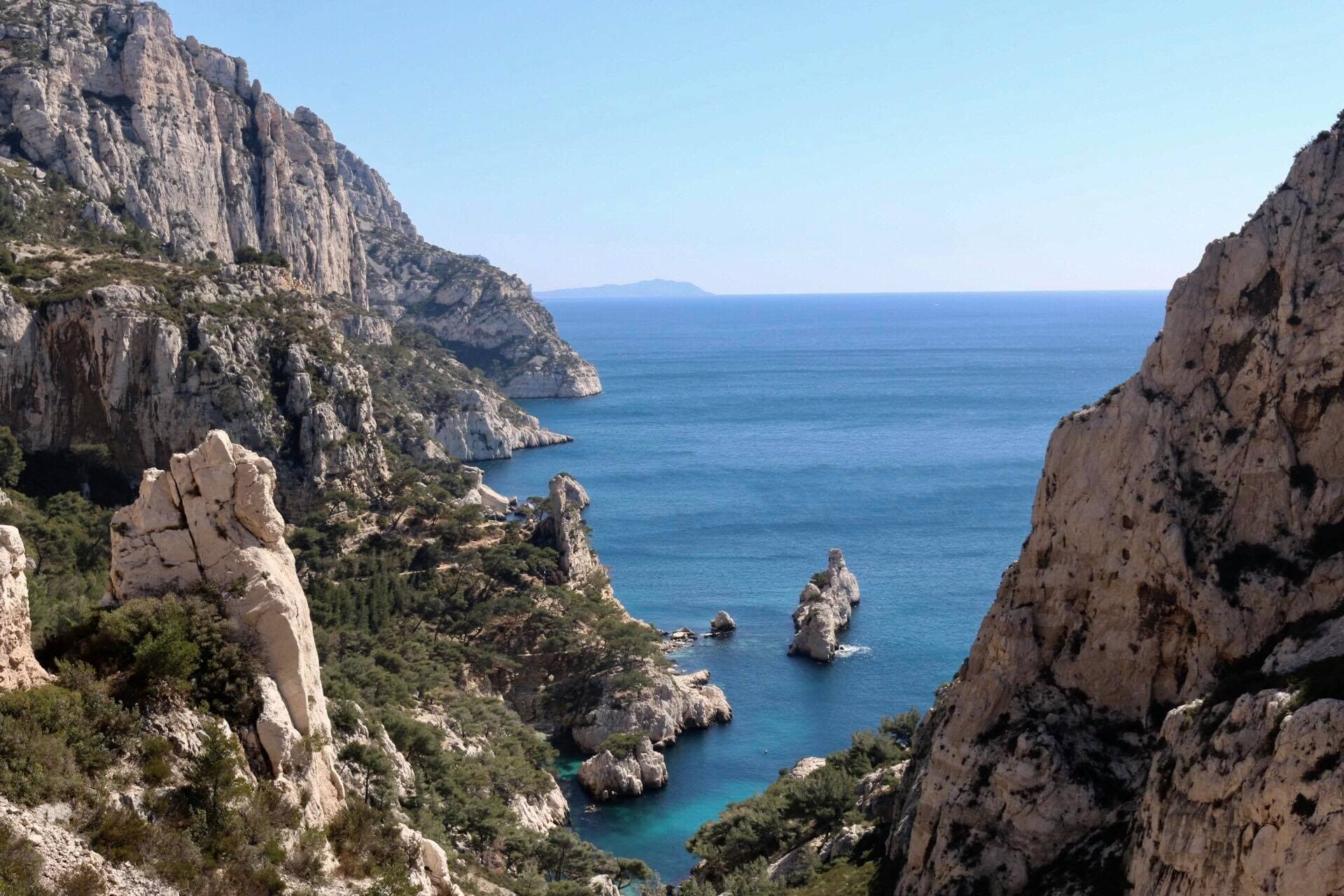
The Provence area is known for a number of things, especially in the food and wine categories, but one of the best parts of the region is the natural surroundings. I did not have the time to do as much exploring as I’d like (there are more parks up north from Marseilles near Aix-en-Provence) but one accessible trip by public transport is the Calanques National Park. This is a great spot just to take a jog or hike, but if you commit to some of the more off-road paths, marked by colours on rocks you will be treated to the below sceneries.


If you put in ‘Calanques du Sugiton‘ into Google Map, you will be brought to one of the best views I’ve ever seen in my life. Calanques are basically similar to Norway’s Fjords, but the rocks are a lot more rugged and made mostly out of limestone. What results are white rocks flanking the emerald sea. It’s worth noting that the hike here is not that easy and requires getting low a couple of times, but it’s doable for an able-bodied person. It’s also a good idea to bring lunch and snacks to have here as the hike can take some time (approximately 1 hour each way). There are other similar spots you can hike to, mounts you can ascend, and if you head to the nearby ferry terminals, boats you can take to do some diving from. All in all, this park is a must-see.


At this point, you must be wondering about the food. Marseille fully embodies its seaside environment and most food is driven by seafood. I highly recommend trying a meal that provides a number of plates to taste the different kinds of seafood and shellfish. La Boîte à Sardine is one of the selective places with a high quality of food at affordable rates (approximately 25 Euros pp). They rarely have a steady menu but if you can, definitely get the sea anemone and the freshly caught sardines.


You may also have heard that Marseille’s is home to bouillabaisse, a fish stew that is traditionally made from reducing a number of ingredients, especially the iconic rockfish. The other fish typically include sea robin, red gurnard and a number of other freshly caught local fish. The dish is normally served in two courses, the first being the delicious and complex broth together with bread and aioli, and the second being the filleted fish itself, to be eaten in the broth. The dish is as indulgent as it gets and is normally a celebratory meal. Don’t expect to pay anything less than 35 Euros for a good dish, but if you want to get the best, do as I do and get it at Chez Fonfon for 53 Euros.

Being so close to the coast has brought Marseille a lot of other influences. The Marseilles Pizza is more iconic than its bouillabaisse amongst locals because it brings together those influences. The proximity to Italy made the pizza a staple here, and the mass influx of immigrants from North Africa and the Middle East has also brought those flavours to the pizza. There are a number of mid-priced pizza places but if you want to go cheap, get 1 Euro slices at Pizza Charly for tasty bites. Note that in true Mediterranean fashion, there’s always an olive on every slice of pizza.

Probably the cutest food item to get in Marseilles is the Navette biscuit. This is a biscuit made in the shape of a boat and often perfumed with botanicals and fruits. Les Navettes des Accoules, near the port, is where the locals go for their fix, and the moment you walk in the bakery, the whiff of fresh biscuits will tell you why.
Here are some general tips for the city:
- France uses Euros and ATMs are easily found around the city. The whole city more or less requires cash with the exception of mid to high-range restaurants.
- The city is mostly walkable but if you don’t want to put in the work, they do have day passes for the buses and subway to get around the city.
- The city has a lot of immigrants and so you can also find a good amount of Middle-Eastern style grill shops if you can’t afford the Provencal seafood.
- As a result of the bad infrastructure and the number of darkly lit streets, I would say that central Marseilles is a bit dodgier than other cities I’ve been to. Either stay in a nice hotel or just stay close to your hostel in the evenings. Otherwise, I did not face any safety issues here.
- For accommodation, either go luxurious and stay on the coast or go budget and stay near the train station. I chose the latter and stayed at Vertigo Hostel, which was a great spot with an affordable bar.
I’d recommend planning a week just in the Provence region to do more exploration than I did. Let me know if you ever do check out the other sights!