october updates: my relationship with religion
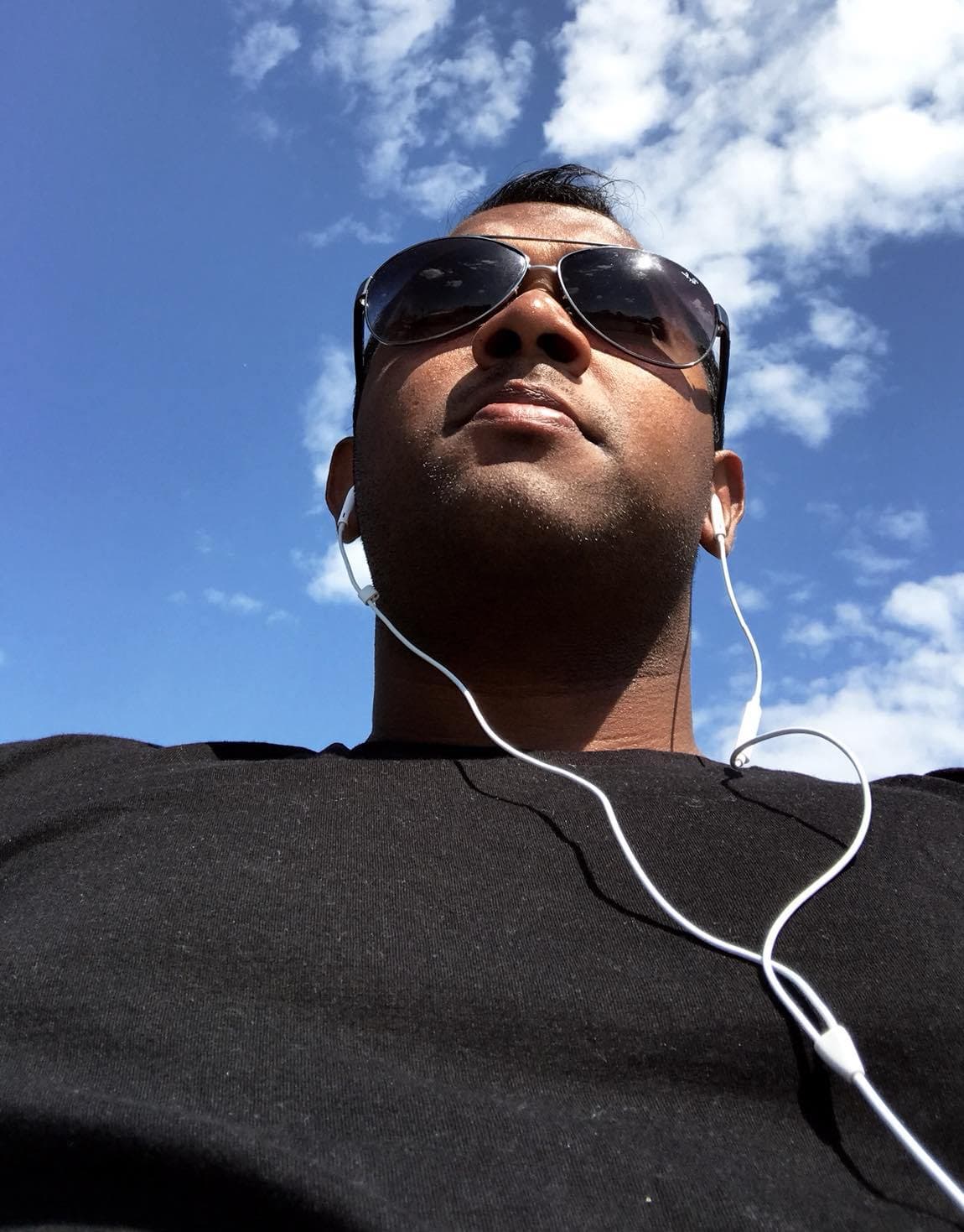
I grew up a Christian – I never really had a choice, my environments were curated for me to be as exposed to Christian teaching as possible. Even my secondary school, SJI, was an explicit choice by my parents to make sure that I lived and breathed Christianity. When I was 19, I chose to become Christian-on-vacation. When I was 20, I renounced my faith. Now, as a 25-year-old, I’m finding myself back at the church entrance, but this time, I’m choosing to be here.
There’s an important reason why I’m writing this post, even though it will probably invite all kind of comments. I want to prelude by stating that this is for my own personal record – a way of tracing my development and ensuring that I’m reflecting on my decisions. Everyone involved in this narrative had good intentions and that is important in its own right, but as I’ll expound, not every good intention is deterministic towards a good outcome. Especially not with answering the messy, complex and nuanced questions of life and the universe.
I grew up a Christian quite aware of my faith. I memorized Bible verses as a 4-year-old and would recite them to anyone who would give me their ears. I even got water baptized when I was 10 even though I really didn’t know what I was doing. I went to church, sang my heart out, and kept asking this man in the sky to talk to me. “Let me know you can hear me,” I’d say. After a while, I started making up stories to convince myself that he was real. “God spoke to me,” I’d say, even though I hadn’t even dreamed the night before. My environments weren’t very helpful, anything that was happenchance was God’s doing while anything bad was the work of the devil. When I was 15, I found myself leading a youth ministry while myself conflicted about what my faith meant to me. Adults around me were happy to let me stumble around as long as I prayed out loud and sang the songs.
At 18, I went to the army and had my first real time away from these curated and encultured environments. I had no patriarchal oversight to continuously feed me the religious lingo. There was no God in my shellscrape, as much as my church would like to disagree, there was just me and the rain. Until this, I refused to confront the probable illusion of God. My identity over the past 18 years had been built on my relationship with this omnipotent being. Yet, in God, I found no hope. When the jungle became dense and the sweat stung my eyes, it was my platoon mates that I found hope in. It was in my resolve that I found perseverance. “Couldn’t these be God’s provision?” people normally ask. Not to me, and definitely not even in retrospect. The encounter with peers who lived lives atheistically and grappled with deep ethical and psychological issues prompted by their life situations made me realize that I had found this blind comfort in a religion that probably wasn’t real. I was living off the privilege of a Methodist church and yet there were people who were dealing with a harsher understanding of what life was. It was at this point that I decided to wear the hat of a non-Christian. I was ready to see what life was like without God in my focus.
I felt liberated to live by my own rules. It seems so typical but as a 19-year-old, not having to live by someone else’s rules is the best way to learn about yourself. I allowed myself to try things, to make decisions and to live by their consequences. Again, I had the privilege of a stable family and access to friends from the church, but I was trying to live without their influence. Was I a rebel? That would be a stretch. Spoilt and indulgent would be more accurate. But I was choosing to live, an affordance not presented to me in the traditional Christian way. My understanding of Christianity involved being recurringly self-hating and anxious for a second coming. So it was refreshing to live purely for the sake of life itself. The next 3 years went by pretty quickly. I discovered a moral code but only after first trying everything else. I believed in moral relativism and the idea that no one is truly right or wrong. I tried to live by empathy, acceptance and a hate for all that was rigid (irony intended). Was life good? Absolutely. But I was getting a sense that most of what I was doing was empty. Why live? Why have a purpose if at the end of it all we simply disappear? I hadn’t met Sartre yet, but his ideas were already becoming self-evident.
Two things happened over the past year that shifted my understanding of the universe. One is private and shareable only in conversation but the other sees me visiting Auschwitz. It was here that I become disgusted with humanity’s ability to rationalize everything. Not only had the Nazis rationalized the industrial murder of so many people, so had the populations around the world rationalized their inaction by claiming moral relativism and ignorance. There had to be some way of making good decisions and to be a good person. But in order to do that, there has to be an idea of what is good. I was fortunate to be taking an Ethics class and was exposed to the difficult ideas of Kant, Rawls, Mills, and Aristotle. Sartre made his debut to me here too. I realized that my interests in improving Singapore, in being a loving son, in being a useful human – all of them paled in comparison to my newfound quest to understand what it meant to live a good life. Religion provided a possible solution because it stepped over the wishy-washiness of most philosophical theories and claimed moral authority from a natural order.
I’ll be honest, I wasn’t initially looking for a supreme being. I hadn’t forgotten about my bad relationship with the God of my upbringing. I was looking for a universal pattern or truth. A connecting force that ran through everything. I realized quickly that to a lot of people, that pattern was God. I started doing readings on different religions – mostly looking at Buddhism and Islam and of course, Christianity. Surprisingly, I found myself visiting Church and spending anywhere between 3-5 hours a week debating with newfound friends about the God of the bible. My ability to get useful information from other religions was limited and I found myself becoming convinced over time of the coherence of the biblical gospels. It made sense within itself. Christianity did the best job of answering my questions of the universe and moral ethics.
Sam Harris suggests that we can deliberate moral truths from an empirical measurement of the universe. If everything that creates a good outcome is weighed as such, perhaps we can finally plot a series of ethical patterns. Of course, this is an impossible task and one that has too many complexities. Jordan Peterson, on the other hand, describes how Christianity has the best mapping onto the Universes’ language of potential, truth, and consciousness. These are good positions. They are, however, not perfect.
I am not a believer, but I feel like I’m close to something. In fact, to a larger extent, I valued my time away from religion. I relish life and the human lives I’ve met, and it is out of that passion that I am pursuing this path. I wrote this post because I’m hoping for answers – from my readers and followers. If you think you can talk to me about them, please do.
- How can we judge our own understanding of what is a good moral framework? I feel biased by my own Christian upbringing to value certain things in a religion and ethical theory. These eventually will prefer Christianity once again in this ongoing search I have. How can I make sure that I remain objective in my valuation of what is good? E.g. I despise ritual for its own sake, but while Christianity has made positions against it in the New Testament, Islam has posited a value and place for it in the human life.
- How do I manage humanistic positions that I still value in this all-or-nothing package? I do not believe in the condemnation of LGBT people but pursuing Christianity for its moral virtue also means accepting its position on the family unit and the role of men and women in the universe. Sure, they’re all related, but to an extent, one could argue that they could be decoupled. However, in such a scenario, the arbitrator of moral virtue is once again, the moral relativist and not the universal truth.
- There are incoherencies in the Bible and the way Christians apply them. I have witnessed things that can be interpreted so many ways and they all still point back to the Bible at multiple cross-references to defend their positions. Why would a God that hopes to create a following make his word so confounding and open for abuse? Why allow it?
- If you have good resources on how to learn about key teachings about other worldviews and religions, please let me know.
As you can see, I’ve given it a lot of thought. In fact, I spend a lot of my day wrestling with these ethical and existential questions. Surely, these are the most important issues. In the meantime, I try my hardest to do things that are good regularly. To live honestly and vulnerable. To care for others, even if it’s one-sided. To give something, especially when it’s needed from me. I’d hate for my ethical paralysis to stop me from figuring out what a good life can look like.