memories of marrakesh: the red city
The penultimate continent: Africa. Very few things rank higher on my list than making my way to the continent that at the same time is talked about frequently yet remains ultimately mystical. Amongst the major cities, Marrakesh called out to me, bringing up pictures of colourful markets and thoughts of roadside stalls to drink endless mint teas. The Red City, home to some Morocco’s best sights and gateway to the Sahara, was my next destination. This was by far one of the best trips I’ve taken.


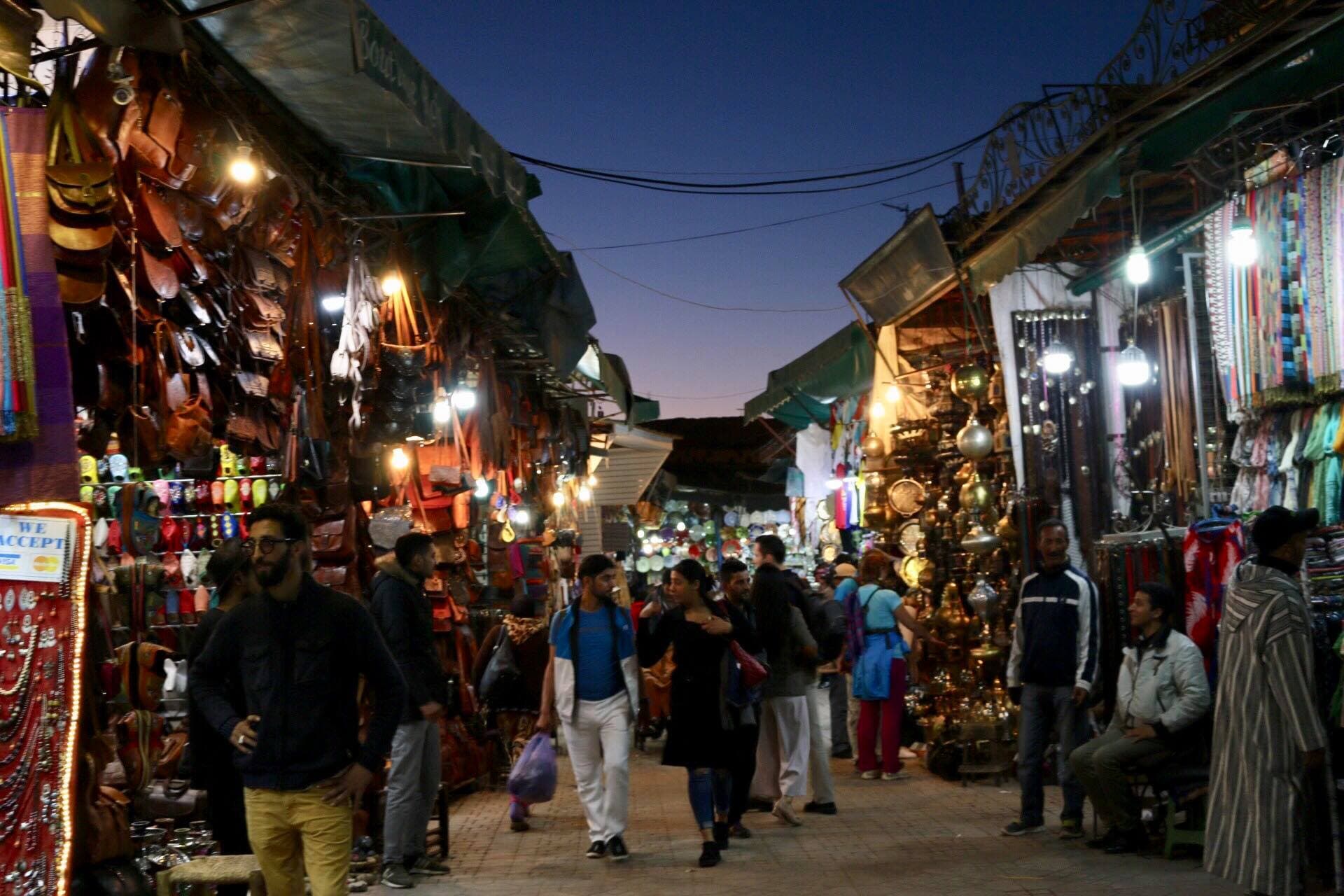
European cities tend to be organized around central plazas. Northern African cities will be organized around the Medina, the formerly fortified part of the town. In Marrakesh, all roads lead back to the most important part of the Medina, the Jemaa el-Fna Market. It is here where all the pictures of merchants and traders originate, but it is also home to performers and conmen, thieves and touters. In the day, the market is a great place to catch fresh fruit juice from one of the many stalls (starting at 50 cents) or begin your shopping extravaganza.
The market is mostly a fun time but it can also be a nightmare for the early-stage traveller. Here are some tips for the market:
- Avoid anyone who asks you to interact with them unless you’re ready to fork out money, and especially make sure that when you take a photo of someone that you are ready to tip them because they will chase you down if you don’t.
- As an ethical stance, I’d also strongly encourage any animal trainers or performers, to prevent the exploitation of these creatures. My heart broke when I saw the many monkey owners who had them sorrowfully chained up and dragged along the square – we need to be intolerant of such torture.


Once you’ve seen the market in the day, go explore the city and then come back at night. Around 6pm, the market transforms into a food extravaganza. I’ll talk about some of the food you can get here later on in the post, but a good tip is to just walk around and follow your nose and eyes. If you want a better shot of the market, the many rooftop bars around the Jemaa el-Fna will provide you with that opportunity for the cost of a slightly overpriced meal.
Fair warning: there will be many touters asking you to patronize their stalls. All the prices are the same in each stall so they compete on customer experience, just go to the one you like the best.Every stall has a number that makes it easy to come back to if you’d rather roam around. It is worth at least one meal to sit in the open air market and soak in the vibrancy and energy of the market.

All around the city but especially around the Jemaa el-Fna are street souks (or Arabic markets). These are streets lined with stalls selling all kinds of souvenirs, textiles and pottery. Marrakesh is a haven for shopaholics and you can actually find good products here for cheap. You will most probably get lost here.


Right beside the Jemaa el-Fna is Marrakesh’s other major attraction, the Koutoubia Minaret, a 12th-century landmark. The minaret is built in a Berber style, called Almohad, with unique ornamentation and etching. The gardens around the minaret and mosque are a good place to walk around, and the ruins around the campus indicate an older mosque that speaks to Marrakesh’s history.


For some more shopping and my favourite wall decoration in Marrakesh, head to the Artistic Ensemble where local craftsmen put up their products including items made out of metal, glass, clay and jewels. There is a nice cafe on the campus as well, and it is protected from the business of the rest of the city.


One of Marrakesh’s most popular attractions is the Jardin Majorelle. Designed over 40 years by French painter Jacques Majorelle, this garden is a stunning intersection of Moorish and European influences. Now run by the Saint-Laurent Foundation, the garden is a ticketed site for tourists to enter, enjoy the beauty and biodiversity and find an escape from the bustle of the city. The Saint Laurent fashion museum and the Berber Museum are also here, the latter of which I visited and really enjoyed. The only annoying thing about this place is the swarm of tourists who are really just here to take their next selfie. Please don’t be that person.

On the southern side of the city lie many of Marrakesh’s ancient structures. The Bab Er Robb is indicative of one of the gates to the Medina, extremely ornate and very imposing. The area behind the gate is now home to a small bazaar and is a good starting point for exploring Old Marrakesh.


One of the places to definitely check out is the Saadian Tombs. Only a 1 Euro payment will give you access to this quiet complex, with both outdoor and indoor tombs. Discovered in the early 1900s, this tomb complex was built by a sultan and houses up to 60 bodies. Famous for its ornamentation and beauty, the complex is a great spot to admire the thoughtfulness of the Saadian dynasty people. The most popular tomb is that of the sultan’s son and takes a wait to get a look at.

Just a 10-minute walk from the tombs is the El Badii Palace. This palace was also built by the sultan and still maintains a lot of its overall form and structure. The now-ticketed palace used to be where the king hosted guests and show off the grandiosity of his kingdom. There is a video in one of the rooms showcasing a visualization of how the palace used to look like. Make sure to check out the rooftops for some great views.


The last major attraction within Marrakesh is the Bahia Palace. This is a 19th-century complex holding 160 rooms and a number of courtyards and gardens, all with the architectural beauty and ornamentation that Morocco is known for. Meant to be the ‘greatest palace’ of its time, you can see the level of thoughtfulness that went into building this place.


While there are a number of things to see in Marrakesh, the best part about the city is getting lost in it. It is mostly safe to just wander around and take in the diversity of the side streets and the level of personalization that occurs across them all. From hanging carpets to wall gardens to souks, every street is unique. The only thing that probably runs common is that there will probably be a man on a scooter rushing past you.
Daytrip towards the Sahara
As mentioned before, Marrakesh is Morocco’s major gateway to the Sahara Desert. The best thing to do is to plan 3 days in addition to your time in the city and book a tour with a tour operator or your hotel. Prices normally are around 90 Euros for a 3 Day adventure, including being hosted by a Berber family, riding a camel and climbing the Erg Chebbi dunes. I really wish Ryanair had made it affordable to stay that long but I could only do a day trip, basically completing what day 1 of the 3-day adventure would have been.


The first part of the trip takes you towards and through the Atlas Mountains. Probably one of the most important mountain ranges in the world, this is where North Africa gets a lot of minerals and resources, the evidence of which you’ll see in the many drilling and excavation sites. It is also home to the Berbers. The Berbers are Morocco’s original population, holding strong Arabic nomadic influences but still unique. The views here are spectacular, but if you’re driving, make sure you head to the Tizi N’Tchika Pass for the best spot.


The most important part of the trip has to be the Ksar Ait Ben Haddou. This used to be a major stopover point for traders from the Sahara who were heading to Marrakesh. While there is a newer village with better utilities across the river, the old city still hosts four families. Now a major tourist attraction, this complex is an example of earthen clay architecture. The front of the city is where the Kasbahs are – similar to quad-style living where four families share a village. It really is quite remarkable and explains why it is a UNESCO Heritage site. Also, this place is the site of many movies and TV shows, including Gladiator and Game of Thrones.

Right next to the Ksar is Ouarzazate. The surrounding area of this town is famous for being used by Hollywood studios to film a lot of their desert scenes, and so there are number of studios here that basically do the work of supporting that production, There is a Cinema Museum here that you could check out but it is interesting to see how there is a Hollywood of North Africa developed here.
From here, the trip normally takes you onward to the Sahara, but I had to turn back. The good news is that we get to talk about food now then.


Let’s start with the most important meal of the day – breakfast. Better known by tourists is the M’Semmen or the Moroccan pancake.Normally made with flour and durum wheat semolina, this pancake can be served either sweet or savoury and with toppings such as honey, butter or cream cheese. They normally go for 20 cents each and are very sinful. They remind me of Parotha, the Indian flatbread, but that makes sense from all the Arabic influence. They are made on a large hotplate and are served fresh. Also, make sure to drink mint tea every chance you get. This is just regular tea made with mint leaves and normally with a bit of sugar. It is Morocco’s guilty pleasure. Any roadside cafe or stall will do.


If you’re looking for a more traditional breakfast, bessara is what you’re looking for. Made with stewed fava beans in a clay pot, this is the Moroccan worker’s breakfast for energy and is only 30 cents. Topped with a heavy amount of olive oil and served with bread, you can feel the nutrition hit you. Again, roadside stalls serve these early in the morning.

You may be asking, what should I try at the Jemaa el-Fna. I’ve got you covered. The appetiser should begin with some spiced tea. More complex than the simple mint tea, these roadside sellers push out a concoction of strong tea with ingredients including ginger and cinnamon. They also have a sweet-spicy dessert that goes well with the tea.

Continuing on the appetizer journey, have some Harira. This is a traditional Moroccan vegetarian soup and is quite delicious. The stalls here have added what they call ‘Chinese Noodles’ for more texture, but for 30 cents I’m already very satisfied.

Onto the mains. One of the more iconic dishes you’ll come across the Pastilla, an enclosed pie stuffed with chicken or fish (the tradition actually dictated pigeon) and topped with confectioner’s sugar. It is a savoury-sweet meal and is heavier than it looks. Influenced mainly by the Andalucian region and more popular in North Morocco, you can still find these in the Jemaa el-Fna.

Feeling escargot? Babbouche is the Moroccan variety, and for 50 cents you get a bowl of snails (smaller than the French variety) in a soup. It’s actually quite delicious and has a peppery kick. The snails are cooked fresh and I’d actually recommend this for the adventurer.


If you’re craving a much meatier dish, Marrakesh has you settled. The Tanjia refers to a terracotta pot that is used to stew lamb over a long duration, and produces some of the best lamb stew you’ll get. While most restaurants require some notice for a dedicated serving to you, you can find that a lot of the stalls in the market have done it for mass distribution. Have it one of the stalls that have sheeps’ heads on them and try their mixed platter, including tripe and brain. The whole meal cost me only 2 Euros but I was treated to some delicious lamb, both in the meat and offal, but also in the tanjia stew. The brain tasted like foie gras, but much saltier. Again, you can choose your own permutation for the dish.

The most popular dish in Marrakesh would have to the tagine. This is also named after the earthenware pot it’s cooked in, normally topped with a conical cover to keep the flavours in. These are slow-cooked stews and you normally can get lamb, beef or chicken. It also comes with vegetables and at times some potatoes and bread. While roadside stalls will sell them, I wanted to have a great version of this dish and Cafe Clock makes a really good serving of this.

If you’re still craving other ways to have your meat, why not have it on a bed of couscous, a popular replacement of rice in the region and much lower in sugar content. It’s actually what the locals indulge in.

One thing to definitely not miss out on is the range of Moroccan sweets. There are so many varieties and it probably serves to balance the spiciness of the food. The most popular is the Gazelle’s Horns but I really enjoyed all of them. La Patisserie des Princes is a good spot to sample as many as you want for a good price.
Here are my general tips for Marrakesh:
- The local currency is the Moroccan Dirham. While I quoted prices in Euros, that’s mainly for reference. Change all your money to dirham or use the local ATMs (many near Jemaa el-Fna) as it is much cheaper. Locals often take Euros but not at a favourable rate. If you haven’t figured it out by now, Marrakesh is extremely cheap to enjoy.
- Safety was surprisingly good here, but I also did not venture out late at night. I’d practice common sense. Only note is that there are many who whizz around on scooters so keep to your right at all times and hold on to your belongings.
- Remember that Morocco is a Muslim country and so they follow Islamic practice pretty closely. Alcohol is strictly controlled so don’t drink it anywhere outside of the legal zones. Also, modesty is expected to a reasonable extent.
- You can walk around most of the city but the public buses are also very cheap, normally around 10 cents for a ride. Do not take a taxi from the airport unless you are in a big group – there is a regular bus from the airport that takes you the Medina for very cheap. Taxis at the airport severely rip you off so make sure to haggle, a lot.
- For accommodation, you can choose between the luxurious riad that has inner courtyards and pools (strongly recommend if you can afford it) or the cheaper hostel that also has similar vibes without the luxury. I stayed at Majorelle Hostel in the Medina and was very satisfied.
I left Marrakesh with an addiction to Morocco. There are so many other cities within the country, each of which are unique and captivating. I will definitely be back.