lisbon nights and days.
I have been waiting for a long time to go to Lisbon. Touted by travel sites as the better alternative to Barcelona, Lisbon was supposed to deliver great sights and food at a cheaper rate and with a crowd that’s supposed to really love fun. Not only did I get to see the world’s densest populated bar neighbourhood, I also stuffed my face with Portuguese egg tarts and soaked in the sun at the coastline. As a result, Lisbon is now in my top 5 destinations to visit of all time, and this post will tell you why.


Exploring Lisbon best starts of the Rossio Square, a historically significant plaza for the Portuguese. Here is where the locals remember bullfighting shows, protests, rallies and all kinds of public events. The statue of Pedro IV (the man who founded Brazil) stands against the backdrop of the National Theatre and is surrounded by tourists and locals alike all through the day. On a nice day, all the cafes on the streets around the square open up the patios for people to grab a coffee and snack.


One of the best things about Lisbon is that the city’s viewscape is very diverse. You have the sea, castles, buildings old and new all within eyesight. The Santa Justa Lift is a refurbished lift that was originally built in the early 1900s to connect the lower and upper streets of Lisbon and also a great way to see the city. You pay a small fee to access the lift which is in itself pretty cool, but the view is what really makes it. The ticket normally also allows tram access the whole day so it becomes a very good value.

Right next to the lift is the Carmo Convent. Back in 1755, Lisbon had a horrific earthquake, destroying most of the city. The Carmo Convent has the only remains of the Gothic church that was here and its mix of arches and open (not by design) roof make for a very surreal feel as you explore it.

From the Rossio Square, you’ll make your way through the newer part of Lisbon down to the promenade where the city meets the sea. The Comercio Plaza is your landmark for this with its imposing statue and arch, surrounded by traditional Portuguese buildings. If you need to go anywhere in Lisbon, chances are the tram or bus leaves from here. You can find your share of cafes and bars here as well for a good view.


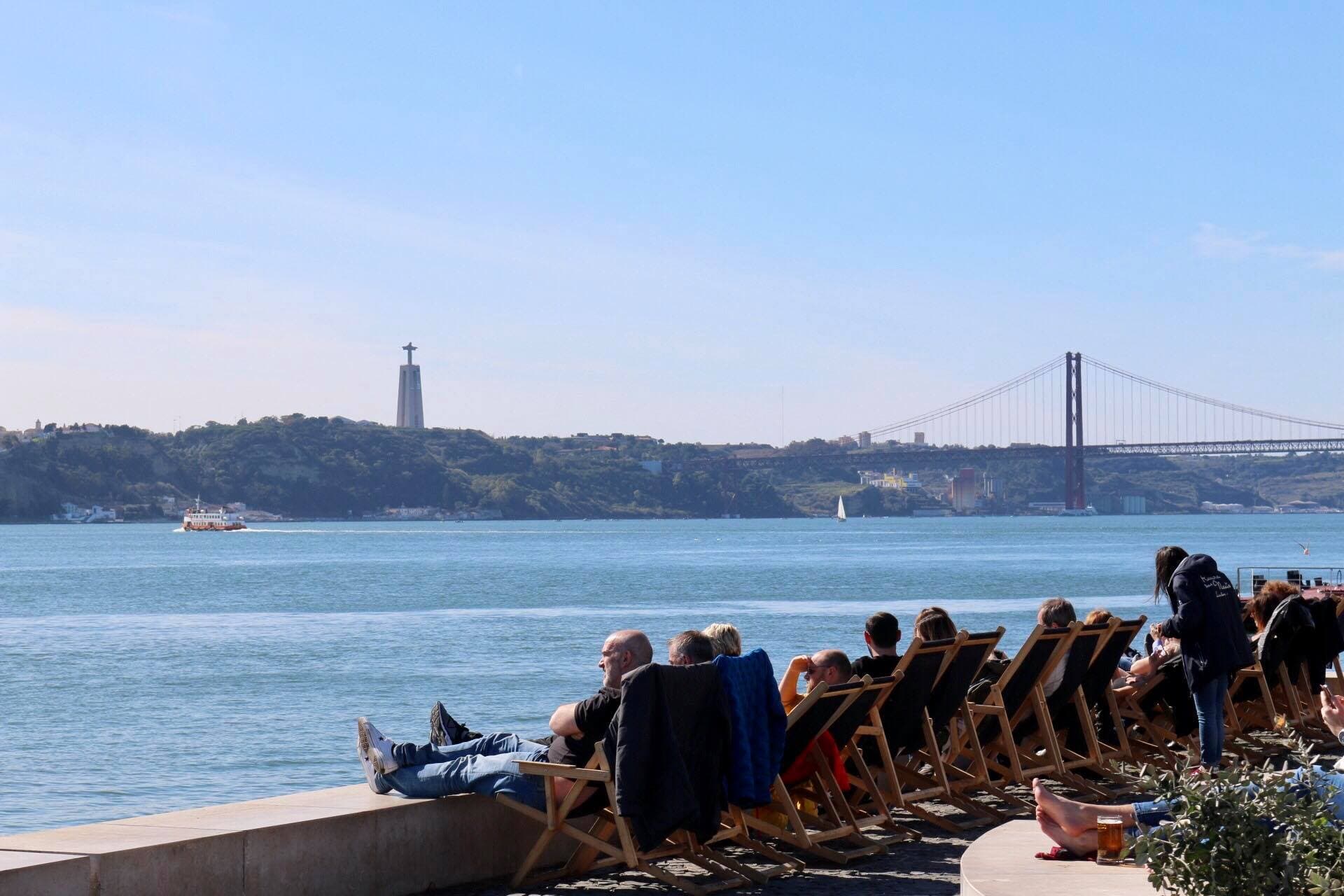
Walking along Lisbon’s coastline was one my favourite things to do, especially when it was warm.You’ll see both young and old relaxing on beaches or at cafes, drinking wine (try the Verde or Green) and listening to street performances. You can just soak up the elements and chill for a while. The coastline is also the best spot to see some of Lisbon’s other landmarks such as the 25 April Bridge or the Cristo Rei statue, the one that inspired the famous Cristo Redentor in Rio de Janeiro.

Towards the east of the Comercio Square, you can find the Casa Bicos. In a 16th century townhouse, this place has both a free ground floor exhibition of ancient ruins before the Portuguese settlements and an upper floor ticketed museum for the Nobel Prize author who used to live there. What I found really interesting was the textured exterior that stood out from the pastel-coloured buildings adjacent to it.

Alfama is Lisbon’s old town and the only part of the city that wasn’t destroyed during the earthquake. Buildings are old and aged and following the roads will surely get you lost in the twisting maze of the neighbourhood. I encourage you to do get lost though because you will see some truly serene views, especially as you pause in the many small plazas around.


Alfama is home to a number of churches but two of them are especially grand. The National Pantheon sits on a hill and is a baroque style church and functioning mausoleum for national celebrities. Make sure to check the opening hours if you want to go here. My personal favourite is the Lisbon Cathedral, a church with many different styles built into it due to the constant restoring work that happens post-earthquakes.


During your whole tour of Lisbon, you’ll be sure to see the Lisbon Castle or the Castelo de Sao Jorge from all angles. You can access it from Alfama or by the famous Tram 28. This is a ticketed entry area but the price is worth some of the best views over the city. The castle itself was built in the 11th Century by the Moors who were the settlers in the region even before the Portuguese formed the nation. You can see a lot of the influence of Northern African architectural styles and it is very cool to explore.

If you’re still looking for viewpoints, ask around for the best ‘miradouro’ which is Portuguese for viewpoint. My personal favourite was the Miradouro of Sophia de Mello Breyner Andresen, which like most other famous viewpoints is next to a church. Again, Lisbon has a really diverse cityscape so different viewpoints provide different angles of the great city.

Around a 30-minute tram ride away from the main city is Belem. This is a municipality of Lisbon, the name coming from the Portuguese spelling of Bethlehem. If you want to see some of Lisbon’s best architecture and also one of its most strategically important areas, this is the place to come. Most of its museums also happen to be here.

One place I highly recommend is the Jeronimos Monastery. Fair warning, this has the longest lines for anything in Lisbon, especially during peak period so come early or budget the time. This is also a ticketed zone but it’s well worth it to see the UNESCO Heritage site. Monks of the Order of Saint Jerome used to work in this monastery which I can only imagine was a privilege – the sense of peace as you explore it, even with so many other people around, is very impressionable. The monastery is also one of the few remaining buildings with Manueline architectural styles which refer to the Portuguese way of ornamentation along the walls and terraces.

At the coastline is the Padrão dos Descobrimentos or Monument to the Discoveries, celebrating 500 years of Henry the Discoverer’s death. As a traveller myself, the monument hit an emotional pulse within me and its grandiose reminded me of the privilege of travelling that I had.

The last key sight in Belem is the Tower of Belem, also a UNESCO Heritage Site for its Manueline architecture and another ticketed zone where you’ll have to join a long line. This building is more interesting because it shows how Portugal tried to protect the adjacent estuary through the military fortress.

One of the things to try to do in Lisbon is to take the trams. These are an essential part of Lisbon’s city mechanics and is adorned with grafitti almost everywhere you look, especially near the rowdier Bairro Alto neighbourhood. They’re rather expensive for a one way so I recommend getting the all day tram pass together with the Santa Justa lift and just enjoying as many rides as you want. Tram 28 through Alframa and the Tram to Belem are the most popular ones.

Normally I encourage travellers to look up to appreciate the architectural styles of the city, but in Lisbon, you’ll also want to look down. There are pavements with all kinds of styles and patterns and they really add some fun to your exploration.

Of course, one of Portugal’s key aesthetic contributions is the Azulejos. Drawing from its Arabic influence, Portugal’s buildings are adorned with these multicolored ceramic tiles everywhere and they add so much color to the city. This is one of the best things about exploring Lisbon in that there’s really no two similar buildings anywhere.


If you’re looking for nightlife, and you should in Lisbon, you have a lot of options. Bairro Alto has the highest density of bars in a single area, in the world. Pub crawls will take you through a number of fun bars, all of which are rowdy and full of locals and tourists having a great time. If you want more clubs and dancefloors, Pink Street (where the prominent pink on the street is) should be your destination.
It’s not all about clubbing, however. Make sure you give a night to Fado, Portugal’s dying traditional music that is being revived because of tourism. Fado is also protected by UNESCO Cultural Heritage and is really one of the most emotive performances I’ve seen. A lot of restaurants do bookings for a set dinner and live music but if you just want a drink, head to Tasca Do Chico. They have free entrance but expect you to buy a drink. They also shut the doors during the hourly Fado session (which itself lasts 10 minutes) so come promptly.

It’s time to talk about food! Yes, all of our favourite part of the travelogue. Lisbon is a food heaven, and they share a lot of regional influences but also maintain a strong unique cuisine. If you want everything in one place, TimeOut has done the work for you and brought what are in its opinion the best places in Lisbon into one market. Here you will find celebrity chefs, innovative new disruptors and even craftsmen and traders.


Two local cuisines to try are the Bachalau (or Salt Cod) and Sardines, both native to the Mediterranean region around Lisbon. The Portuguese do their Bachalau with scrambled eggs and potatoes for a dense but delicious meal. I had my food from celebrity chef Miguel Castro e Silva, who also dished out a mean sardines on toast drenched in olive oil and garnished with fresh herbs.

Speaking of sardines, the Portguese for some reason love canned sardines. What brings back memories of cheap canned food in Singapore is here a delicacy because of the fresh ingredients and the richness of the olive oil its drenched in. There are different spiced and herbed flavors worth exploring.


My all-time favourite food in Lisbon was the Bifana. This is a pork sandwich made with thinly cut pork slices cooked in a flavorful stew and served on fresh Portuguese bread. I personally love putting Piri Piri sauce on it, and at Cafe Beira Gare you can get this delicious dish for 2.50 Euros.

While Lisbon is full of great seafood, the Portuguese also know how to grill their meats. The best place to have a taste of their style of grilling is Restaurant Ze dos Cornos, which serves you a full rack of ribs alongside some fries for 10 Euros. The meat is delicious and the grilling is simple, with a simple rub added to it.

To have a proper taste of seafood, you will want to find the Portuguese version of a seafood gumbo. This uses Portuguese rice (slightly thicker), cooked in a rich seafood broth. Restaurant Alpendre provides a great value for money with tons of shrimp, a langoustine, half a crab and lots of shellfish all for under 15 Euros.

Did you know Portugal is where Piri Piri (or Peri Peri) sauce comes from? Yes, you’re thinking of Nandos right now. Many come to Lisbon trying to find the local version of Nandos but rather than fall for tourist traps, head to Bonjardim for a deliciously juicy chicken that can be drizzled with their Piri Piri sauce. I must warn that these guys are generous with the salt rub on the chicken so take note of that.


For dessert, Lisbon has many confectionaries that serve great pastries. But you will also notice the country’s obsession with Pasteis, Portuguese egg tarts that are creamy in the centre and crusty on the exterior. These two-bite pieces are addictive yet so complex. You will find many a place to try them. The Pasteis de Belem is the most popular and is slightly different from the others, having less of an egg note and more of a custard note. The rest are definitely similar in taste and vary on delivery to the palate, but I personally found Manteigaria (also at TimeOut Market) to serve the best pastel, followed by Fabrica de Nata. To be fair though, each one of these are normally 1 Euro each so you can wolf down as many as you want and wash it down with an espresso anytime.

My final recommendation is to definitely drink as much wine as you can in Lisbon. They have the regulars, but they also have green (or verde) wine which is a young wine that is slightly fizzier and sometimes comes with a sour note. Of course, also drink port. Lots of it. This is a fortified wine from Portugal that is normally served as a dessert wine but honestly could be drunk any time. It is sweet and comes beautifully within Lisbon. I prefer the tawny variety but ruby is the cheaper and more available alternative that is also good.
Here are some general tips for Lisbon:
- Lisbon is well connected with public transport so there’s really no need for taxis or car hires. The roads are also a bit unpredictable so walking and tramming are my best recommendations.
- Safety is good in the day except for the occasional pickpocketing scheme. Bairro Alto is a bit seedy at night because the city does not have a strong policing scheme against drugs so you’ll find folks pushing hard and soft drugs alike there. Do not buy anything, naturally but also avoid going anywhere by yourself in this maze of a district.
- For hostels, you will find many options, but the GSpot Party Hostel is as it name puts, the best place to go if you want to celebrate Lisbon like everyone else.
- There are a good number of ATMs in the city and Lisbon tends to be pretty cash driven so do carry around a fair amount of Euros.
- Everything is extremely cheap here for the good quality of life you’re getting. Lisbon is one Europe’s most important economical capitals but the city is still well kept in its past, which is an interesting juxtaposition. Enjoy the good life at good rates.
- One can make a day trip to Sintra, the castle town, from Lisbon if they so choose. I chose not to because it was the tail-end of my trip and Sintra is notorious for costly entrance fees to its attraction but I’ve heard it is worth visiting for its beauty.
I am compelled to come back to Portugal because the country is supposed to be so diverse. If Lisbon is any indication of the rest of the country, Portugal is a fun place to be.