Learning to Hygge in Copenhagen
Knowing my friend Joe was in Copenhagen made me hop on the plane and come over as soon as I could because I had heard Denmark is a city best seen with people already familiar. I wasn’t unfamiliar with the term ‘Hygge’, which is a commoditized reference to the sense of comfort that the Danes embody in their lifestyles. I wanted to experience it too, and experience it I did, in all the best ways and more. Through the sights, I saw and things I did, I left Copenhagen very satisfied.

A good place to start exploring Denmark is the Rosenborg Castle. Situated within a large garden, the castle is emblematic of Danish buildings built in the 1600s, with a strong Dutch Renaissance look. The KIng’s Gardens are well laid out and I can imagine it is really beautiful in the summer. You can also enter the Castle if you so choose – they house the crown jewels there in a museum.

Want to see the largest dome in Scandinavia? Frederik’s Church has it, and it’s only along the way. Like most European cities, Copenhagen has a number of large churches but Frederik’s Church is one of the most prominent ones out there. It’s a Lutheran church with a beautiful rococo style.

The Danes still have a ruling royalty and they stay at Amalienborg. This palace complex is not as restricted as the Buckingham Palace in England but it’s still an imposing space. The statue in the middle is of King Frederik V, the founder of the palace. Interestingly enough, the royal family was meant to stay at Christiansborg Palace, but it burnt down in the late 1700s and so they moved here instead. Rumor has it that the younger members of the family are quite the party animals and you can catch a ruckus sometime.

On the other side of the palace complex is a view that is distinctively beautiful – situated on the harbor is the Copenhagen Opera House. With a modern architectural style, the Opera House demonstrates Copenhagen’s diverse city landscape and is one of the more exciting parts of exploring this city.

The main old city is easy to explore and can be seen in 2-3 hours if you take your time. One of the cooler areas to go is near the rebuilt Christansborg Palace where the current Danish National Parliament sits. It is in the vicinity of all these old-style Danish buildings including the Stock Exchange. You can easily walk around these buildings and see them close up. If you go at the right time, you could also possibly tour the interior which is supposed to be pretty extravagant.

The most photographed spot in Copenhagen has to be Nyhavn though. This is the harbor with colorful buildings lining the main canal and a great spot for a midday coffee or tea. You can take boat rides from here or just admire the scene on land. It’s a very charming spot within Copenhagen and one of the more popular spots in the city.


While you’re this close to the harbor, make your way to Paper Island, a small piece of land jutting out from across the harbor. As an aside, it’s important to note that Copenhagen is hailed as one of the culinary hotspots in the world. With NOMA (closed when I was there but reopening soon) leading the charge, Copenhagen has seen a burst in innovativeness across food establishments. The other side of the harbor is where some of these restaurants lie and it’s definitely worth the small journey. One of those establishments is Copenhagen Street Food, a food market that is currently shifting not too far away. Here you’ll get a bunch of artisan food craftspeople and so many good options you wouldn’t know what to do.


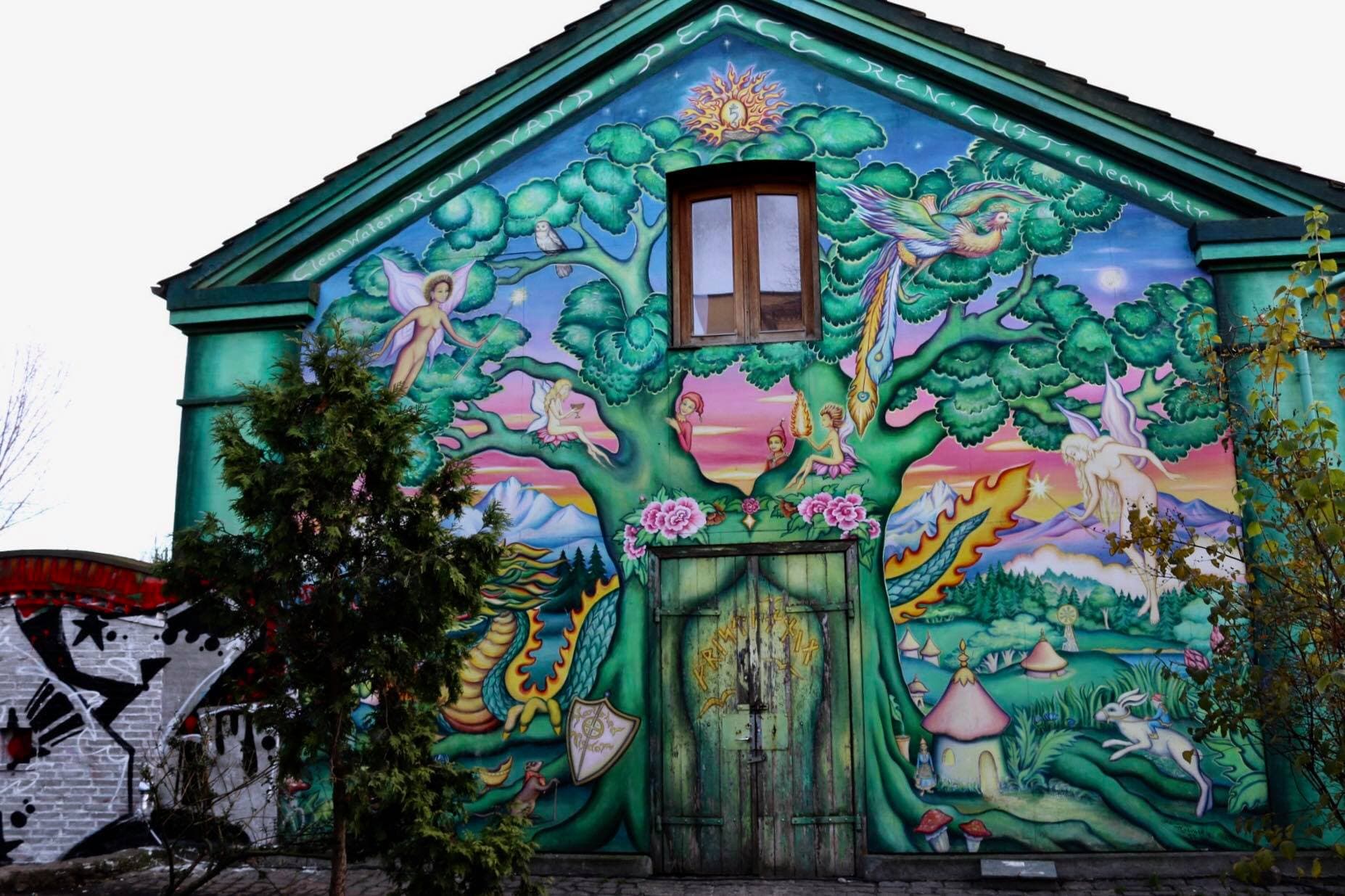
Another place that breaks and diversifies the scene of what Copenhagen is, is the Freetown Christiana. Honestly, I would put this and Tivoli into the category of what makes Copenhagen especially unique from other European cities. The Freetown is an anarchist establishment that self-rules separate from the government based on a consensual agreement. Here you’ll find graffiti, open spaces, the homeless and the free. One of the more popular spots is Pusher Street, where drugs are sold openly and regulated by the gangs themselves. It is quite the sight, although that specific street doesn’t allow photography for obvious reasons. There are food establishments and the occasional concert held here but I’d say it’s worth visiting just to see it for yourself and appreciate some of the murals. It’s also one of the more interesting social experiments I’ve seen.


And then we have Tivoli. I’m kind of bummed about not being able to actually go into Tivoli because I had arrived just a couple of days after the Christmas update was made and the lines were at least 2 hours long just to get in. I couldn’t bear the cold enough to do it. Tivoli is a garden, amusement park and arts venue all in one. The gardens were created in agreement with the Danish King to distract the people from politics and it seems like it could be continuing to do that. As one of the most popular theme parks in the world, it is on the pricier side just to get in, and even more costly to get on the rides but it seems like most people enjoy it. The pictures I’ve seen of the interior are expansive and magnificent. I’d honestly be interested to revisit in the spring or summer.
Now let’s talk about food:


As I mentioned before, Copenhagen’s culinary ecosystem is great. It also tends to favor the pricier side in general so if you can try to make a reservation way in advance for one of their Michelin-starred restaurants and start stacking your wallet. I tried to be strategic about it and did research on culinarily innovative restaurants in the mid-price range. Royal Smushi Cafe was a great find, knocking off both my desire for an innovative restaurant as well as my interest in trying a traditional Danish food, the Smørrebrød. This is an open-faced sandwich and there are multiple cafes selling them across the city, but at Smushi Cafe not only do they come sushi-style i.e. why it’s called smushi, they also have some great flavors like Nordic salmon or Æbleflæsk (which is a Danish apple and streaky bacon mix).

If you’re there in the winter season, make sure you get your hands on some Gløgg. This can be found almost everywhere, especially in the Christmas markets (which you should also explore while there – they’re really pretty in Copenhagen). It’s similar to mulled wine but the Danes add raisins and other fruit to the mix and tend to use stronger alcohols. You’ll get a good buzz and stay warm thanks to these treats along the way.

Finally, don’t stop from indulging yourself in a Danish hotdog or Polser. These are sold in food carts around the city and the mark of a great traditional dog is the mountain of fried onions served on top. I had mine from John’s Hotdog Deli and I can assure you that they use quality meat in the sausage. I do still miss it.
For drinks, you’re probably familiar with one of Denmark’s biggest exports – Carlsberg. You could make your way to the brewery although it is a bit of a trip. I didn’t manage to go but I heard it’s more of a museum than anything else. While you’re in the city, however, make sure to try Tuborg, which is made by the same group but is the local favorite. It’s also cheaper.
Nightlife can be found on Vestergade Street with tons of bars and dancefloors, although I’d advise coming earlier in the night to avoid really long lines. The more glitzy clubs are of course in the Meatpacking District, which is also a bit out of the way. I did the former and found it good fun by itself.
You may be also asking – what about the iconic Little Mermaid statue? The statue is a long walk from the center of the action and unless you want to have a waterfront walk near military installations (which could legitimately be interesting), it wouldn’t fit into a tight itinerary in Copenhagen and according to reviews, it doesn’t have anything interesting to add to your understanding of the city. Additionally, another spot I didn’t make it to was the Glass Market, which has a food market similar to Paper Island. Let me know how it is if you end up going there.
Here are my general tips:
- Prices are high, but you can get around if you plan your meals and expenditures. Most attractions I mentioned are free unless you buy tickets for museums.
- Transportation is thankfully not as necessary since you can walk almost everywhere. Public transportation is good though if you do need to use it. The airport is also accessible by their public transport which is a major lifesaver.
- Safety is a given here – there are few street crimes because of the high quality of life.
- Most places take contactless cards so you can get around without carrying cash for the most part.
Copenhagen has an impressive standard of living, mainly due to its high taxes. There are a lot of historical reasons for this worth reading about, but you’ll notice that Denmark is going through a confrontation of its values as Europe sees rising immigration, especially from refugees. Hygge is present and well – the way people live is indicative of the sense of comfort they find in the everyday and staying with Joe and his friends gave me a peek into how that looks like. But I’ll be keeping an eye on how its politics engages with a changing and diversifying ecosystem. It is quite a time to be alive for the people of Denmark.