it’s all greek to me: athens & andros
There’s a certain expectation when visiting countries like Greece that the trip would consist of merely the affirmation of widespread mythologies, heard all the way back to my home in Singapore. Zeus, Athena and Heracles are names I’ve grown up with. Yet, in the most surprising of ways, I found out how little I actually knew about Greece, both as a historical empire as well as a contemporary society. This trip took me on an emotional journey, on multiple fronts, to peer at this country with lenses borrowed from past and present. Athens, the capital, and Andros, a Cycladic Island, provided a strong breadth of experiences that continue to reassure me of Greece’s special place in my list of travels. Here is the travelogue for them.


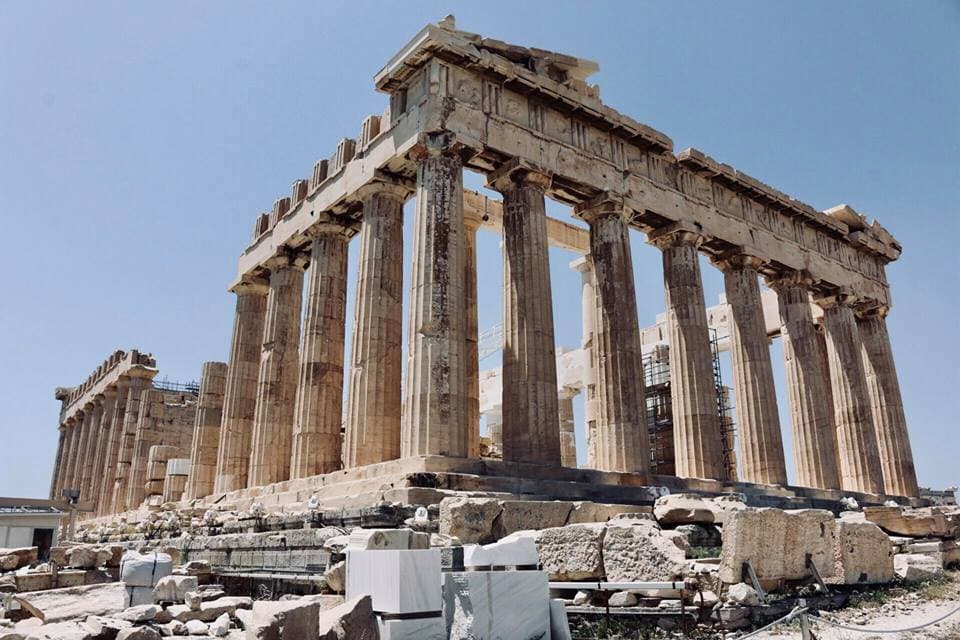
The centrepiece of Athens is indisputably the Acropolis. Built on a rocky hill, this citadel is composed of ancient temples rebuilt after the Eurymedon Battle with the Persians. The campus was previously used by ancient kings but eventually evolved to become a place of worship as Athens developed a sense of city life and democracy, housing the important temples of the Parthenon and the Erechtheion. Athena, the patron God of Athens, is the main deity worshipped here and the site provides a good amount of information on both the history and restoration efforts for the various buildings. It is quite unfortunate that a lot of the structures are destroyed due to their use during the various European wars, but the restoration work is quite remarkable. One can walk through the ancient Propylaea gate, continue to be amazed at what is called the most remarkable Doric-style building still in existence and enjoy some of the best views over Athens.


Adjacent to the Acropolis and at the foot of the hill is the Odeon of Herodes Atticus. This is a still standing ancient theatre, constructed initially in 161 CE, that not only is historically significant (the Greeks advanced European theatre in a formidable way) but is still continuing to provide great acoustics and views. If you can, go online to find out what performances you can sign up to watch. Tickets are affordable.


Agoras are ancient meeting squares where the Greeks actually participated in active city lives such as going to the city and socializing. When you think of the ‘birthplace of democracy’, this is often where the action occurred. There are two main agoras worth visiting. The Ancient Agora is a bit of a walk from the Acropolis but it holds alongside the main meeting grounds, the Stoa of Attalos and the Temple of Hephaestus. These are ancient structures that tower above you impressively. The Stoa also holds more artefacts for the curious. The other main Agora is the Roman Agora, closer to the Acropolis. This was built by the Romans during their occupation and is a smaller complex. The Tower of Wind within the Agora is a weather observation tower that makes for a good photo.

Another important historical site in Athens is the Pnyx. This is a hill near the Acropolis that hosted many of the assemblies in the early days of democracy. Historians suggest that up to 20,000 people could be hosted here for famous talks such as those on dismantling feudalism and understanding the role of money in politics. An interesting find in the Pnyx is Socrates Prison, allegedly where he was kept for impiety. It is more accurately where historical treasures were hidden from the Nazi in WW2 and so still historically important.

If you’re looking for the ruler of the Gods, Zeus himself has a temple within the city centre. The Temple of Zeus stands in a mid-sized campus with only a couple of its columns remaining. This was one of the temples that were least maintained, even being quarried for materials for other structures in Greece, especially during the Byzantine empire. Guess you could say Zeus never got the respect he should have gotten as king of the gods.


One of my favourite parts of Athens definitely has to be its central park, called the National Gardens. This huge park is home to a number of attractions including ancient archaeological remains, a bird sanctuary and a number of performances. You can easily get lost in the park but it’s perhaps worth it, especially since Athens’ centre is very built up.

Looking for something Olympics related? The Panathenaic stadium is the world’s only white marble stadium and is publicly accessible for a small fee. Here you can learn about the Olympic stadium and the mix of old and new architectural insights into the design of the stadium. They also have a small exhibit to the Olympics within the stadium. Of course, you can also take a lap around the stadium.


Athens is probably home to some of the best museums in the world. The National Archaeological Museum is a bit out of the way from the rest of the attractions but is worth the detour for a look at some of Greece’s oldest and most interesting archaeological finds, including some from the Cycladean islands. My favourites here were that of the Boy and the Horse and the mysterious statue of Zeus/ Poseidon.


If you’re still curious about the monumental Acropolis, the Acropolis Museum at the foot of the hill houses some of the more fragile and important artefacts found in the Acropolis. The museum itself provides some of the best views of the Acropolis but its interior is filled with some of the grandest Greek exhibits I’ve seen, including partial reconstructions of the Acropolis. The original Caryatids are also housed here, with one exception having been kept by the British Museum (tsk). Note that they have some weird and arbitrary photography restrictions on some of the exhibits so don’t be surprised by the museum assistants who start yelling at you.


One of the lesser spoken eras of Greece is its primacy in the Byzantine Empire. The Byzantine and Christian Museum slightly east of the city is housed in a beautiful complex. It houses artefacts from the Byzantine Era but most importantly holds some of the most striking Christian murals I’ve seen, etched on wood and aged with care. I was very surprised by how little I knew of the Byzantine age and this museum really does a good job of educating you about it.


Athens also has a number of private museums and the Museum of Cycladic Art is the one I got the privilege to visit. It houses a decently extensive collection of Cycladic and Ancient Greek artefacts and has an astounding level of thoughtfulness dedicated to ensuring everything is well explained. They also have temporary exhibits such as the George Condo one I got to visit. Definitely worth the visit if you have the time.


While Athens is definitely home to a number of historically and culturally significant structures, it would be naive to claim that that is all Athens is about. You’ll easily notice as you wander the city that as you go to see some of Greece’s most important historical monuments, you’ll end up navigating through a lot of Greece’s very lively present. The Eurozone Crisis gave outsiders the impressions that Greece would have put everything at a standstill but while the Greeks are working on getting their country back on track, they do not stop dreaming, living and celebrating their existence just as they did back in the day. The neighbourhoods of Plaka, Monastiraki, Anafiotika and Kolonaki are amazing places to just wander and enjoy the time pass by together with the locals.

Friends of mine would know that I love rooftops and Athens is a treat for all rooftop lovers. Almost any decent spot in the city has a rooftop terrace with a great view of the Acropolis. Make sure that you end every night up on a rooftop with a beer in your hand and an inspiring view of the Acropolis in the distance.
Weekend Trip to Andros

Before I jump into the food section, let’s talk about a Greece must-do: islands. Everyone knows about the classics such as Santorini and Mykonos and while they are definitely cool in their own rights, Greece actually has so many other islands that also provide great reasons to visit. There are a number of ports that ferries depart from, primarily Piraeus and Rafina, and almost all the ferries are classy and semi-luxurious. We decided to visit Andros, a Cycladic island only 2 hours away.


Andros surprised me a lot. For somewhere I knew nothing about, the island was home to some of the best views I had seen. The town of Chora is its capital and you can access a great number of beaches (with a healthy amount of booze provided by beach bars) from it. A lot of the life on this island is centred around its beaches and you can do a good amount beach-hopping to different types of beaches.


If you want those iconic Greek white-washed buildings with patches of blue, you will be delighted by the news that all Cycladic islands have similar features. Andros is no exception and getting lost in its towns will leave you with many opportunities for great photos. Chora’s unique townscape with its residential cats provides no shortage of views.


Protip: One of the best views of Chora and Andros can be captured from the cave hidden in the ‘Castle’. It’s a bit of a tricky climb to get there and I’d recommend sturdy shoes to climb the non-bridge but the view is breath-taking. This view probably summarized a lot of the trip for me: beauty is a reward for those who pursue it.
Food in Athens/ Andros


Greek food is a world in itself. I was so well-treated this whole trip I have a new found appreciation and love for Greek food. Breakfast here is a treat. Most Greeks have a selection of bread and pastries. Most common are the sesame ring bread, cheese puffs and spanakopita (spinach pastry). All of these are incredibly tasty and go well-matched with some freshly made Greek coffee. Greek coffee is pretty much similar to coffee from the region, especially Turkish coffee, but is identifiable from its fine grind and a healthy amount of ground coffee left in the brew. You can have a good breakfast at any corner bakery in the cities.


Nothing gets more Greek than a beautiful souvlaki. These are Greek wraps made with tzatziki spread, greasy pork shavings from the gyro and freshly fried potato chips. Sometimes other ingredients are added such as tomatoes, onions or carrots, but the essential ingredients provide for a delicious treat. Most souvlakis go for around 2-3 Euros so this is both a filling mid-day meal and a body pleasing drunk snack. The skepasti is a variation of the souvlaki that comes more as a giant sandwich but it’s made with all the same ingredients. Again, most Greek streets will have a number of souvlaki shops so just follow your nose and eyes. A good souvlaki maker will carve the gyro straight off for you and slightly grease the pita for you.

I’ll be honest, I’ve never actually been a salad guy but Greece changed my mind. In the hot summer, fresh juicy produce on a plate actually does wonders for your body and Greece has access to a range of beautifully served ingredients and tasty cheeses. The Greek Salad, of course, comes to mind for everyone but don’t let that detract you from the wide range of other salads in Greece.

Moussaka is a beautiful hot layered dish similar to a lasagne, except that its based on aubergines and ground meat and topped with a bechamel like cheese sauce. This is a luxurious tasting dish and can fill you up but every bite bursts with flavour. I had an amazing serving of this at OIKEIO and would highly recommend this restaurant to anyone wanting an affordable treat in the city.

The Greeks do love their meats and it would not be uncommon to find a group of locals seated around a meat platter, topped with chicken, pork, sausage, cheese, aubergines and fries. The Anfiotika Cafe had a great value dish of this.

A more ‘traditional’ dish would bring you to Rooster and Pasta, a Greek dish that reminds me a lot of Mediterranean stewed meats. The rooster is stewed in a fragrant tomato sauce and put on a bed of fresh pasta. The meal is just a hearty treat that serves you well in Greece. I had mine at Strofi which is a place to enjoy a finer treatment of all that is food.


If you’re on the islands, you are going to want to switch up your diet to include a selection of the freshest seafood possible. On Andros, we definitely did that and we were treated to a tapas-style selection of light but delicious Mediterranean cuisine. Think of stuffed vine leaves, octopus salads and stuffed calamari. If you happen to be on the island, go to Nona’s for this amazing meal.


The Greeks don’t have a shortage of desserts. Try their deep fried doughnuts called Loukoumades, which come soaked in sweet honey. Their Greek Yoghurt, world-famous for its thick consistency, is also available at most restaurants topped with local or regional honey. You can also find a good range of Greek Froyo stores in the city.

Finally, when it comes to alcohol, I am happy to announce that the Greeks have a great drinking culture. From their locally made liquors to their more famous ouzos and rakis, the Greeks are in no shortage of local drinks to imbibe on. There are a good number of bars and dancefloors near Imittou Street where you can find locals and tourists alike and where nightlife goes till late almost every day. Things only start to get interesting around 1am so either start late or plan for a long night. Rest assured, a lot of the trip was fueled on ouzo.
Here are some general tips:
- Athens has a great public transport network that is pretty affordable BUT it is subjected to frequent strikes, so it’s worth checking the local news for updates. They also have Uber but it basically is a taxi-hailing app.
- Athens is mostly cash-oriented with the exception of mid-high end restaurants. There are a good number of ATMs around, especially in the city centre. The local currency is the Euro.
- Airbnbs are the go-to for accommodation both in Athens and Andros.
- Athens is very cheap to visit, food tends to be cheap and transportation even more so. If you are an EU student, you also get access to all the public sites for free.
- Athens felt safe the whole time I was there, and there were very few signs of unrest. The only potential problems for tourists are the people who harass you near the ancient sites with tokens and gifts and ask for donations at the end. Just avoid them altogether and you should be fine.

There was a lot to this trip that I will continue to hold dear in my memories but perhaps the most important is how grateful I was to explore this magical country with Mike and Georgia. There’s still so much to this country that I know nothing about but I’m infected with a newfound love for a country and culture that has a foot firmly ledged in its past and with a foot searching hurriedly for a definitive future.
This tension and exploration speaks to a lot of people and proves that the absence of a current answer does not leave impossible the opportunity for celebration. I left the country feeling rejuvenated. There was now an appreciation for struggle as a means to growth, for redefinition as not disabling of celebrating one’s past decisions. Anyone who thinks they have an idea of what Greece is going to be should let themselves be challenged by the beautiful reality of what the country actually is.