discovering the beauty of central sri lanka
It had been a while since I took a more adventurous trip and I was getting tired of just visiting cities. Since I was going to be back in Asia for my winter break, I chose to coordinate a detour to Sri Lanka for a couple of days to explore this allegedly underrated country. I was curious if it was going to be no different from my first India trip since both countries have shared heritages, but I was very pleasantly treated to enough novelty to convince me that Sri Lanka merits a visit of its own from any serious traveler. Rather than have a separate post for each city/region, I’m compiling all of them in this one post to reflect the fluidity of traveling in Sri Lanka – you don’t really stay in one city here, you move around and explore.
I should probably mention a few logistical notes regarding the trip. Sri Lanka looks like a small country but it’s actually huge and a bit complicated to get around. Given the fact that I only had 5 nights in the country, I had to prioritize certain regions over others and so chose to focus on the ‘Cultural Triangle’ with some additional time in Colombo and the Udawalawe National Park. Travelers can choose to visit the Northern region around Jaffna or the Southern beaches as well.
Colombo

Colombo is the capital of Sri Lanka and probably where you’ll be flying into. The city is one of the more atypical capital cities I’ve been to, being touristically pretty lacking but still a good first exposure to the country. Almost every site I researched recommended spending as little time in the city and prioritizing the other parts of Sri Lanka.
I’d argue that Colombo does have something to offer the curious traveler, and is worth at least a day. For one, the Lotus Tower follows you everywhere, similar to Seattle’s Space Needle. This is one of the many recent government infrastructural projects in the city to kickstart the economy, and indicative of the increasing focus on building an attractive city.

Sri Lanka’s history is very rich, and you can see elements of it everywhere in the city. Firstly, it had its own indigenous kingdoms, some of which we explore later on in the trip. Yet soon after, it was conquered by the Portuguese, the Dutch and the British in quick succession. It is quite tragic how the country was essentially bled of its resources before being ‘freed’ by other colonizers who then continued to bleed them as well. Right now, the city itself is in a transition point. After stabilizing from the recent civil unrest, the country is focussing on improving its economy. Colombo is a big part of that effort. You can see all sorts of big national projects alongside colonial buildings, and the city is starting to boom. It’s a very energizing feeling.

In the Fort part of Colombo, you will find the Dutch Hospital, a revamped old colonial-style hospital that now houses great restaurants and bars. This is a useful starting point for exploring most of ‘old Colombo’ as the hospital and other surrounding buildings tell you more about how the colonial architecture looked like in Sri Lanka.

The waterfront in Colombo is worth taking a walk on. Called Galle Face Green, locals and tourists alike come here, especially at night, to enjoy the sea breeze against the backdrop of their city. While the day is filled with people exercising, sitting on the benches or even lying on the grass, the night is where the waterfront truly becomes bustling with people. Food sellers come out and a spectacle of light and noise will treat you as you walk along here.

There are other parts of Colombo that are worth visiting that I never go to hit because of time. Gangaramaya Park, where there’s a temple in the middle of a lake, is a beautiful sight apparently, and the National Museum is an educational visit that won’t be wasted if you are trying to understand the history and culture of the country.. Viharamahadevi Park should be visited if you want to see local life in Sri Lanka. The place that I did visit that I enjoyed a lot was the Red Mosque, in the central part of the city. In the Muslim part of the city, this mosque was built by immigrants from India who needed a place to pray. The red and white facade is stunning and the interior is architecturally captivating. You would probably get a neck ache from all the time you’ll spend looking up at the building.
Kandy

From Colombo, we took a 4-hour train ride to Kandy, the cultural capital of Sri Lanka. Kandy is Sri Lanka’s second city, but it has a much smaller feel to it than Colombo. Here, you see fewer people in business shirts and more casual wear. The city is known for being home to some of Sri Lanka’s oldest traditions and cultural activities, as well as the gateway to some of the country’s most beautiful sights.

One of the places I’d recommend to visit in any city is the local market, and so do I continue in Kandy as well. The Central Market is home to some of the freshest produce in the region and a site for cheap grocery shopping. The market is built as a square with a garden in the center and it does get lively as the locals come out to do their daily errands. It’s a popular meeting point and together with the market sellers and their craft, you have a great location to witness local life in action.

The other activity I’d recommend is taking an early morning hike up to the Kandy City Viewpoint overseeing the Bogambara Lake. This is one of the many stunning views I got to witness in Sri Lanka, especially as the sun makes its way up. You could alternatively take a tuk-tuk up here for around 50 cents (US).
Cultural Triangle
Kandy is the gateway and starting point of the Cultural Triangle. One of the three sights is the Temple of the Tooth Relic, within the city itself. We didn’t get to make our way there as our days were already packed with activity and we were tired from visiting temples but if you have the time or you’re a devout Buddhist, I’ve heard it’s worth the visit.
Another activity on this cultural spree is the Cultural Dance Show. Kandy was the seat of the ancient Kandy kingdom (one of Sri Lanka’s few kingdoms) and so if you want a peek at the culture back then, this performance is for you.
Moving away from Kandy, the actual Cultural Triangle is north of the city, encompassing the Dambulla Cave Temple and the Sigiriya Rock. You can take public transport/ buses to both of these sites although their cheap cost gets quickly balanced out by the cramped personal space and uncomfortable seats. We pooled together as a group of 4 and hired a car to take us around the whole day for only 10 USD (before tip) per person. More information on these in the general tip section later.


On your way up to the sites, you are going to have the opportunity to stop at many secondary attractions including ruins, temples, spice gardens and smaller cities. I’d recommend knowing what you want to do ahead of the trip as it takes 2 hours up to Dambulla and then another hour to Sigiriya so you’ll have to be selective. One of the activities we were recommended and took up was visiting a local batik hut. Batik isn’t native to Sri Lanka but was brought over through trade and adapted for local practice. Here you get to see the rudimentary manner in which they create the textiles and clothes and how they employ and empower women in the area.


Dambulla Cave Temple is built into five caves in a giant rock formation. This is a World Heritage site and a very unique experience. You have to hike your way up for approximately 30 minutes from the ticket counter to the top of the formation where the temple is. It’s a pretty unforgiving expedition but you are rewarded well with the view from the top. The temple itself creates an Indiana Jones-like atmosphere where you discover treasures in the cavernous spaces. Do note that monkeys are numerous and active here. Dambulla shows you how the Buddhist monks here found some of the best spots in the country and converted them to temples so that they could find beautiful spaces to meditate and pray.


Sigiriya was my favorite part of the whole trip. Essentially a giant rock fortress surrounded by ruins of the ancient city, this UNESCO World Heritage site used to be home to one of Sri Lanka’s ancient kings. The rock itself is imposing but don’t let it distract you from wandering around the grounds and seeing the vast expanse of the city, from quiet meditating spaces to look out points. Climbing up the rock is a journey and is akin to a mini-hike. It takes approximately 30-45 minutes to get to the top and the route takes you through ancient frescos and structures. The palace of the king itself is right on top of the rock and is protected by a gateway that embodies a lion. Getting to the top is such a reward though, both because you get to explore the palace and get to see the view, my personal favorite on this trip. We got to catch the sunset here and it was absolutely worth the planning to make it in time.
Train to Ella

After exploring the Cultural Triangle, we were off again, this time to Ella. However, while Ella itself is amazing, the attraction to note is actually the train ride there. One of the most popular train rides in the world, the route from Kandy to Ella lasts six hours and is known to be one of the most beautiful trips possible. Trains in Sri Lanka (and South Asia in general) are notorious for being packed. This was quickly proven true as we attempted to make our way onto the train amongst many like-minded tourists and even more knowledgeable locals who had come from the city before Kandy instead. People pass belongings through windows to ‘reserve’ seats and there’ll be a lot of jostling and some enemy-making before you find a place to sit. This is part and parcel of getting a spot on this famous train ride, only two of which depart daily.

If you get hungry on the ride, you’ll have no shortage of options as merchants come on board selling all kinds of snacks from vadai (a dough snack) to nuts to fruits, as well as hot drinks like coffee and Milo.


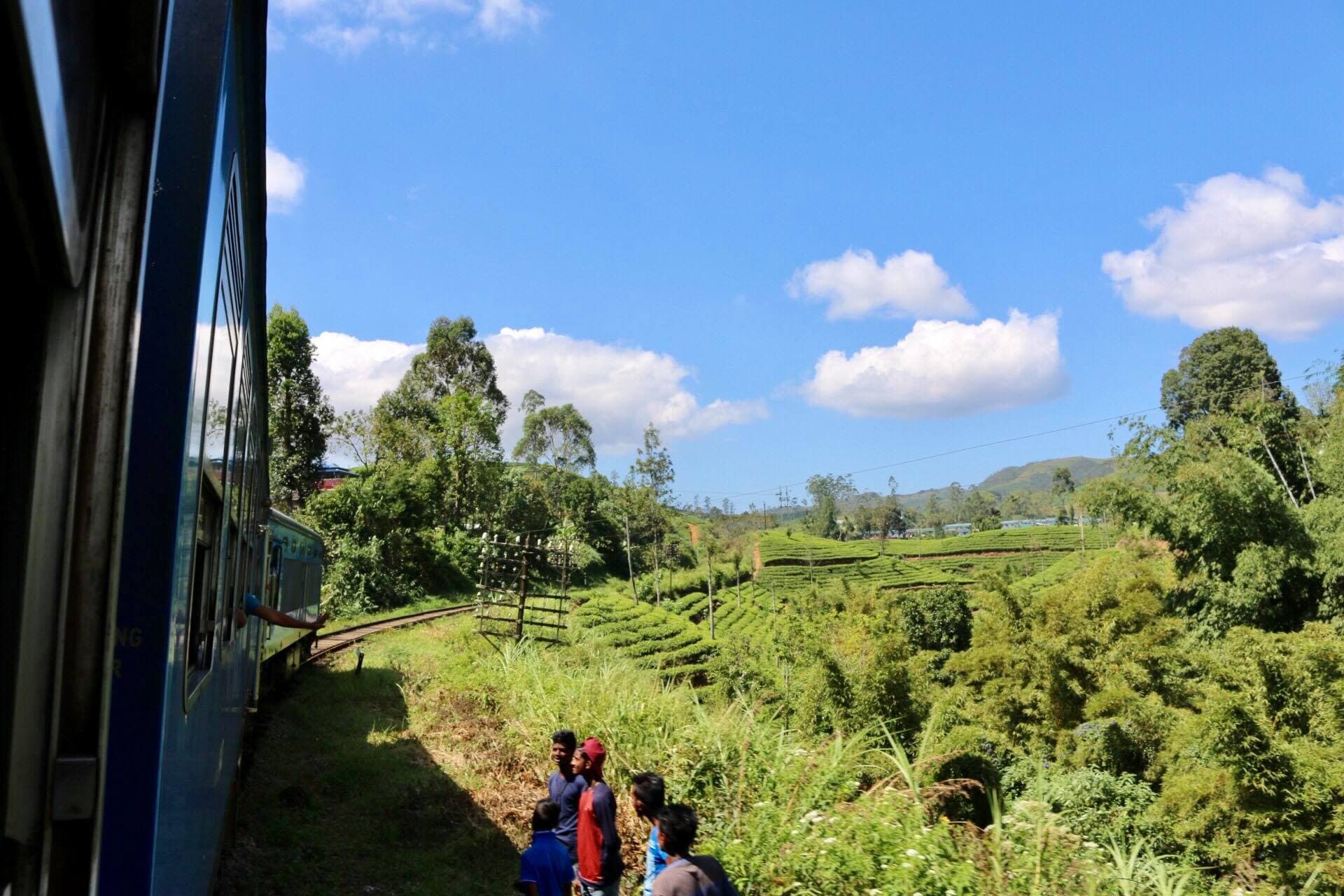
What makes this train ride especially worth it though is the views along the way. The six-hour journey quickly becomes bearable as you go up into the mountains and get to see tea plantations, waterfalls, local villages and all kinds of landscapes. It does get cold as you are up in the mountains, so bring a jacket. The train passes through many tunnels along the way and you can hear the local youth on the train take the opportunity to scream into the void. You’re welcome to join thema s well. Grab a coffee, open up a book and enjoy one of the best ways to spend a day in Sri Lanka.
Ella

Ella is Sri Lanka’s touristy mountain escape. Up in the highlands, Ella has very few locals and more adventure seeking travelers coming to do some exploring. The main town itself is small and bed and breakfasts are plentiful. Choose the right location and you get to wake up to views like this every morning.


One of the adventures you can make here is the trip to the Nine Arch Bridge. Built without steel (supposedly because the British diverted resources to fund the war) the Nine Arch Bridge stands a hike away from the main city. You can walk on the tracks from the Ella train station to the bridge but I’d actually recommend saving that for the hike back and making a journey from the main road to the bridge through the village. That way, you get to also see some of the local life (they don’t mind, in fact, they’d try selling you stuff) and have a bit of an adventure as well. If you take the adventurous route, you’ll also come across Asanka Cafe, a small local-run cafe where you can get a cup of tea and watch the tracks. Come at the right time and you’ll get to see the train pass through.

Ravana Falls is a famous waterfall in Sri Lanka that is either a very long hike or a short car ride away. This is one of the country’s widest falls and cited in a couple of literary works. This is also part of Ella’s many natural sights.
One site we didn’t have the chance to explore was Little Adam’s Peak, a one hour climb to the top of a mountain where you get to see a panoramic view of the highlands. The travelers in the area heavily recommended doing it if we were ever back in the area.
Udawalawe National Park


The last stop on my adventure through Sri Lanka was the Udawalawe National Park. Run by the government, this park was a perfect way for us to see some of Sri Lanka’s natural life while on our back to Colombo to catch our flights. There will be many options in the country for you to catch Sri Lanka’s pride and joy: the elephant. However, Sri Lanka is also notorious for not having proper ethical oversight for some of the ‘sanctuaries’ or ‘parks’ and due diligence must be done to ensure you’re not supporting animal exploitation. Here, the national park is more of a reserve, where the animals are allowed to live and roam freely with minimal intervention.
You can (actually, you must) hire a jeep outside the park and explore the park for around two hours. The driver or the scout will keep an eye out for animals and natural features. Elephants are in the plenty and you’ll get to see them in the midst of all sorts of activities, from resting to bathing to eating. Coming around 2pm is best for elephants as they congregate the watering holes but early mornings and evenings are better if you want to catch the likes of alligators, deer, and coyotes. We managed to see some of them but they are nowhere as numerous as the might elephants. A word of caution, make sure to bargain hard with the jeep operators. They don’t sell a fair price, exponentially scaling up their prices sometimes. It’s a captive market so you’ll have to stand your ground and insist on a lower price.
Sri Lankan Cuisine
This is one of my favorite parts of the travelogues. Sri Lankan cuisine is amazing and quite distinctive from Indian cuisine, hosting more coastal flavors and more diverse colonial influences. I’ll share the recommendations by food item rather than the specific restaurant as most places that do sell these dishes tend to have a high baseline for street food anyway. I will add the places where I had them in case you want to be on the safer side.

We need to start with hoppers, probably Sri Lanka’s most famous food item. Made with fermented rice batter and coconut milk, this is a shared dish with the south and west parts of India. I will say this though, the best hoppers I’ve had have come from Sri Lanka. Similar to pancakes, these hoppers are fluffy in the center and crispy at the edges and go well with curries. Add an egg in the middle of it, and the hopper becomes a savory treat. Here, I’d actually highly recommend going to Upali’s in Colombo for the best hopper I’ve ever had in my life.

Made with rice flour, string hoppers are noodle-like steamed pancakes that are eaten for breakfast around the country. These are extremely cheap and are served well with a lentil curry or sambol, a spicy coconut mixed with some dried seafood and other spices. This is the perfect way to start your day. Lyon’s in Kandy does a mean serving of these,

Lunch normally takes the form of rice and curry. It sounds like it’s just a bowl of rice and a curry on the side but it’s not. Go with a group, and you’ll be served as in the picture with an assortment of curries, vegetables, crackers and normally one meat dish. Almost every restaurant serves this for lunch so just follow your eyes and nose on this one. They also tend to use local produce so you’ll get to see some unique dishes like jackfruit on the plate.


Sri Lankan breakfasts are plentiful and full of delectable options. Here you get to see some unique Sri Lankan baked goods such as Roti, a stuffed Sri Lankan bread that has a spicy filling. Here again, follow your nose and eyes.

Kottu is the perfect dinner dish to end your day. Served as street food, this is Sri Lankan style bread chopped into pieces and fried with vegetables and a meat (normally chicken). It’s fried on a hot grill, spiced well and served hot. You’ll find many street side stalls selling these for a cheap price.

Lamprais was one of my favorite dishes to come across in Sri Lanka. Inherited from the Dutch Burghers (mixed Dutch, Portuguese and Sri Lankan descent) this is a rice dish baked in a banana leaf. Normally it comes with a bunch of vegetables including aubergine and okra, a boiled egg as well as a piece of meat, all drizzled well with delicious curry. The name comes from the Dutch word for packet food, but it’s best eaten in the Chill Restaurant at Ella.

We really cannot forget Sri Lanka’s most popular food export – seafood, specifically the Sri Lankan Crab. The Ministry of Crab is a highly awarded and celebrated local restaurant that serves premium crab within Sri Lanka. This is important as the best crab tends to get exported where they are sold at much higher prices. Here, you get to eat them fresh and served in delicious Sri Lankan styles. Get the Crab curry and the King Prawn in butter soy sauce and you’ll be in heaven for a while. This is a pricey meal so budget accordingly, but it’s worth the experience.

A good dessert (or breakfast) to find while you’re in Ella, is Curd and Honey. This is a simple dish and uses fresh local products.

Finally, Ceylon Tea. This is Sri Lanka’s proudest export and in large supply around the city. The tea here is plucked from the Sri Lankan highlands and crafted to deliver powerful flavors. If you are struggling to find a good spot to try different kinds of tea (you probably wouldn’t), head to one of Dilmah’s many cafes called the t-Lounge, for a large selection of craft teas.
____

I’m really glad I got to see Sri Lanka. I may have used the word ‘stunning’ a lot in describing the sights, but that’s accurate in describing how much in awe I was a lot of the time. I’m also really glad I got to travel with Jethro and Eric throughout this adventure, as they were great companions and part of the fun of exploring this country.
Here are some of my general tips for the city:
- The international airport is an hour away from Colombo and there are many ways to get to the main city, but I’d recommend taking the public bus. This is right outside the airport on the other side of the round and only costs around 5 USD. You could also call an Uber which sets you back around 20USD.
- Speaking of Uber, this app is only available in the main city of Colombo. However, download PickMe and not only will you get access to cheaper prices, you can also call a larger selection of vehicles including tuk-tuks and Tata Nanos. Choose to pay by card and you’ll only pay the meter fee rather than an arbitrary sum decided by the driver.
- Cash is king in Sri Lanka and the ATMs tend to charge a 5-7 USD fee on transactions so budget and plan accordingly. Hostels and tourist attractions sometimes accept credit cards.
- Here are my accommodation recommendations (all of them are decent locations):
- Colombo: CityRest Fort
- Kandy: ClockInn Kandy
- Ella: Hotel SunBreeze
- Safety is a bit tricky here. Streets aren’t well lit outside of Colombo and some parts of Kandy so I’d recommend limiting time out at night unless you are in a large group of friends. Having said that, Sri Lankan locals were extremely pleasant to interact with and never seemed like they were out to con us or trick us. The civil unrest is also almost a distant memory and there are no signs of instability.
- Drivers are the preferred mode of transport around the region and while trains and buses are cheap, they tend to be a hassle to coordinate because some don’t run regularly and others are extremely uncomfortable. Almost every hostel/hotel has a list of drivers on call and you can bargain prices down to your comfort level. There’s no urgent need to book drivers online.
- Ticket prices for all the attractions above can be found here
I can’t wait to go back to visit the other parts of Sri Lanka. There’s still so much to see and the adventure continues.