capital of india: delhi ft. agra
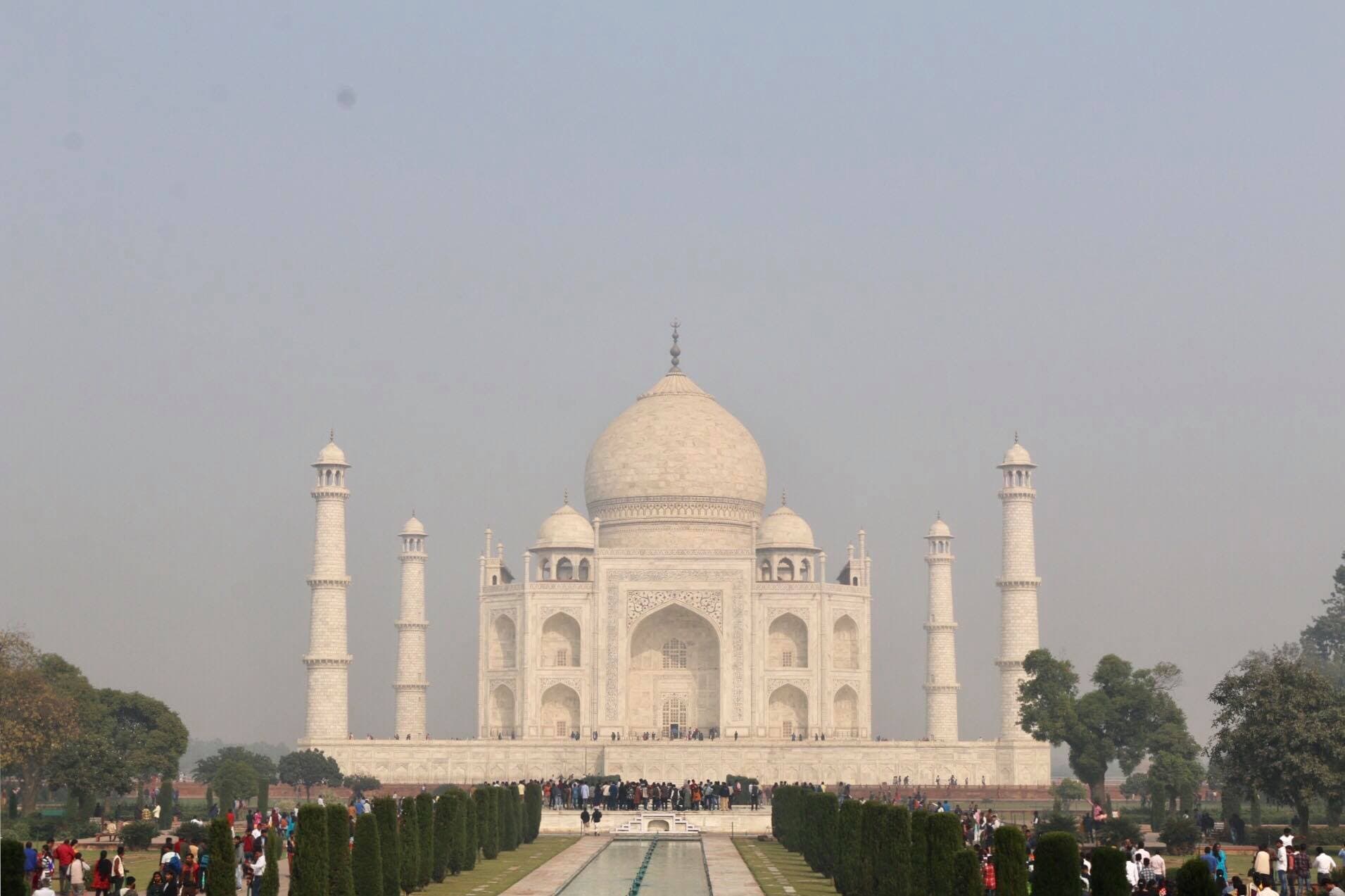
Every December, I make a trip to South Asia to visit my grandparents, following it up with a detour to somewhere else in the region. This time, it was a family trip to North India with the intention to do the Golden Triangle itinerary. While we were not able to make our way to Rajasthan, Delhi and Agra were full of experiences in themselves that anchored their positions as must-visit cities in the world. I’ve compiled my personal highlights here for your use on your next trip!
Delhi
It’s almost impossible to think of India and not think of Delhi. The capital of India, this city is a mix of boisterous traffic, wafting smells, and phenomenal sights. While not necessarily a clear distinction, there are two Delhis to explore: Old and New Delhi. I’d recommend starting with the chaos of the Old.


One must take the first opportunity to hit up Chandni Chowk, a giant wholesale market that winds its way through alleys to bring the madness of India to your front and center. You’ll find spices, oils, and garments all next to each other as trishaws and mopeds push past you to reach their destinations. As one of the oldest markets in India, Chandni Chowk is a reflection of the bazaars and tradespeople that propelled India to its current commercial status. If you are brave, you could venture a trek through the market, but it’s a lot more fun to simply rent a rickshaw and swiftly navigate the crowds.

While you’re at Chandni Chowk, make sure to take the time to appreciate Jama Masjid, a towering 17th-century red sandstone mosque. As one of the largest mosques in India, the Jama Masjid is emblematic of the grand structures of yore that continue to earmark Delhi’s place as a capital of history.


Perhaps the most iconic sight in Old Delhi is the Red Fort. Built by Shah Jahan, the same emperor who built the Masjid above and the Taj Mahal, the fort was the main residence of the Mughal rulers and the political center of the Mughal empire for a long time. As a UNESCO World Heritage site, it does not disappoint. Its grand fortifications are intimidating and the vast expanse of the interior reflects Shah Jahan’s appreciation for beauty and tranquility. You can find a lot within the fort, including a functioning market, a museum, and former British barracks. Do note that this is a ticketed area.

Moving on to New Delhi, I’d recommend taking a drive around India’s political center, following a series of roundabouts to reach buildings such as Rashtrapati Bhavan (the President’s Palace), Parliament and the Supreme Court. While you are unlikely to enter the actual buildings, you can witness the political action of India from the exterior, especially as civil servants bustle in and out. What’s especially notable is that most of these buildings were inherited from the British during the colonial period.

In the vicinity is an Arc de Triomphe-style gate commemorating the Indian soldiers who died in the First World War. The India Gate holds a lot of meaning for Indian nationals, protecting an ever-burning flame while the names of all those who died, remain etched into the wall.

Most Indians will recommend you to head to Connaught Place, the central node of the series of roundabouts that make up the road plan of New Delhi. Also known as the commercial and financial center of New Delhi, CP, as it is affectionately called, is a series of radial Georgian-style structures that house a mix of international brands and local outlets. It’s a good place to go for shopping and a good meal.

One of two astrological complexes ordered by the Mughal emperor Mohammed Shah, the Jantar Mantar in Delhi is a series of 13 astrological structures meant to measure the movement of the stars and planets. While I had no concept of how to interpret any of the “readings”, it was fascinating to see how kings and scholars used to rely on such structures back in the day. I am much more satisfied with Google to tell me where the moon is at in its rotation. Do note that this is a ticketed area.


If you thought Delhi was out of sites to visit, you’d be dead wrong. The Qutub Minar near the south of Delhi is the oldest free-standing stone minaret and it is a sight to behold. UNESCO protected, this complex is a set of ruins that holds some of the oldest structures in India. The base of the minaret, for example, is said to have been laid in the late 1100s. The complex is actually quite beautiful to roam around in and absolutely worth the visit. Do note that this is a ticketed area.


One of my favorite sites in Delhi had to be Humayun’s tomb. This is the tomb of the Mughal emperor Humayun and the surrounding gardens and complexes make up for a great stroll. The intended symmetry across structures and the framed views provide good fodder for some great photos as well. Isa Khan’s tomb, within the same complex, was my personal favorite part of the area because of its more vibrant colors. Do note that this is a ticketed area.

Having seen the North American Baha’i Temple, I knew I had to visit the famous Lotus Temple in New Delhi. Open to all religions, this giant building is one of few Baha’i temples globally and a monument to world peace and understanding across religions. While it is only open at fixed hours in the day, it is a magnificent sight and is visible from a distance. Do note that it is slightly out of the way from other attractions.
And now onto food in Delhi!


You’d be remiss if you came to Delhi and did not find your way to Karim’s. One of the oldest restaurants in India, this North Indian establishment serves Mughlai-style food including Mutton Stews and Tandoori Chicken. Their kebabs and bread are the signature items on the menu, especially their ghee-doused Paranthe. I sometimes find myself dreaming about the curries had here.

Kathi rolls may come from Calcutta, but the Delhi spin of it can be found in Nizam’s. Using the local Paranthe instead, these rolls are stuffed with spiced onions and delicious kebabs. You may find yourself buying a couple at a go at this establishment.

It’s reputed that Butter Chicken came from Moti Mahal and while I have no way of verifying that, I can assure that the Butter Chicken here is definitely something special. Using fresh butter, and perhaps a dose of cream, this butter chicken will remind you why Indian food exists in a league of its own.

Mention a North Indian breakfast and people will point you to the Channa Bhattura. This is a vegetarian meal with fried puffy bread and a chickpea masala. Baba Nagpal Corner has a special recipe with extra savory Channa (chickpea) masala that is truly quite addictive. Fair warning, you may want to treat this as brunch instead.


If you’re willing to splurge a bit more, I’d highly recommend treating yourself to a meal at Bukhara. Once named the best Indian restaurant in the world, this establishment straddles the worlds of tradition and innovation by anchoring itself in some truly delicious recipes. Their Dhal Bukhara is the signature dish which stands out for its creamy yet earthy complexion. Their Naan Bukhara is a visual surprise and very cost-effective if you come in a big group. Prioritize which grill items you want but trust that you can’t go too wrong with most selections.


For desserts, make sure to have the Indian version of ice-cream: the kulfi. Roshan di Kulfi is a local favorite, serving sinfully good concoctions of this dense ice-cream dish topped with all kinds of treats.

If you’re looking for something on the warmer side, make your way to Old Famous Jalebi Wala in the Chandni Chowk. This is pure sugar and oil, but if you’re willing to make up the calories, you are in for an unmatchable treat. The jaleebis served from this stall are cheap but deserving of the fame it deserves.
Agra
One of the things Delhi is known for is its proximity to other great cities. As mentioned above, we had planned to visit more cities from Delhi but due to unforeseeable circumstances, we could only make our way to Agra. This was every bit of a reward though, as Agra is home to treasures such as the Taj Mahal and Fatehpur Sikri, both Mughal-era complexes that reveal more about the prestigious history of India. Do note that Agra is not as well developed as Delhi and so still remains very much a place you would want to visit on a tour group or with a private driver.


There’s very little to be said about the Taj Mahal that you probably haven’t already read up on. I’ll say this, the marble mausoleum that is the center of attraction is only one part of a larger complex of beautiful structures. Do take the time to actually wander around and appreciate the intentionality and effort of those who constructed it. I’d also advise getting a guide as there is a lot of both romantic and gruesome history to the complex including World War 2 era stories. This is a naturally ticketed area.


Since you’re already in Agra, spend the rest of your day at Fatehpur Sikri, a city in itself that was the residence of Akbar, one of the more famous emperors of India. There is a lot of walking involved as you roam across Akbar’s main palace as well as his wider city where there lay a mosque and mausoleum. It is also home to the tallest arched doorway in the world. You will find that it’s still very much a functioning city, with a lot of locals scrambling around. It is also, unfortunately, one of the attractions on the trip that is densely populated with touters and beggars. I’d still recommend checking it out though, paying the ticket price even.

While in Agra, you will want to grab a box of the local Petha, a sweetened pumpkin snack that bursts with sugary flavor. You would feel like you’re taking a bite of diabetes, but that may motivate you to share the calories around more. A reliable place to grab a box of these is the Panchhi Petha Store in downtown Agra.
Here are some general tips for Delhi:
- I highly recommend getting a private driver for your travels, especially if you are in a group of 4 or more. While there is public transportation in Delhi, it is densely populated (the city is known as the second largest urban populated area in the world) and quite a nightmare to travel around. These drivers are actually affordable in India and should be factored into your cost of travel.
- You can find ATMS pretty easily around Delhi but do note that most of them have rather low withdrawal limits.
- One of the biggest concerns is likely safety. I traveled with my Mom and Sister on the trip and by the end of the trip, everyone felt confident roaming slightly more freely than at the beginning. That being said, do exercise standard caution such as staying in groups and avoiding dark streets. Having a private driver would easily solve all of these.
- Getting around with Autos is very easy. Just flag one down and you’re good to go for any short distance. There’s also Ola and Uber for all kinds of transportation needs.
- Another concern is likely to be Delhi Belly, or food poisoning. Some of India’s best food is its street food and if you stick to anything that’s fried or grilled, you are likely to be okay. Anything that’s water based should be taken with caution. I’d personally recommend risking it and enjoying the food, paying the price in the short term so that your stomach can build the tolerance for long term enjoyment of food. But that’s just my opinion.
Places like Delhi and Agra remind me of why traveling is such a thrilling experience. Being able to access history and culture with such intimacy is a privilege and I am glad that places like these continue to offer unrivaled experiences for the curious souls in us.