Brussels – Capital of Belgium (and the EU)
I was very excited for Brussels – I had heard so much about the food and culture in this city, not to mention the fact that it was one of the most politically influential cities in the world. I wasn’t disappointed with my time here at all, especially following the high baseline Antwerp had set up for me. If you want to see Belgium, Brussels is a great place to base yourself.

The main city of Brussels is extremely walkable and you could complete all the sights within 1-1.5 days. A good place to start is the Brussels Stock Exchange, the unofficial western entrance into the ‘old city’. It is most famous for the lion statue flanking it as well as the street in front of it that is blocked off at certain parts of the day for pedestrians only. You can catch performances here at times, some of which are actually great. What’s especially interesting about the building is that after the bombings last year in Brussels, this was the focal point for the massive gathering for Belgians to mourn and rally together. You’ll find chalk marks all over the building as remnants of the tributes left.

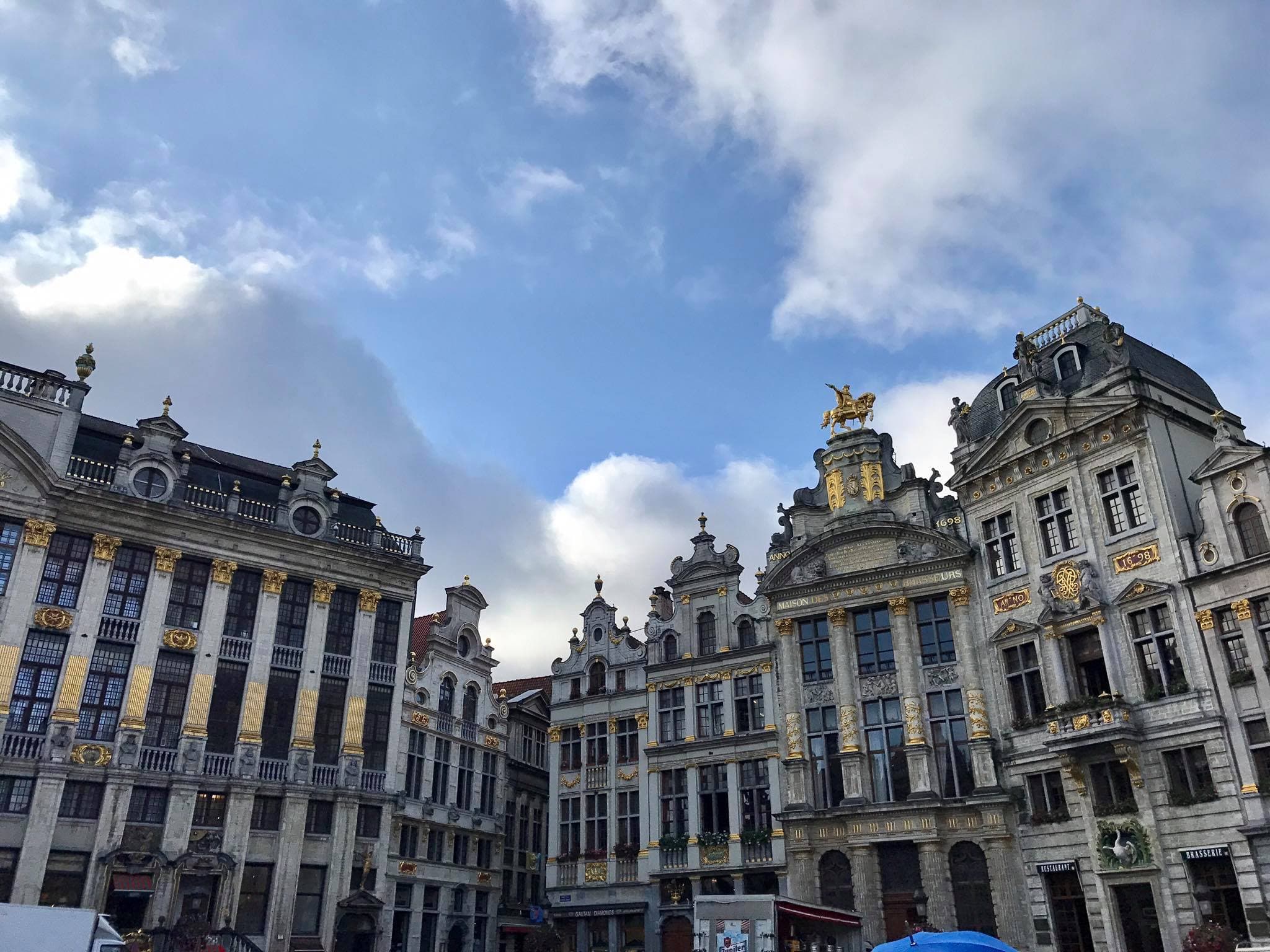
Continue heading eastwards and through the alleys to find yourself in the Grand Place, a giant square that is flanked on all sides by some of the grandest buildings I’ve ever seen in proximity to each other. You honestly feel small here and you recognize why European cities have been revered as some of the most beautiful places in the world. It’s mostly surrounded by guilds, a throwback to the importance of Brussels as a meeting point and trade center.

Probably one of the more interesting buildings is the town hall. Incorporating heavy gothic elements and a tall central tower, the building is especially unique because of its asymmetry. Yup, that’s right, you’re not going to get a great straight-on picture because it’s always going to be asymmetric.


On the note of cool buildings, head east to the Brussels Notre Dame or the Église Notre-Dame au Sablon, another Gothic masterpiece with beautiful Baroque interiors. The neighborhood here is especially charming with great cafes and squares around. The park right in front of the main entrance of the church was remarkably pretty and was one of my favorite places to catch a break during the day.

If you’re looking for views, you’re going to find it difficult to find one better than the Mont des Arts. This was a district dedicated (by King Leopold II, the Belgian king that exploited the Congo) to culture and art and holds one of the best views over the city of Brussels.

Belgium is home to a constitutional monarchy and they reside in the nearby Royal Palace, an expansive building that towers over you. Similar to most European districts around the palace, there are parks and other ‘regal’ buildings nearby to accentuate the feeling of grandiose.

What I’d especially recommend is a trip to the Royal Museum of Fine Arts within the district. Housing three main halls that are ticketed separately, this is both a beautiful building and collection of classical to modern art. Especially noteworthy is the Rubens Room with 20 paintings by the guy as well as some work by Bruegel. When I was there in September there was a lot of renovation work, so do take note of that.


After being overwhelmed by all that old history of Brussels, going eastwards to the ‘EU Quarter’ is a worthy remedy. Here, you get to see the future of Europe. While the EU doesn’t have an official capital, Brussels is widely agreed as its most important political center, with large areas of land dedicated to EU affairs. What’s interesting is the stark contrast in styles of architecture, using more reflective and modern influences to reflect the progressivism and ‘transparency’ aspired in these institutions. This place is filled with politicians and administrators so you’re going to have to deal with high prices and some seedy goings (ironic, I know) but it’s a good walk around.


Paris has the Eiffel Tower, London has the Big Ben and Brussels has these pissing statues. It’s really a curious tale of how these became embedded within the city’s lore but I found it a fun adventure to find all three pissing statues. You have Mannekin Pis (the original pissing statue and the most famous – it has a costume on at times), Zinneke Pis (the dog), and Jeanneke Pis (the girl). It’s really just a comical part of the city and it is all within the old city area.

Something else to keep an eye out for are these ‘comic book walls’. Belgium is especially famous as the birthplace of a lot of famous comic series, and you’ll find multiple homages to the greats (such as TinTin) around. They’re very fun and a great addition to your city exploration.


How could we talk about Brussels without talking about beer? Every self-respecting Belgian restaurant is going to have a good selection of amazing local beer for you, but to expand on your selections (cos there are so many varieties), you’re going to want to head to Delirium Cafe. Yes, it’s touristy and yes it gets slightly rowdy, but this is home to largest beer collection in the world and has some of the most diverse spaces within its ‘campus’. The main treat is the bar with everything on tap but they have a spirit room and a rooftop as well. Of course, if you know your beer, you also Delirium itself has some of the tastiest beer ever. If you want something endorsed by more locals, head southeast to Cafe Belga, a fun and hip bar with good vibes and where you actually will see Belgians and locals hang out. Definitely, try to get a Trappist ale at one of the places because they have larger varieties here.


Belgium is a food heaven and Brussels is paradise. You’re not going to have a limitation of great snacks and delights, especially if you do your research. First of all, you’re going to have to try the fries. A common misconception is that French Fries originated from France, but it actually came from Belgium, where they actually speak French too. There are going to be tons of ‘Friturs’ or ‘Friteries’ but watch out for those that use fries that are frozen and shipped. The locals will tell you that a good shop has fresh potatoes being cut and a diverse range of sauces (more than 15). Friterie Tabora is my solid recommendation for mind-blowingly good fries. I personally loved the Andouille sauce.

Another thing, in addition to the smell of fries, you’re going to smell waffles everywhere you go in Brussels. As mentioned in my Visiting Antwerp post on the difference between Liege and Brussels waffles, at Maison Dandoy, you’re going to have one of the most authentic Brussels waffles in the city. While slightly more expensive than average, the soft and fluffy waffles are extremely fragrant and accompanied only with powdered sugar. This is craftsmanship and you’re going to be well treated.

If you’re craving some traditional Belgian cuisine but want to meat it up, head to Cafe Novo for their Carbonnade. These are fatty beef chunks that are served with a beautiful gravy and come with a solid accompaniment of Belgian Fries. Their sauces at hand (supposedly made for Belgian cuisine) are also worth trying out.

Especially famous, and not taking reservations, is Fin de siècle, another traditional Belgian cuisine outpost. Known within the local culinary scene as exceptional and at affordable prices, it’s worth coming here for both the ambiance and cuisine. Their Stoemp, which is a regional dish consisting of sausages on mash, is good and goes well with a proper Belgian beer.

And how we could forget the chocolates. Within Brussels, you will be bombarded by confectionaries at every corner, but know that while the general standard of chocolate is high, you’ll want to prioritize your dollar for what is unique and what is truly artisan. I’d recommend skipping Godiva franchises (no diss on Godiva, just that I can get it anywhere), and look for boutiques such as Frederic Blondeel. The staff is very knowledgeable about their chocolate and if you’re friendly enough, they may even give you tasters free of charge. What a joy.
Here are some additional notes on Brussels:
- There are multiple train stations to enter Brussels into, so look out for which one is closest to your residence. If you’re taking the bus, as I did, you’ll end up at the North Station and will have to either take the metro or Uber down. Speaking of which, Uber is available and public transport is very reliable here.
- Hostel-wise, I stayed in Meininger Hostel, which co-shares the space with a hotel and affords similar luxuries in facilities. It’s great value for money and one of my best stays.
- Safety within the main city is good, but I took the wrong tram slightly on the outskirts and realized how shady things were. Definitely, don’t take safety for granted here. Also understanding that Brussels is the center of political action within the EU, be wary of political developments as they may affect your ability to get things done.
- English is well spoken here, but multilingualism is also common because of the EU Quarter.
I loved Brussels and definitely rank it high as an important city to comprehensively understand Europe. You will have no shortage of cultural, political and even culinary servings, and will leave all the more connected to what the EU is about and aspires to be. I can’t wait to go back.