brunch-chat in singapore: session two
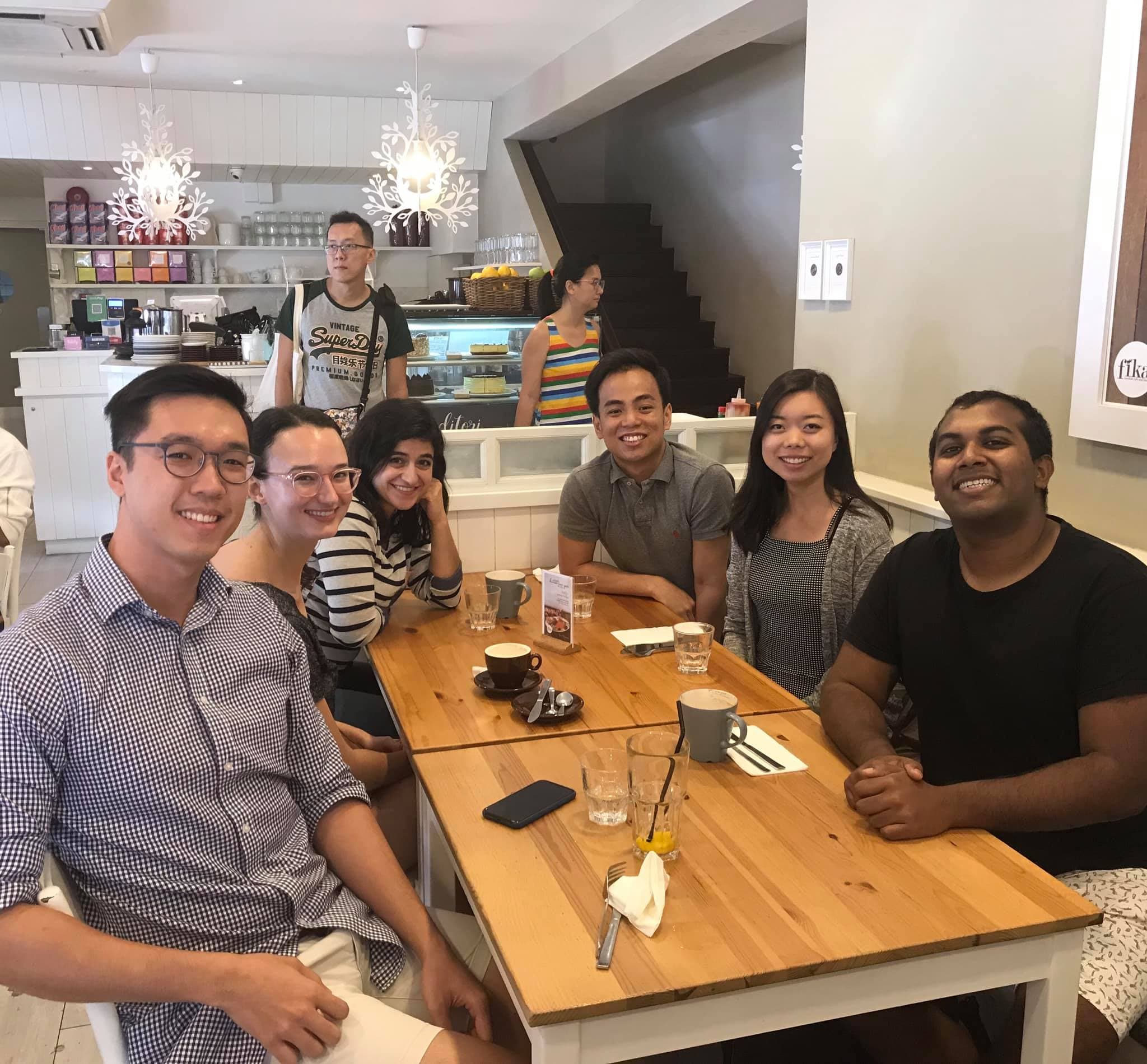
In my second iteration of the Brunch-Chat, I brought six friends to fika. at Beach Road for a Swedish-style brunch and a Singaporean-centric conversation. As with the first iteration, I wanted to create a setting where friends of different backgrounds could interact with one another, find points of agreement and contention across new lines and where I could construct models of what it means to be a Singaporean.
Here are the topics we talked about:
- Love and Marriage in a BTO-first Society – is Romance still alive?
- Liberal Democracy – was Singapore never destined to be one?
- Cosmopolitan Cities and Rural Countrysides – where do the people of our generation want to live?
If you want to know more about what those talking points entailed, ping me and we can get into it. This post is more about my summarised reflections from the two-hour chat on that model of being Singaporean.
Stability First
Singapore is home to a society that is preferential to people who value stability and security overall. As a middle-class individual who has had the privilege to travel widely, I recognize that in my pursuit of freedoms and liberties, I am willing to make sacrifices in my personal welfare and short-term utility because I believe it affords everyone more long-term agency over their futures without external obstacles. I believe in a broader set of successes and goals in life and see the need for open plains to explore rather than an escalator upwards to an arbitrary suite of resources. I value all of these because of my backgrounds and my exposures and therefore have a lot of issues with the narrow policy formulations we exist with. Rather than simply eliminate obstacles for people to achieve whatever goal to please, the culture in Singapore seems to allocate resources toward those who want to achieve the Singaporean suite of goals (owned property, a family with children, a 9-6 paying job and a good CPF balance sheet) and create constraints towards goals that are even slightly controversial (being a community leader, encouraging multiple perspectives in the news etc.).
There is this idea of productive tension that is foreign to a lot of people I have spoken to here. When the term “tension” or “instability” is mentioned, it is treated with a shudder and shock, because we have been cautioned from young to avoid such pains. But instability is sometimes part of transitionary movements and course corrections. Instability is not new to ruling powers that want to consolidate such powers. But instability is scary if it is wielded by the masses and without end. That is the fearmongering that likes to be used when instead, tensions can and should be highlighted so that civic leaders and politicians can coordinate on compromises and best feet forward to help both achieve the liberties of the people but also the stability of the country.
I personally think stability is an overrated value, especially when considering the human condition. Growth takes risk and courage, and that involves choosing to fight for important values. But also, maybe I can only speak for those who want to value such ideals. Maybe, that means that Singapore should continue being a place for the masses who prefer stability and security and who continue to vote for such policies. I have to find my place not just within the boundaries of Singapore but within the context of the universe. That gives me a lot more hope.
Politics of Love
When it comes to love, we want to think of romance and attraction. Two people who make gestures that are compelled by their emotions and inclinations towards one another. However, marriage is not just a declaration of love – it is also participation in a politically and legally implicated institution that affords benefits (and liabilities) to those who chose to do so. Some countries aim to simply codify expected norms e.g. marriage allows co-ownership of property. But Singapore goes leaps beyond just codification to a cultural normalization through the tool of marriage. It wields marriage as a necessary precondition to the treasure chests of property ownership and the affiliation to nuclear families as a prerequisite for respect.
One must be married within a heterosexual relationship before 30 in order to gain the full range of housing benefits within the country. It is an old joke that one locks down their property before they even propose. The romance of Singapore is a stale one, in my opinion, and full of pragmatic considerations before emotional ones. It is counter-intuitive to me, that the government implicates the vagaries of love Politik in marriage but not in divorce, where it refuses to recognize pre-nuptial agreements in an effort to discourage divorce.
I am apprehensive of engaging in the politics of love in Singapore because I believe that I will be distracted away from the beauties of the person I am engaged to and the profoundness of the romance. Instead, I will be more situated in the questions of pragmatism, property, and procreation (the sanitized word for sex when it’s now encouraged by Baby Bonus). Conversations on companionship and dating tend to be riddled with considerations of economic clout and priorities rather than personal values and principles.
All of these, again, are objectively acceptable positions to take. But these are not the position I hold. And it frustrates me that those of us who choose to value other goals and lifestyles must see ourselves constrained from full participation in society.
___
Perhaps I sound annoyed throughout this post. That’s probably because I am. I came back thinking that there was hope for Singapore to be a nation for all of its people, as long as you held onto its passport and served it well. I’m becoming more skeptical of this position and I’m being convinced through the logic of the population that it sees no need to broaden its scope of involvement. Singapore may not be a country that evolves with its population – it may simply be one that sets its population standards and deals with the outliers on a case to case basis.
I wonder how sustainable and robust such an approach can ever be.