brunch-chat in singapore: session five
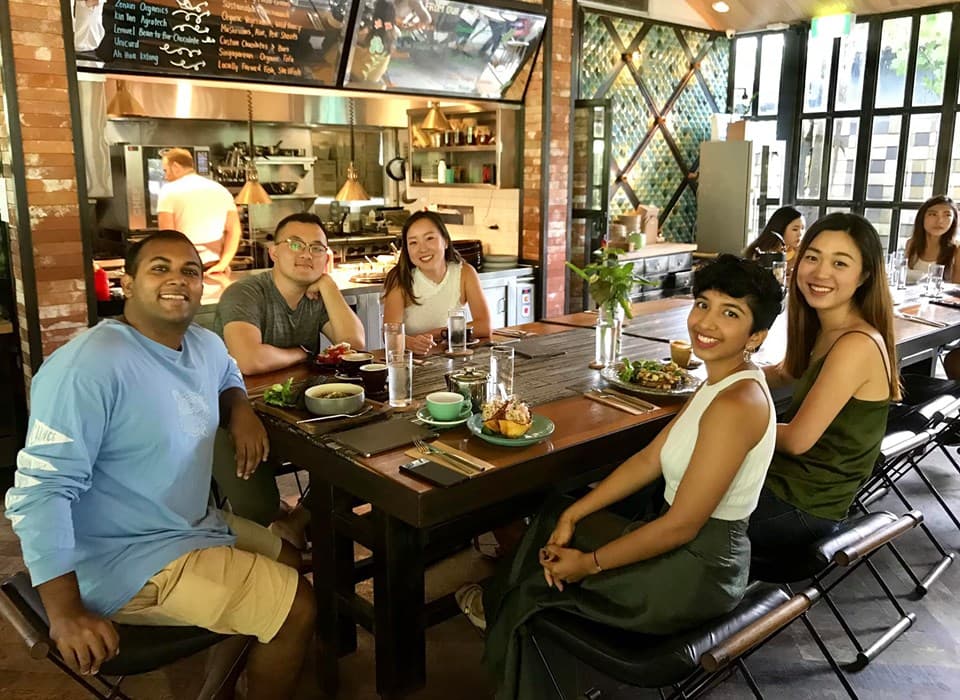
I’m going to combine two sets of reflections in this post – the first is on the takeaways from this specific brunch and the second is on the past year of hosting such brunch-chats. For those who are just getting to know about this, I’ve been hosting brunches every few months as a means to get a sense of the views people hold in Singapore on both hot button and deep-seated issues. Rather than to assume what Singaporeans believe, I would invite friends who I’ve had provoking conversations with to join me as I engage across differences and stir the pot. The hypothesis was that when it was necessary to engage with people whom one has loose ties with, there is a higher propensity for the niceties to drop as one allies or defends their positions. Needless to say, I’ve enjoyed every single one of these chats.
On Brunch-Chat Five and Sacrifice
This brunch was occurring amidst a news high, with events such as the EPay Saga and the Hong Kong Protests, in full focus. While we started with the simpler themes of racism and freedoms, it became apparent that the familiar refuge of balance was about to make itself known.
“Are you actually willing to give up what we have for what you want?”
There is a frustrating assumption hidden in statements like these and it is that the current state is beneficial for all. It is pareto optimal because anything more given to one party will take a painful much from the other. The truth is that such a change in scales is only detrimental to the extent that we’ve always allowed for certain groups to enjoy privileges and benefits. Compromise actually is not about harming those in power but about ensuring fair and equitable opportunities.
It’s important for us to see the rules and systems in place as constructs, validated through the test of time and context, but constructs nonetheless. We need to recognize how we’ve gotten to we are through choices and consequences. We also need to recognize that how we move forward is equally dependent on choices and consequences, not just a continuation of policies as they are.
What do we hope to gain in the future and what must we give up in the present to get there? These are questions that I feel go unanswered because we either prefer no loss in the short term or have no idea of what we want to to change in the medium to long term.
On the Brunch-Chat journey
Five brunches, 23 friends and 8 hours later, it’s not unreasonable to ask what it all has produced. If we revisit the very intent of these brunches, which was to help me gain a grounded sense of where Singaporean views were at, then I feel satisfied. Much so to the point where I have decided to put the brunches on hiatus until some new spark comes and I feel the value of convening such a group (also because it takes time and effort to organize).
Broadly, the brunches have shown me that most Singaporeans are satisfied with where we are. We recognize the gaps, whether they be in inequality, the sacrifice of freedoms or the concentration of powers. But we have given in to the narrative that we will be taken care for. Now, this is good for a number of reasons, the biggest being that people in this country feel secure about their future given their environment.
What it also means is that there are two probems.
Firstly, all of this is dependent on a benevolent and trustworthy government. I can say very little against the government, both because of the fact that I’m a public servant as well as the fact that even in the fiercest critique, the government has been able to defend its choice of policy. But what we can bet on is that there’s a non-zero probability that any future government could not be as reliable. In those cases, the resilience of our civic communities is extremely important and our ability to keep ensuring rigorous checks and balances becomes vital. If we simply know the problems, but do nothing to mitigate them, we are only allowing ourselves to be vulnerable in the future.
Secondly, we become complacent. Among the narratives of innovation, expanding into ASEAN, and going digital, is a need for the individual Singaporean to pick up the slack, take on some pain and venture out. In all of these chats, I saw none of this drive and even worse, I saw no one calling out the problem of this lack of drive. We have the success stories blasted on the news, but I am also conscious that these are mostly highlights and not a trend. We do not see the need to be uncomfortable because the promise has been comfort. Both expatriates and Singaporeans see Singapore as the comfortable base to build a career but not a base to be different within. The pressure to conform or be ostracized has created a sad paradox where we may all no longer be relevant. The incentive structure is simply not in place.
___
It’s been an extremely interesting one year journey running this experiment. I’m glad I did this, and even gladder I had great friends along the way for it. Maybe, you too can consider doing something like this within your communities. Let me know if you come up with anything different!