Berlin’s Complexity
By the end of the month, I’d have spent a total of six weeks in Berlin in my short life so far. Behind Singapore and Chicago, that makes Berlin the place where I’ve spent the next longest time actively living. (You could throw my baby years in India into that list but I really can’t remember too much from that time.) Berlin is my answer to the question of “Which is your favorite city that you’ve visited?”. Berlin is my reference point for how a city should encourage a good quality of life. Berlin is my third home. Having been here for some time now, I’ve been able to get past the touristy fascination with the city and dig into what life here could actually mean, and I’ve developed some thoughts.

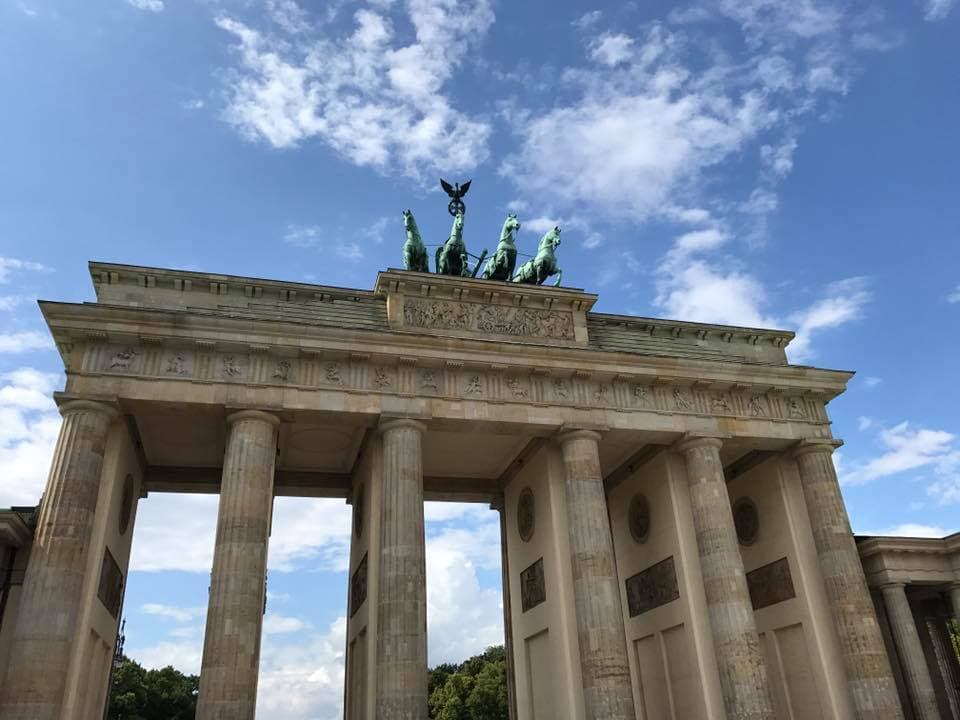
Germany, in general, has a complex history. It started out as a number of kingdoms, got amalgamated into the German Empire, underwent revolution, got damaged during the first World War, was lead by the National Socialist (NAZI) party during the second World War, became split into two main blocs that pit communism and western democracy against one another, and then finally evolved into the current democratic Federation that it is today. Not too much has survived all of that – the Brandenburger Tor is a famous symbol that has stood much of history and is a recurring piece in all historical stories.

Berlin too has been always in the center of all this, rarely losing its place (with exceptions to Bonn) as the capital of political and strategic affairs. So a visit to Berlin is really a visit to multiple dimensions at one. Some of them coalesce into one like at the Reichstag and some occupy whole areas by themselves such as the Eastern Wall gallery.
It can get confusing at times because each historical dimension is full of flavor and lessons, but appreciating that Berlin has been through a lot has become an important first step for me to see that there are layers to be peeled at each site I visit.
Another key part of being in Berlin is recognizing its focus on the future while balancing its responsibility to its past. There have been atrocities that have been committed in its past. It’s easy to name them. The Holocaust, the invasion of sovereign lands, the explicit oppression of non-Aryans, the massacre of millions of people.

During the Cold War, Germans even spied on each other. It becomes difficult for a country to really see a future for itself knowing that its own people were capable of such deeds. Think about it – some of these people were grandparents or even parents of current Berliners. There have been a number of books published by children of Nazis/ DDR informants where they process their identities and try to claim their own futures. It’s important for Berliners (and anyone who takes the lesson on themselves) to recognize that while accountability for their actions is important and crucial to the process of justice, it is also important that work is made on charting your own future with a new set of values that are coherent with the lessons learned. It’s really a success story on how Germany has, while not completely perfect, created a new brand for itself within the past 60 years that has anchored its place as a leader in the world.

There’s something weirdly ironic about Berlin’s ability to draw people from so many different cultures and backgrounds. Hitler wanted Berlin to be the capital of the world and sought conquest to achieve that goal. He tried to eliminate diversity in the world. Yet, it is not militaristic might, but strong moral and economic leadership that has brought Berlin to its current place as one of the most international and cosmopolitan cities in the world. It is truly now very close to earning the title of capital of the world and it has become homes to one of the most diverse communities in capital cities.


One aspect of Berlin that I want to explore more and am incredibly curious about is the current Jewish sentiment in Berlin. I would say that one of Germany’s metrics in its ability to rebrand itself is in its ability to finally become a place that Jewish people can feel comfortable calling home. It is massively triggering to be in a city that essentially drove the massacre of millions from your religion. Yet there is a rebuilt synagogue (well, partially) and a ton of memorials dedicated to the Jewish people who lost their lives during WWII. Does that do enough to compensate for the crimes of the war? The answer is always going to be no, and rightly so. But even today, the fear of anti-Semitism plagues Berlin, even if it doesn’t necessarily exist at a systemic level. I was told the story of how an abandoned bag in a Jewish high school caused an evacuation of the whole vicinity, only to find out that a student has simply lost their backpack. How do you live in the land of your oppressor? This is a question that I’ve revisited again and again, with black communities in the US and indigenous communities worldwide. The answer still eludes me.


Berlin is also home to an interesting class evolution. I’m not going to lie, one of my biggest reasons for loving this city are the cheap prices all around. Food is incredibly affordable and the cost of living makes you feel like a king sometimes. There are areas that are known for being especially cheap, and this is where the immigrants live. Refugees and immigrants occupy almost exclusively the areas of Kreuzberg and Neukolln and its drove prices down like crazy. But this is also inviting gentrification and a raw occupation of areas for alternative lifestyles. One of the coolest things about this city is the amount of ‘unpretentious’ rawness you’ll see around. From graffiti to street performances to beautiful markets to thrilling clubs, life in Berlin used to be known for being simple and hateful of the pretentious and rich. But the brand has become consumed by neo-liberalistic capitalism and you see a co-opting of a lot of these places and themes by businesses and organizations. The drive to be ‘unpretentious’ has in its own way become pretentious.
I still have two weeks left in this city and I’m nowhere near done exploring. I’m sure I’ll continue to develop more thoughts or even have some of these challenged again. But in it all, I think we’ll have to agree that nothing is simple in Berlin. The layers are there and apparent. The joy (and tragedy) of living in this city comes in being able to appreciate every layer.