belfast and the northern irish coast
When people think of the Irish, the Republic of Ireland comes to mind. But Northern Ireland, part of the UK, always struck me as a mysterious place because I never knew if it was more Irish or British or neither at all. How does this region find its place in the archipelago of gloomy skyed kingdoms? Also, where does the rugged Northern Irish coastline come into all of this? These were questions I sought the answers to in my time in Belfast.
When I was a young boy, my school dedicated some time to teach us about The Troubles in Northern Ireland. We learnt about the difference between the Catholic Republicans and the Protestant Loyalists, and why it was important to maintain the religious tolerance within Singapore. Time has passed since the class, and it’s been 20 years since the Good Friday Agreement, ending the official conflict but still seeing tensions come and go. I was curious to see above all else, how Belfast looked like and if it was actually conflict-ridden.

Anyone trying to explore the city should start at City Hall. Built in the early 1900s, this grand building is the centrepiece of the city, housing government functions as well as a museum of Belfast’s history as a city. I found it interesting how you could see the dome from almost any street leading to it. Architecturally, the building is very ornate and has a number of gardens.


If you’re looking to have a glimpse of local life, there’s no better place to visit than St George’s Market. Open only from Friday to Sunday, this 19th-century market is where local producers and amateur chefs come together to serve the locals (and tourists) with great food. I was very pleasantly delighted by all the colours and smells, especially the grill stations. There are some craftsmen too if you want to buy some souvenirs.

If you came to Belfast because you knew the Titanic was built and deployed here, then you’re in luck. There’s a whole district called the Titanic Quarter dedicated to learning about the building of the Titanic and other shipyard knowledge. The grand Titanic Museum was voted Europe’s best attraction, with tons of hands-on exhibitions and some stunning photos of the ship before its tragic demise. You can also walk around the shipyards to see how the ships were built and see where the Titanic set sail from.

Another district in Belfast is the Cathedral district, only across the river from the Titanic Quarter. Centred around the St. Anne’s or Belfast Cathedral, this district is filled with a number of shopping malls and outlets. The Cathedral itself is Romanesque style church, with a WWII Memorial in it. There’s a small token fee to be paid to explore the cathedral and it’s not really strikingly different from any other European church so I’d recommend just enjoying whatever part of it is free, or coming during service.

If you’re looking for a quirkier attraction, head to the Europa Hotel, which is also known as the most bombed hotel in Europe and allegedly the world. Having survived 36 attacks during the Troubles, this hotel has seen its fair share of damage. It continues to be one of Belfast’s premier hotels, however, hosting prime ministers and presidents regularly.

Belfast as a city contrasts a lot with Dublin, its counterpart in the Republic. Both have small and concentrated city centres, but Belfast definitely has more signs that it has taken a beating, with a lot more of a rugged look. Amongst all the ruggedness though, you will find these murals. Found both within and outside the city, these murals depict both the history of the Troubles and the sentiment of locals at the time. Because of the period I was there, I did not have the opportunity to book a Black Taxi tour, one of Belfast’s top tourist activities, where local guides drive you to West Belfast where some of the most striking murals area. I was lucky to just catch these while wandering through the town.

If you’re choosing between the more boozy and popular but ultimately expensive Dublin and the lesser known but definitely cheaper Belfast for the actual St Patrick’s Day, here are some arguments in favour of the latter. Belfast for St Patty’s starts around 11am with the parade through the main streets of the city. The parade is very community oriented, having both mascots from lore but also local townsfolk and community groups putting on parade shows. It was quite amazing being able to witness the city come together.
There’s normally a free concert after the parade with local acts, but a lot of people head to the pub to watch the Rugby Sevens or start partying. The Filthy Quarter, Laverys and The Points are all great pubs worth exploring, frequented by locals and students from the nearby Queen’s University. There have been repeated reports of riots and excessive rowdiness as the day goes on but nothing significant happened this year so perhaps that’s hopeful. I enjoyed myself a lot in Belfast for probably a third of the price in Dublin, and it wasn’t any less ‘Irish’ by the looks of it.
The Northern Irish Outdoors
As mentioned, Belfast is a very small city, so a lot of times, people take the opportunity to head out to the outdoors. One can road trip or if you want to book a tour, an affordable option is Allen’s Tours that leave from the city centre.

The first stop as you head outdoors should be the Carrickfergus Castle. Occupied by everyone from the English to the Irish to the Scots to even the French, this castle is one of Northern Ireland’s best medieval castles. Built in the 1100s, the structure sits fiercely on the waterfront and is quite interesting to walk around. Be careful though, as you get closer to the waterfront, especially on a windy day, the waves do hit the coast hard and you may get sprayed on.

Further up north, you will find the Carrick-a-Rede rope bridge. This bridge is more emblematic of the beautiful Northern Irish coast. Initially built by and for fishermen, this bridge is now rebuilt for tourist use and can be accessed for a fee. The views around here are stunning. Note that on windy days, they may not let you use the bridge, as in our case.

While you are exploring the outdoors, make sure to keep an eye out for the Nine Glens of Antrim. These are valleys that join the coast to the nearby Antrim Plateau and are stunning insight. Many small towns and villages are found in these glens.

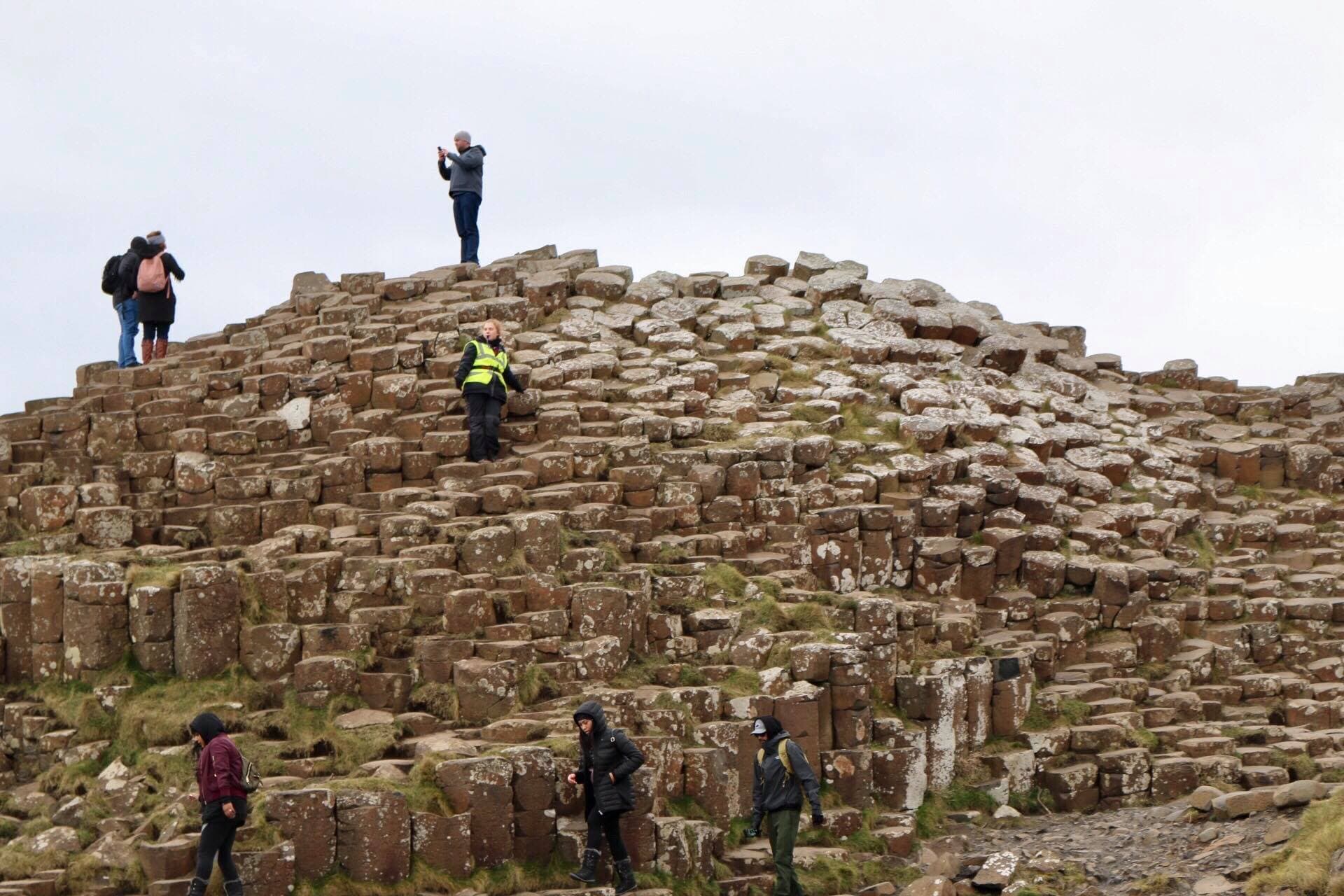
What would a trip to the Northern Irish coast be without visiting the Giant’s Causeway? Free for entry and a 10-minute walk from the visitor centre, this is an absolutely captivating natural feature, formed out of volcanic processes. The lore goes that the giant Finn McCool had a fight with the Scottish giant on the other side of the channel and ended up throwing rocks from the coast at him, causing the formation. The hexagonal rocks stack upon each other and can be climbed and traversed for some great exploration. This UNESCO site is one of my favourite sights of all time.

Finally, if you’re a Game of Thrones fan or simply have the time for it, try to head to the Dark Hedges, a curiously picturesque road with trees interlocking in the canopy. Manmade in terms of the arrangement, this road is famous for being the Kingsroad in GoT. In the summer, the trees have their leaves on them, making for a different kind of sight as well.
Onto the food now!

Food in Northern Ireland is a curious thing. You’ll get access to a good amount of Irish and English food here, so you have a fair selection. Something that is definitely unique is the Ulster Fryup, a take on the regional dish but with soda bread and potato bread alongside the regular ingredients. This makes for a carb-heavy meal but it is so sinfully good. Maggie May’s serves all of the above for only 4.50 Pounds, and I felt like I went to heaven.

Make sure you find the occassion to try local beef. For me, that came in the form of a good local Guinness and Steak pie up in the countryside. The beef is definitely a lot more flavorful up here, from the cold weather, and serves a great taste.

Finally, knocking two goals out at once, I went to Deanes Loves Fish to have food by local celebrity chef Michael Deane as well as enjoy some local seafood. Their Fish & Chips, a classic UK dish is only 5 Pounds and is really good. The mushy peas were surprisingly the star of the meal.
Here are some general tips:
- Belfast is extremely cheap but it is a bit of a mix between being cash-based and cashless. The currency is the sterling pound, not the euro so be aware.
- Safety is a bit tricky, just because gangs still are in place here, and the Troubles are not that far away in terms of history. I’d take lit up streets as much as I can and Uber (yes, it’s available) between spots as much as I can.
- Hostel-wise I stayed at Lagan Backpackers and was well satisfied with my stay. They also serve a full breakfast within the booking price so that’s always great.
- Locals tend to be on the friendlier side in Belfast. Older folk tend to be a bit unfriendly but a lot of the younger folk, especially millennials, seem to be much more joyous and optimistic.
- Be very careful about waving the Irish flag around the city, especially on St Patty’s. While the younger folk in the bars may not care, older people do and will call you out for it. Being sensitive is always a good option here.
I really enjoyed my stay in Belfast and was surprised by how much fun I had. I’d highly recommend anyone exploring the island to make some time for it and the surrounding outdoors.